When Everyone Complies and No One Is Responsible: What Hannah Arendt Tells Us About Urban Planning
When Everyone Complies and No One Is Responsible: What Hannah Arendt Tells Us About Urban Planning
In the mid-twentieth century, Hannah Arendt covered the trial of Adolf Eichmann in Jerusalem for The New Yorker. Eichmann had been one of the principal architects of the Holocaust's logistical machinery. What began as a journalism assignment became one of the most influential texts in twentieth-century political thought. In her account, Arendt describes Eichmann not as an ideological fanatic but as a bureaucrat who claimed he had simply followed existing rules without questioning them. As she wrote, it was "sheer thoughtlessness — something by no means identical with stupidity — that predisposed him to become one of the greatest criminals of that period."
For urban planning, one of the most important lessons of Arendt's idea is that some problems do not reside solely in the rules themselves, but in the way we relate to them. The very rules that make coexistence possible can also allow people — without any intention of doing harm — to act against the very purpose for which those rules were created. The reason this happens is relatively straightforward: compliance replaces reflection on meaning. A very similar logic operates in cities today, where rules and plans are revised, approved and implemented as ends in themselves, rather than as instruments for transforming reality.
_Nick_Fancher_Photos_ID3528%20(2).jpg?w=900&q=80&fit=max&auto=format)
Image by Nick Fancher on Death To Stock
The paradox of urban automatism
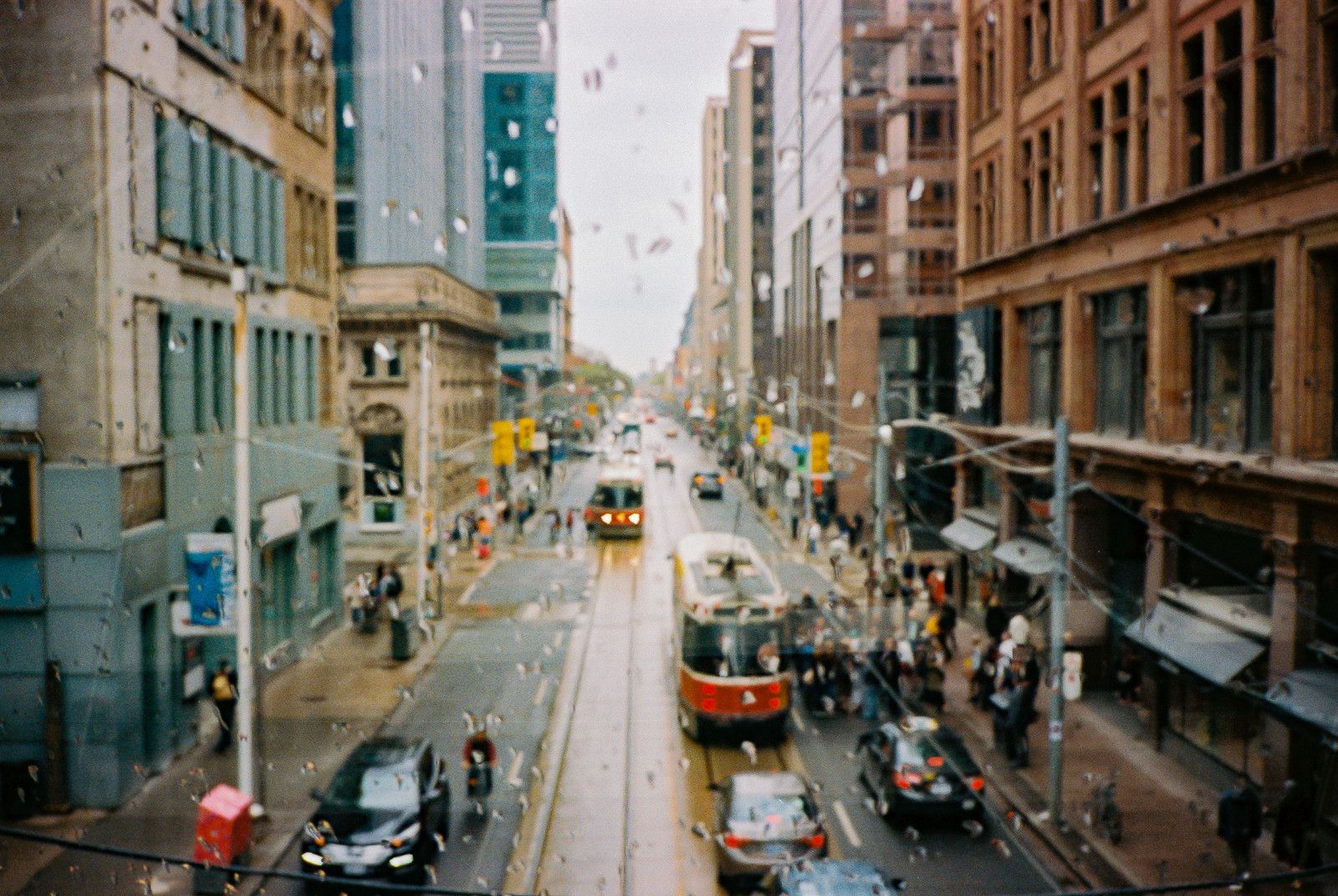
Standing at any city intersection on a congested weekday afternoon makes this visible: a red pedestrian light, vehicles moving at 50 km/h carrying one or two occupants, a truck collecting glass, a van unloading deliveries. Each action, taken individually, complies with the rules. And yet something happens there that makes you want to leave as quickly as possible. That confluence of rule-following actors reveals what regulation rarely accounts for: what happens when everyone follows the rules, but no one stops to think about the effects — especially when many individually correct actions converge in the same place at the same time.
This absence of reflection is not accidental. It is a direct consequence of what contemporary urban planning has done to city life. A great deal has been invested in minimising the need to make decisions, through rules and technologies designed to automate our choices. Traffic lights, urban highways, intelligent signalling systems: they order movement so that we do not have to think about it.
.jpg?w=1200&q=80&fit=max&auto=format)
Image by Mackenzie Freemire on Death To Stock
This is not to say that automatisms are harmful. On the contrary, as cities grow in complexity and scale, they become indispensable to urban life. Without them, chaos would be inevitable. But here lies a paradox of the contemporary city: the more we depend on mechanisms that invite us not to think, the harder it becomes to know who is accountable for their consequences.
And this is precisely where Arendt's insight becomes essential. When a system only measures compliance with the rule, it struggles to see its unintended effects. If rules are designed, followed and monitored as routine, unexpected harm becomes invisible both to those who implement them and to those who evaluate them. This is one of the central lessons of the banality of evil: sometimes harm does not come from a conscious decision, but from thoughtless compliance. And when that happens, everything appears normal — even when it perhaps is not.
Privileges that look like rights
There are privileges we do not see. Driving a private vehicle in a city is a recognised right — but it is also something not everyone can do, something that occupies finite space, generates noise and pollution. The driver moving at 50 km/h along a central street is doing something the law permits. At the same time, without perhaps being aware of it, they are occupying space that could be used in other ways. Their green light has an impact on pedestrians' time. Because the law permits it, the privilege is assumed to be a right, and almost no one questions it.
But what happens when the rule changes under specific circumstances? When a pollution episode activates a Low Emission Zone, some vehicles are prohibited from circulating. In that moment, something shifts: a right that seemed absolute becomes relative. The privilege of driving becomes limited, temporary, dependent on conditions outside individual control.
Image by Christian Lue on Unsplash
This forces a moment of reflection — not because someone has issued a moral appeal, but because the context changed. The right to drive still exists, but it is now selective. Some can, others cannot. In that difference, reflection re-emerges. The driver who can circulate knows they are an exception. The one who cannot discovers something previously invisible: that what they considered a normal right was a privilege the city can revoke.
Speed in dense urban environments is another case. Its logic is to minimise travel times by car — but it is not a neutral variable: it increases the severity of pedestrian accidents, amplifies noise, reinforces barrier effects, and alters the quality of life for those who live, walk or work along those streets.
Calle Aragó in Barcelona, Teheran-ro in Seoul and Paseo de la Reforma in Mexico City all cross areas of high pedestrian and commercial density with speed limits of 50 km/h along much of their length. In those cities, the rules, the road geometry and the signal coordination invite drivers to move at that speed. A driver who respects the limit has no reason to reflect on the invisible consequences: they are following the rules, and that is enough. Compliance becomes sufficient justification for thinking no further.
Neither Blind Automatism nor Constant Reflection
This is more complex, however. Looked at through Arendt's lens, the conclusion would not be to eliminate automatisms, or to assume that reflection always produces better outcomes. The framework her thinking offers is richer and more nuanced: it points towards strategies that prevent mechanical rule-following from concealing invisible harms, normalising them, or providing justification for them.
What does it mean to design cities where reflection — on design, compliance and evaluation — is present in the right measure? What does it take to ensure that privileges are recognised as such, rather than becoming, through inertia, assumed rights? Three elements are fundamental: acknowledging that automatisms are necessary; understanding that not every failure is solved by adding new rules; and incorporating regular review cycles into the structure of rules themselves, with clear criteria and verifiable data.
Many cities already dynamically adjust speed limits, parking spaces or circulation restrictions. What matters is not simply that these changes exist, but whether they form part of a system capable of learning from its own effects. Too often, review mechanisms are designed reactively — after a crisis has already occurred. What would be genuinely valuable is a systematic approach: frequent reviews, clear criteria, small adjustments that allow the city's behaviour and its rules to adapt to each other continuously. Constant and efficient learning cycles where the evident coexists with the possible, without waiting for the problem to become unsustainable.
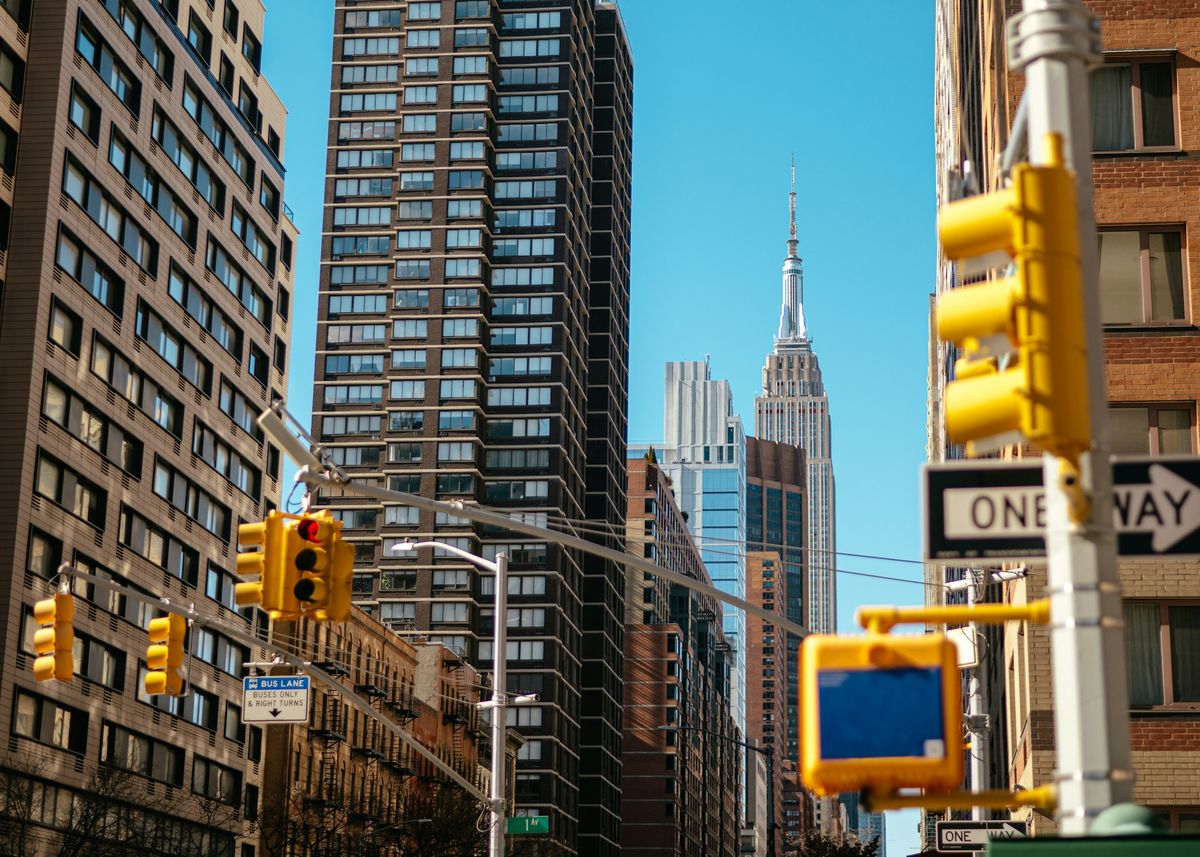
Image by Katelyn Perry on Unsplash
But that same cycle can fall into the trap it tries to resolve. A review that happens when planning dictates — rather than when it is needed — is itself another automatism: it fulfils its function while ceasing to think about its purpose. This is precisely what Arendt invites us to avoid: compliance that annuls reflection. Yet constant reflection on the design and monitoring of every rule is equally impossible. Perhaps it is enough for reflection to occur when it matters — when the city has already changed and the rules have not yet caught up.
Knowing when it matters depends, in large part, on what we measure. Accident rates and pollution levels have clear indicators; the time lost by someone walking and waiting at a pedestrian light almost never does, or is rarely used. Any revision of the rules risks seeing only what its indicators point to. The question, then, is not only when to revise the rule, but with what tools we do so. Because what we measure is what we see. And what we do not measure, definitively, does not exist. ●
Related Articles
.jpg?w=1000&q=80&fit=max&auto=format)
What's New at the New CitiesToBe?

The Infrastructure You Never Think About

Beyond Books and Shelves: Four Cities Reimagining the Public Library — and Public Life