«Urban sketching is a form of love towards the city, to things that are not perfect»
«Urban sketching is a form of love towards the city, to things that are not perfect»
«When you draw something, the memory of it moves somewhere else — and you carry it with you for the rest of your life, with an intensity that has nothing to do with taking a photograph», says Barcelona-based artist and illustrator Maru Godàs. We invited her to join us around the table in our office meeting room, just above the streets of the Eixample — where so much is always happening, and which she has captured countless times in her sketchbooks (always handmade, as she’s quick to point out) — after she led an urban sketching workshop for the Anteverti team last December.
We were so taken by the exercise, and by Maru’s passion for capturing the everyday life of the city through line and brushstroke — especially by what that slow, reflective, analogue process sparked in us — that we wanted to dig deeper. Much deeper: into how urban sketching came into her life almost by chance, why it fascinates her, and how, now an established name in the field, she travels the world observing and capturing spaces, atmospheres, and the emotions that surround the everyday places she draws.
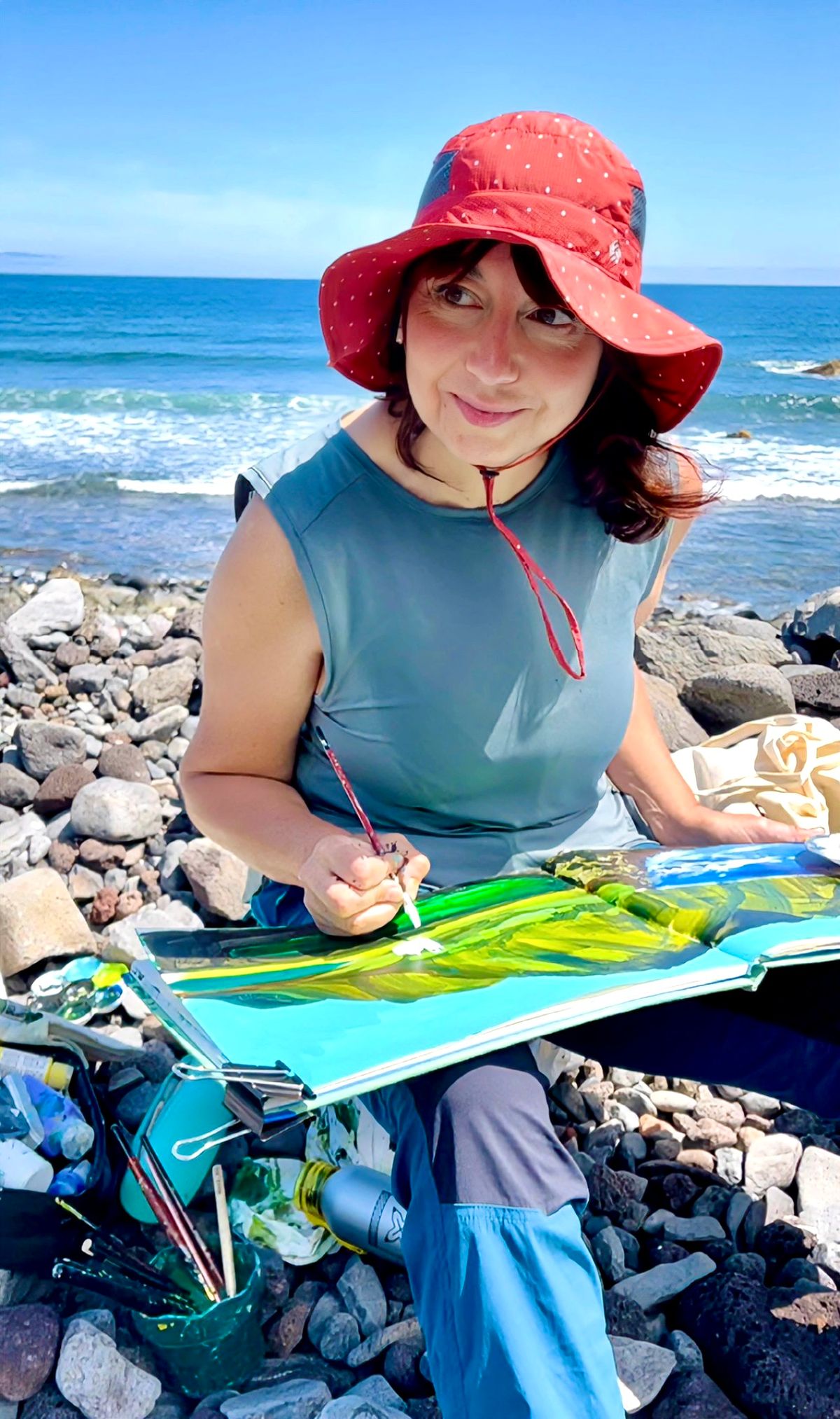
Maru Godàs painting on the beach.
We ended up spending two hours with her, talking and leafing through her sketchbooks, completely absorbed — reflecting on how illustration reshapes the way we experience cities: from the memories we create while drawing them to the details locals often overlook, yet which quietly define a place. And on how urban sketching has grown into a global community of passionate urban dwellers, all heading out into the streets with the same urge: to look, to notice, and to capture.
In this conversation, she reflects on how illustration reshapes the way we experience cities: from the memories created while capturing them, to the details that often go unnoticed by locals yet define a city’s essence.
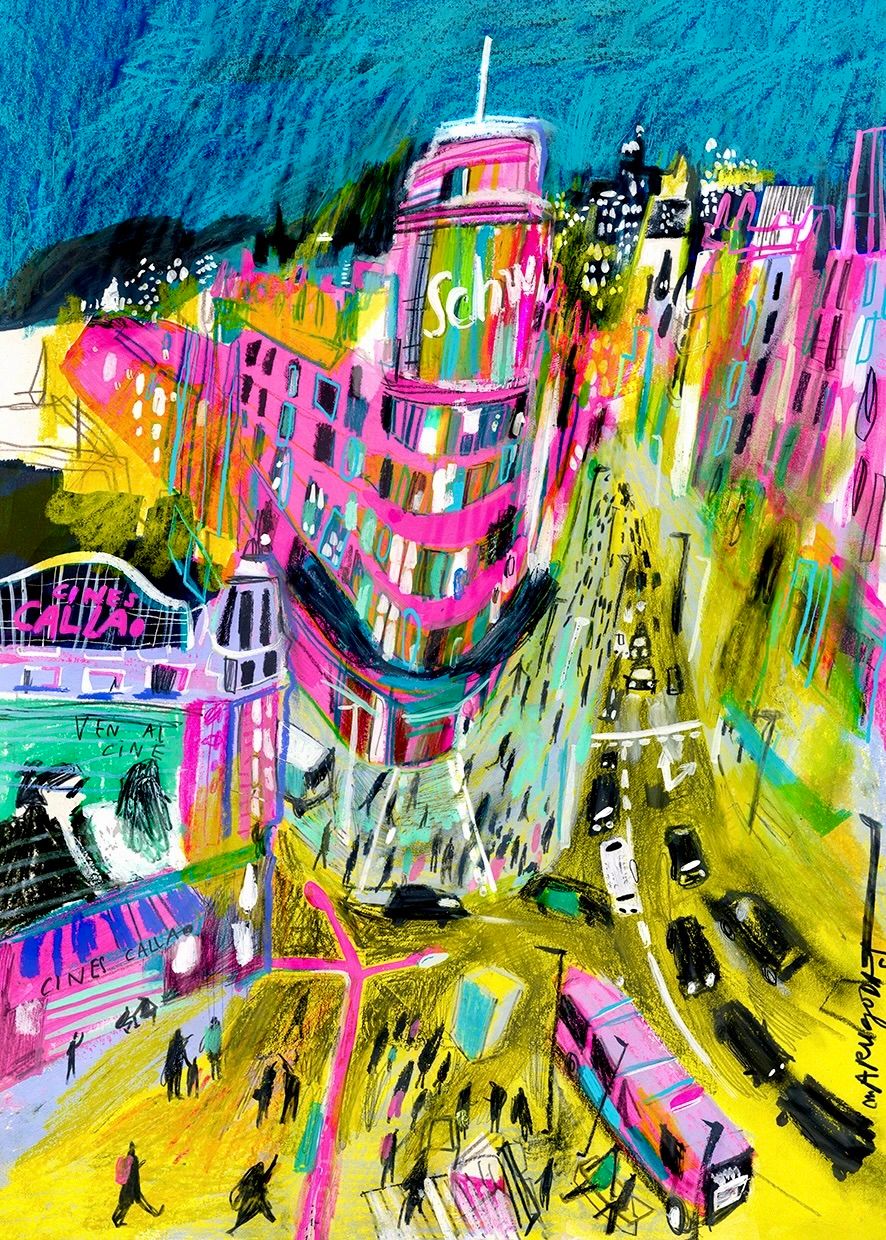
Madrid's Gran Vía, by Maru Godàs.
It’s quite difficult to define in general terms. At its core, a city is simply a natural evolution of people, the space they occupy and the things they do within it. Cities change so much! They can become vastly different from one another, but what they all have in common is people.
Depending on the space, the climate, its history — and everything related to the people who inhabit it — a city takes on one form or another. I find it fascinating because people end up reflecting themselves in the city, and you can sense what people are like by visiting a place, and the other way around.
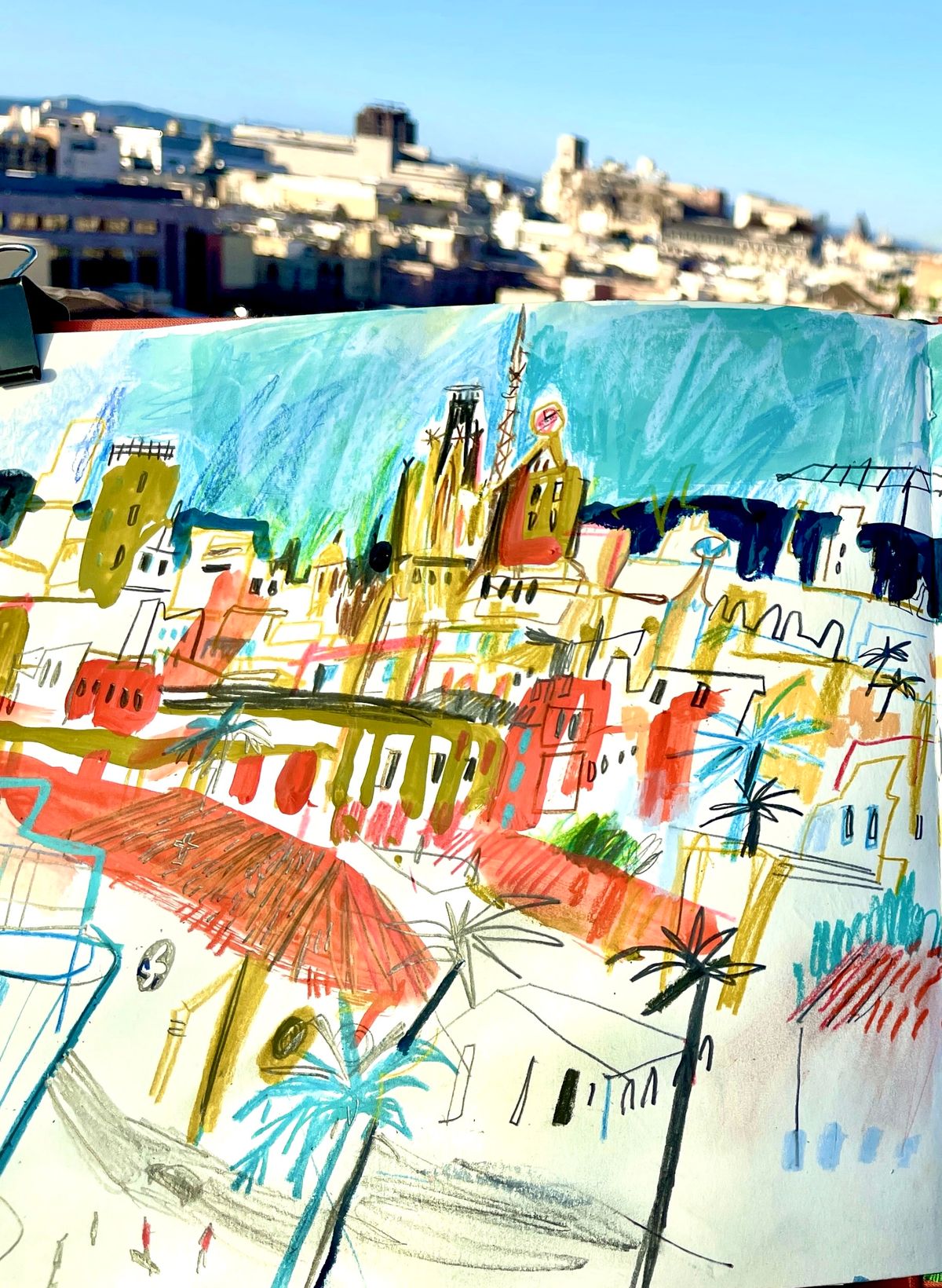
Barcelona from a rooftop, by Maru Godàs.
I’m a graphic designer by training, and I’ve always worked on representing things visually with a specific purpose. For a long time, I had this hidden desire to become an illustrator, and I eventually started taking drawing classes and painting in private. At some point, I began working as an illustrator with a bit of impostor syndrome; but little by little I gained confidence.
One day, I came across a group of people drawing in the street. I asked what they were doing, and they told me it was urban sketching — this was still very early on, around 2011 or 2012. It all started with Gabriel Campanario and a group of people who connected through Flickr and gathered to draw in the streets. He was living in Seattle, working as a journalist and creating this kind of visual chronicle of the city. That’s the movement I became hooked one. Then I witnessed the boom in Barcelona, which is now home to one of the most active and vibrant urban sketching communities.
Today, urban sketching also goes hand in hand with sharing through social media and the broader popularization of art, which has opened the field to many more people. There’s an interesting ecosystem that started on Flickr or Facebook, later moved to Instagram and TikTok, and now includes newsletters, local and national groups, and international gatherings.
But there’s also a strong sense of community when you travel. Urban sketchers tend to be travellers by nature: what draws you to urban sketching is the possibility of traveling, and at the same time, you travel to draw. Even when you’re traveling alone, there’s always a list of people or a local group you can reach out to. And because people within these communities often have a lot in common — they all choose to see the world this way — real friendships naturally grow from it.
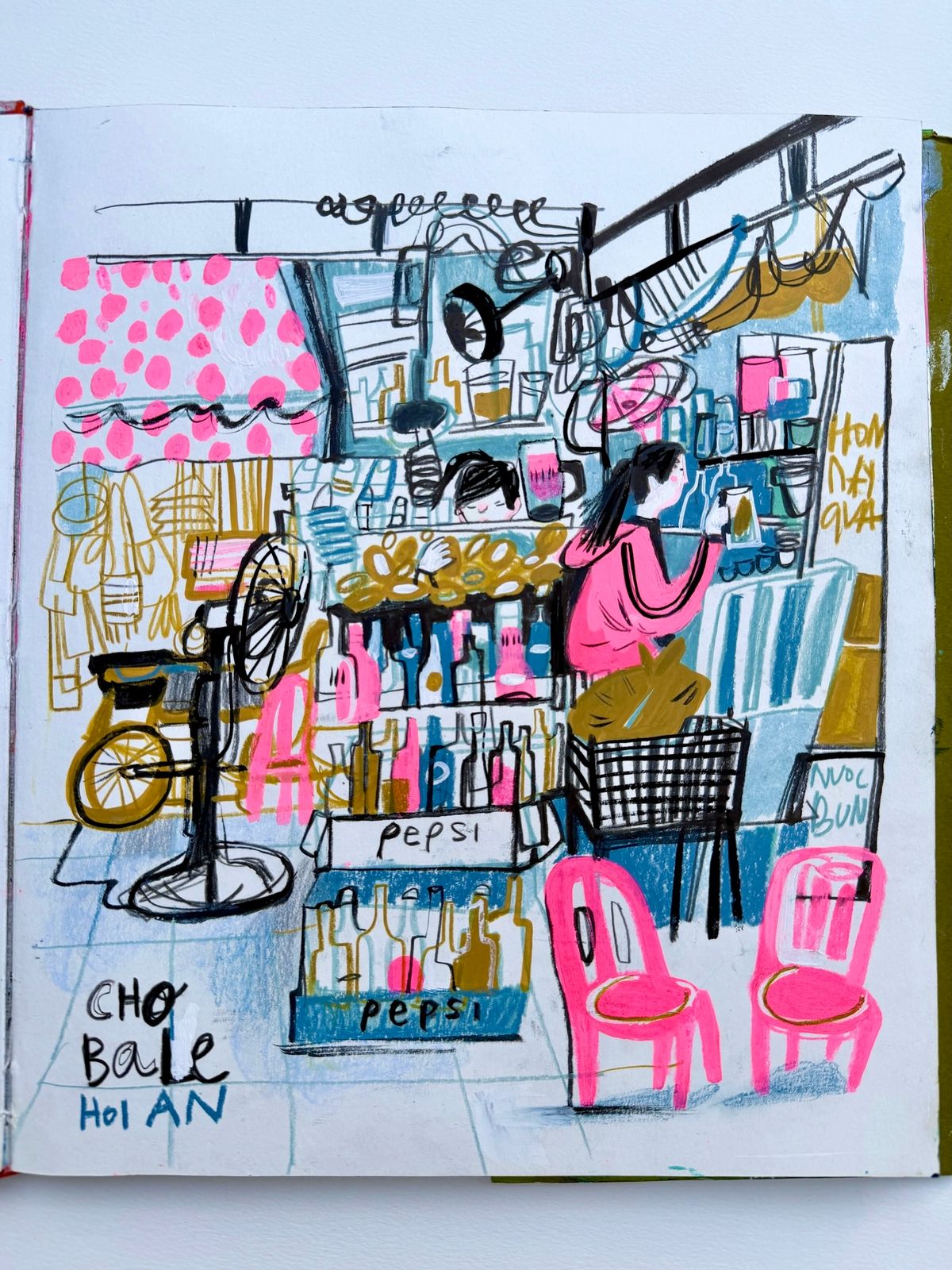
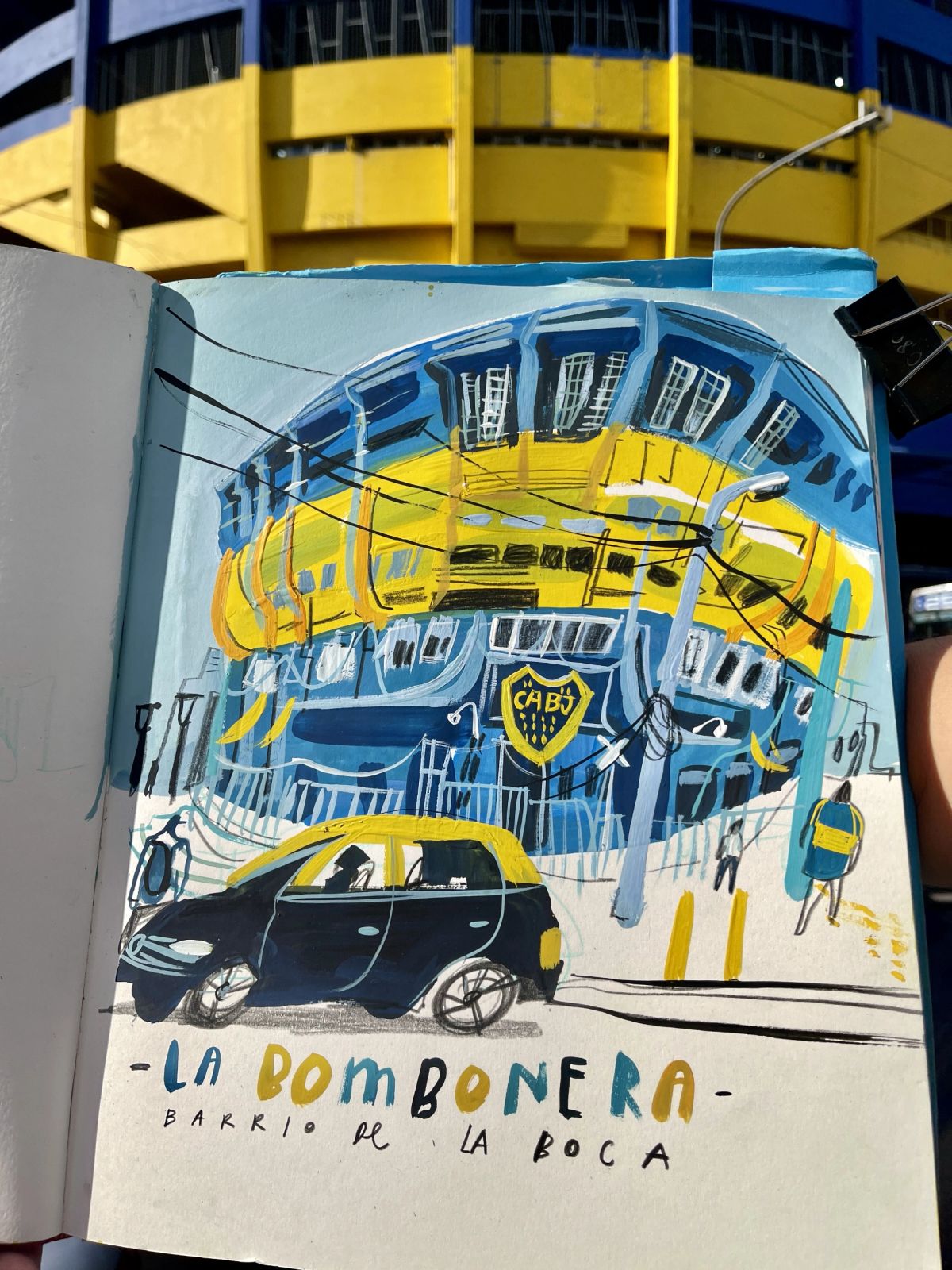
Two urban scenes by Maru Godàs: A store in Hội An, Vietnam, and La Bombonera stadium in la Boca neighborhood, Buenos Aires, Argentina.
Thanks to urban sketching I have changed both my style and the way I work. It’s a very open community, where nobody judges you or gives you grades. People with incredible technical skills coexist with people who have just started drawing. And that has allowed us to understand art differently, where imperfections are also beautiful.
I have a very ambitious approach: I try to draw everything. Reality and cities are full of people, open and empty spaces, stains, imperfections… and I find all of it fascinating. I also try to maintain what I call an “innocent gaze”: a sense of curiosity, of representing what you see without overanalysing it. Sometimes I simply hold on to a composition of shapes I like, or the face of someone passing by.
In the end, streets have things that are completely unique. I often compare it to music: you can take a guitar out into the street and start to play and improvise. But you can also add an amplifier, go into the metro… Urban sketching works in a similar way. We carry a small folding chair, a mini kit, we have limited time, and we sit wherever something inspires us. I tend to bring different materials as well. I really love gouache, which gives my work a more alternative style, and I break away from strict conceptions of perspective and projections.
At first, I felt embarrassed to represent cities this way. But because people don’t judge you, and because my style resonated with others, I began to feel happy working like this.
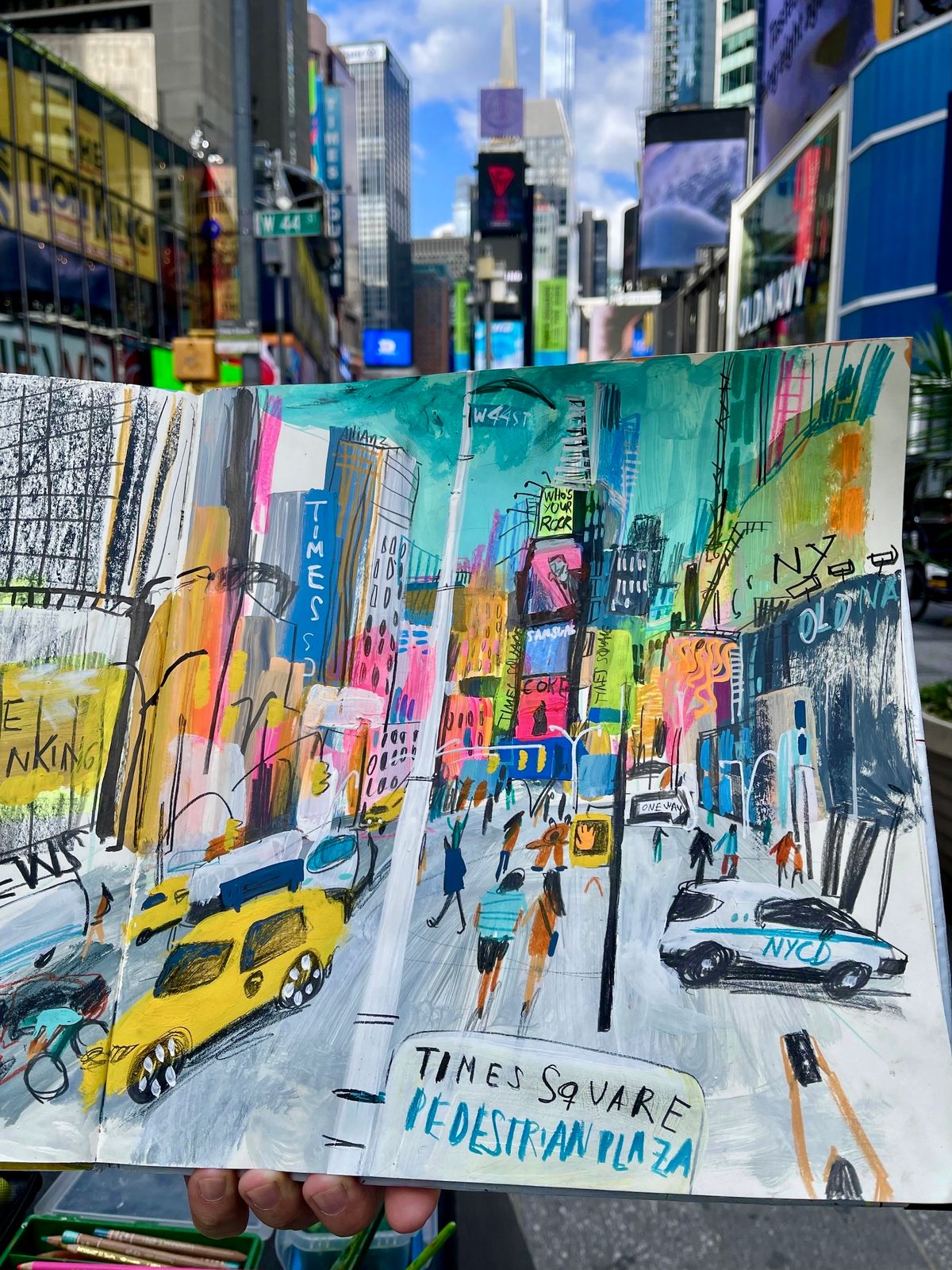
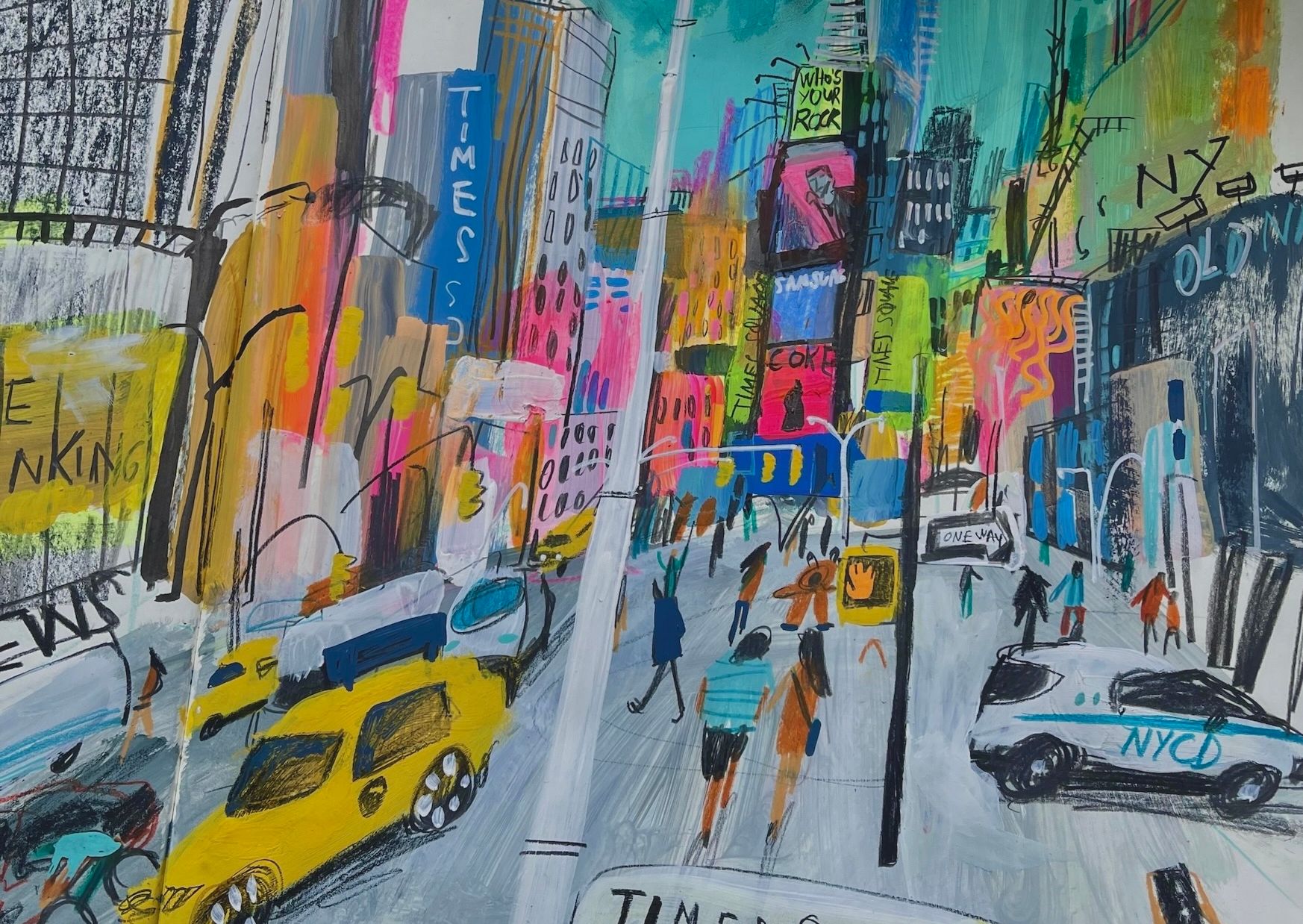
New York City's Times Square, by Maru Godàs
Absolutely. The city is central to what we do because we love drawing it. When we represent it, we observe and look for shared characteristics: what do the shutters look like? The windows? Which colours dominate? What makes Madrid feel like Madrid? What makes Barcelona feel like Barcelona?
Often, those of us who live in a place don’t notice these elements. But when you see other people’s drawings, you can sometimes recognize the city just by the signals, the wiring, or even how people are dressed.
It’s also a very immediate way of capturing change. When I started, around 2012 or 2013, no one was using electric scooters. Now, 90% of the people you catch while drawing are either riding one or looking at their phone.
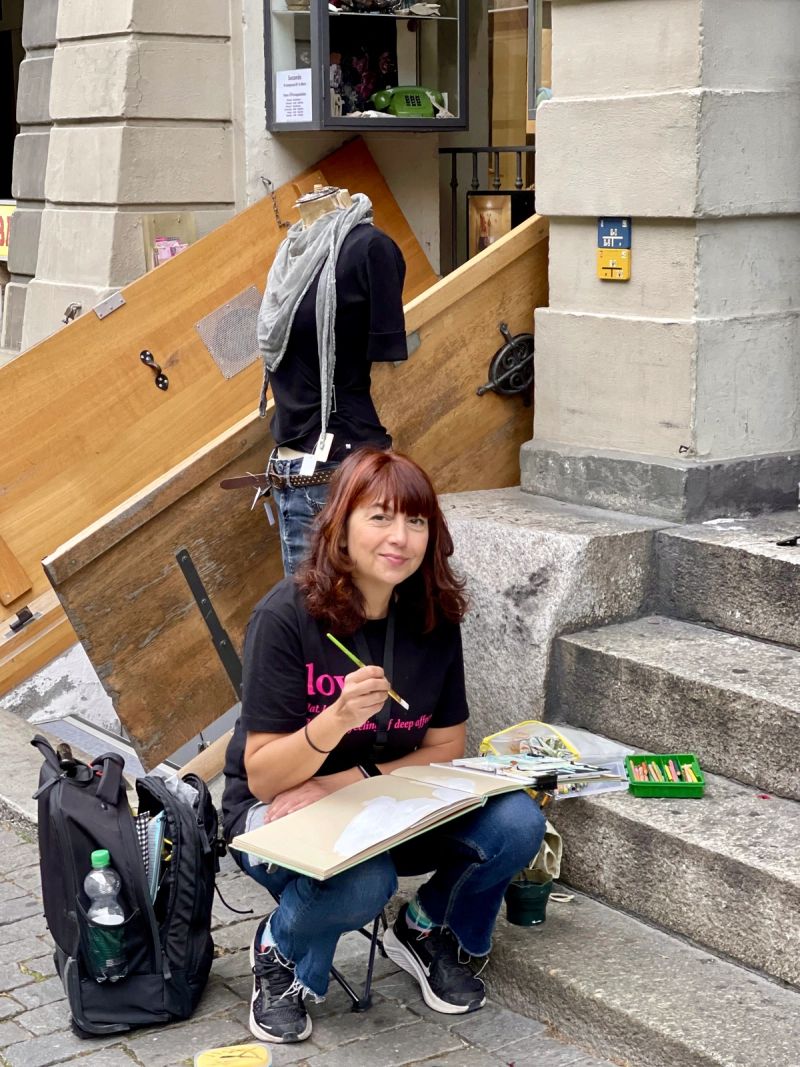
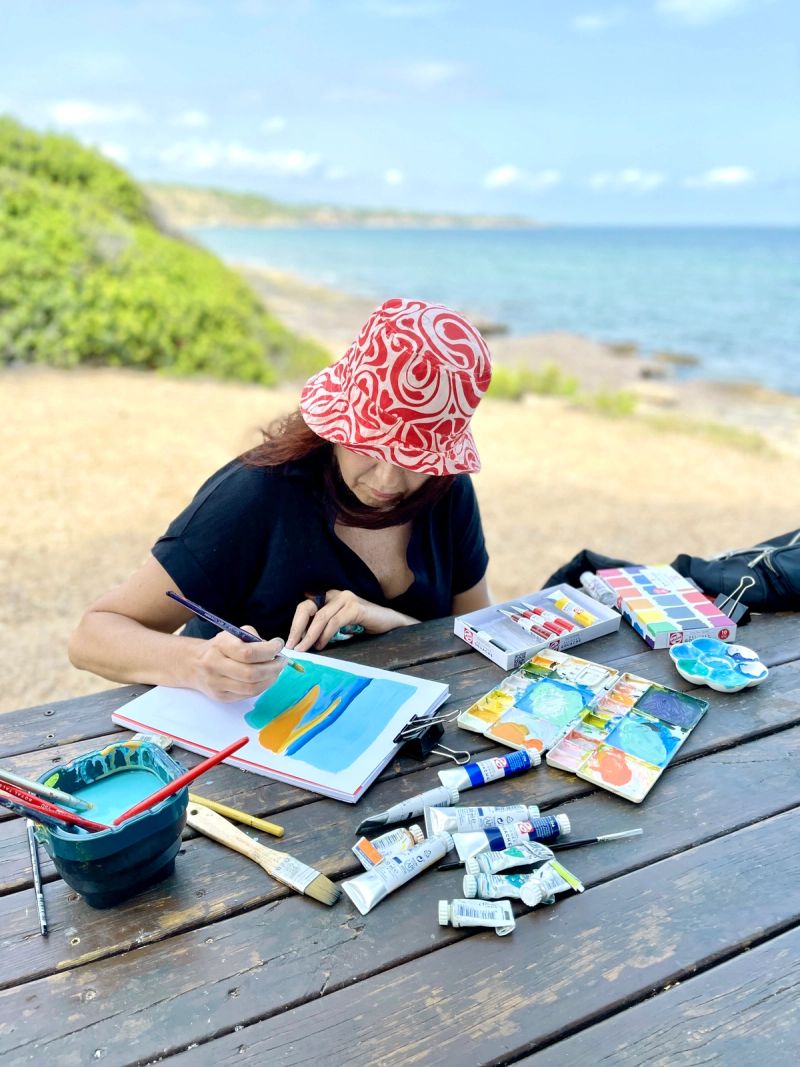
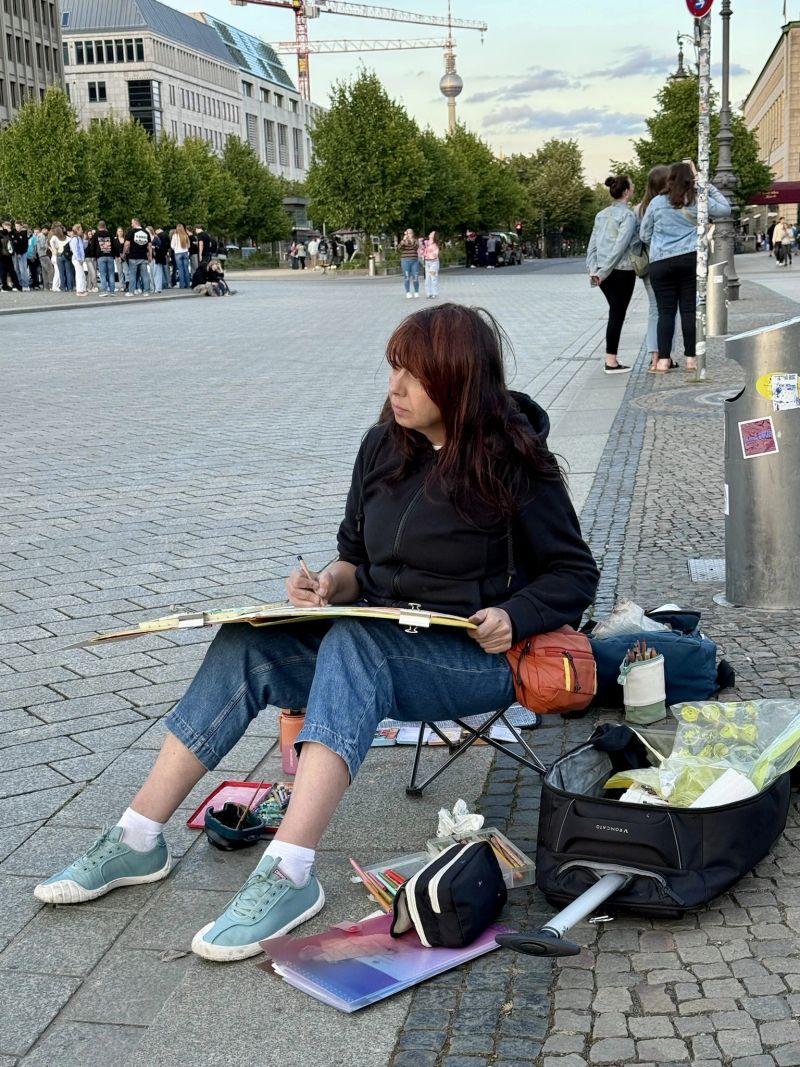
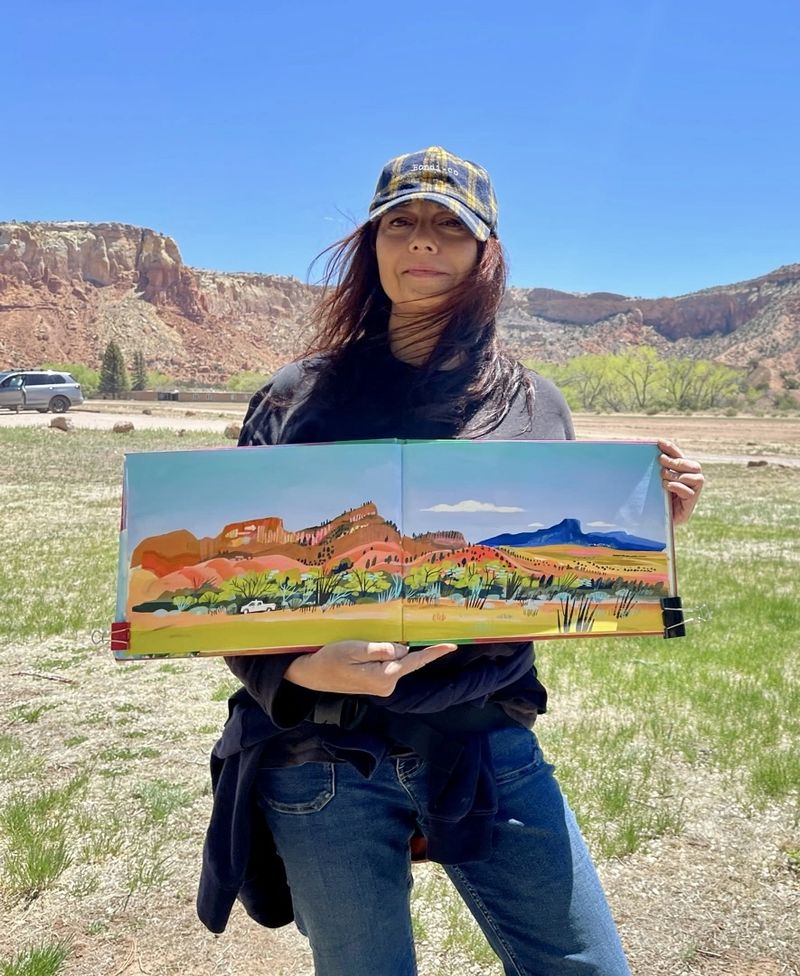
Maru Godàs creating new sketches all over the world.
There’s something almost “medieval” about the fact that people travel to places because they’ve seen drawings of them. Once you put on the urban sketcher’s lens, it stays with you — you start moving through the world seeing drawings everywhere.
Because when you learn how to draw — and how to draw the city — you sit down, observe and instinctively know where to begin. You must spend some time really looking, but quite quickly your brain will start doing this exercise almost automatically.
What it’s doing, essentially, is translating reality into drawing. And this is the part of the brain we use less and less today, because we rely so heavily on digital systems of representation. But it’s an ability we’re born with. Humans were already drawing in prehistoric times — we’ve always had this capacity to interpret and generate images. Once you repeat the process of “eye, brain, hand, paper, drawing” eventually it becomes natural. You begin to see the world that way.
And when you draw something, the memory it creates is very different from the one you get from taking a photograph. When I look at my drawings, I can recall exactly where I was, what I was doing, what the place smelled like, what I was listening to, even what I had for lunch. Because you become highly receptive through all your senses, the memory of that moment becomes much more vivid.
These decisions you make — whether to include a window or leave it out — come from a place of absolute freedom, and I think that’s incredibly important. In the end, drawing is a lot like life: you choose what you love about a city, and in doing so, you reaffirm yourself through those choices.
I think this exercise really matters for the city itself, because when you decide to draw certain elements, they end up becoming part of what I call your “personal iTunes” — your own gallery of beautiful things. And beautiful things are things you automatically begin to love.
You would feel sad if they disappeared, and instinctively, you want to take care of them. It becomes an attitude of love toward the city, its details, and even the things that aren’t perfect.
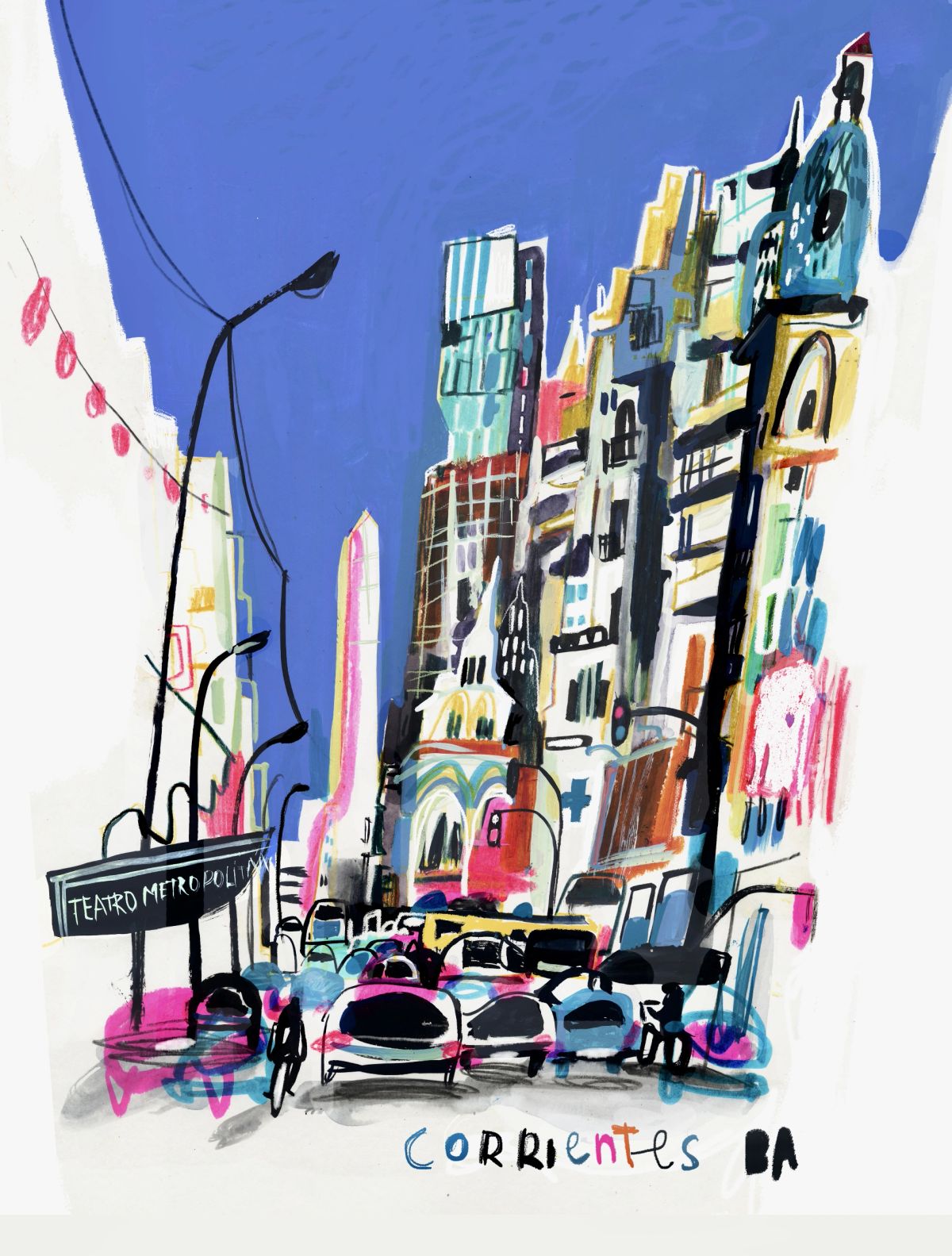
Buenos Aires' Avenida Corrientes, by Maru Godàs.
I’d take them on a route from the mountains to the sea, crossing through the city centre. One of the most beautiful things about Barcelona is how the landscape keeps changing. From Montjuïc or Collserola, down through Passeig de Sant Joan, Ciutadella, and Barceloneta. You can pass through the Gothic Quarter or Rambla de Catalunya, where you see both more modernist and more contemporary urban layers, and places like Park Güell or Gràcia. And I’d take them to a traditional residential neighbourhood — something we’re increasingly starting to miss.
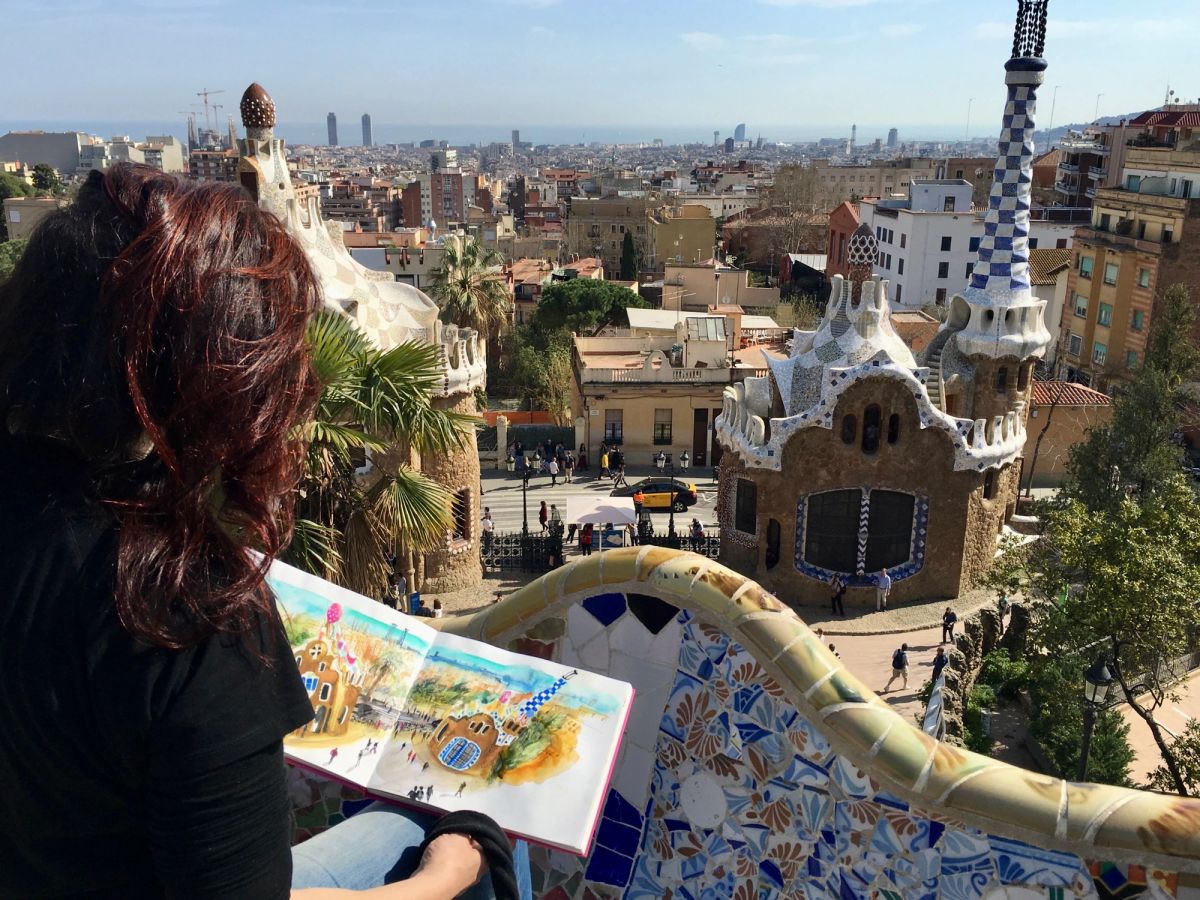
Maru drawing at Barcelona's Park Güell.
I like hearing a festival from a distance, the way the bass sounds as you get closer. Or children shouting during class breaks.
Somewhere I haven’t been yet: Japan. ●
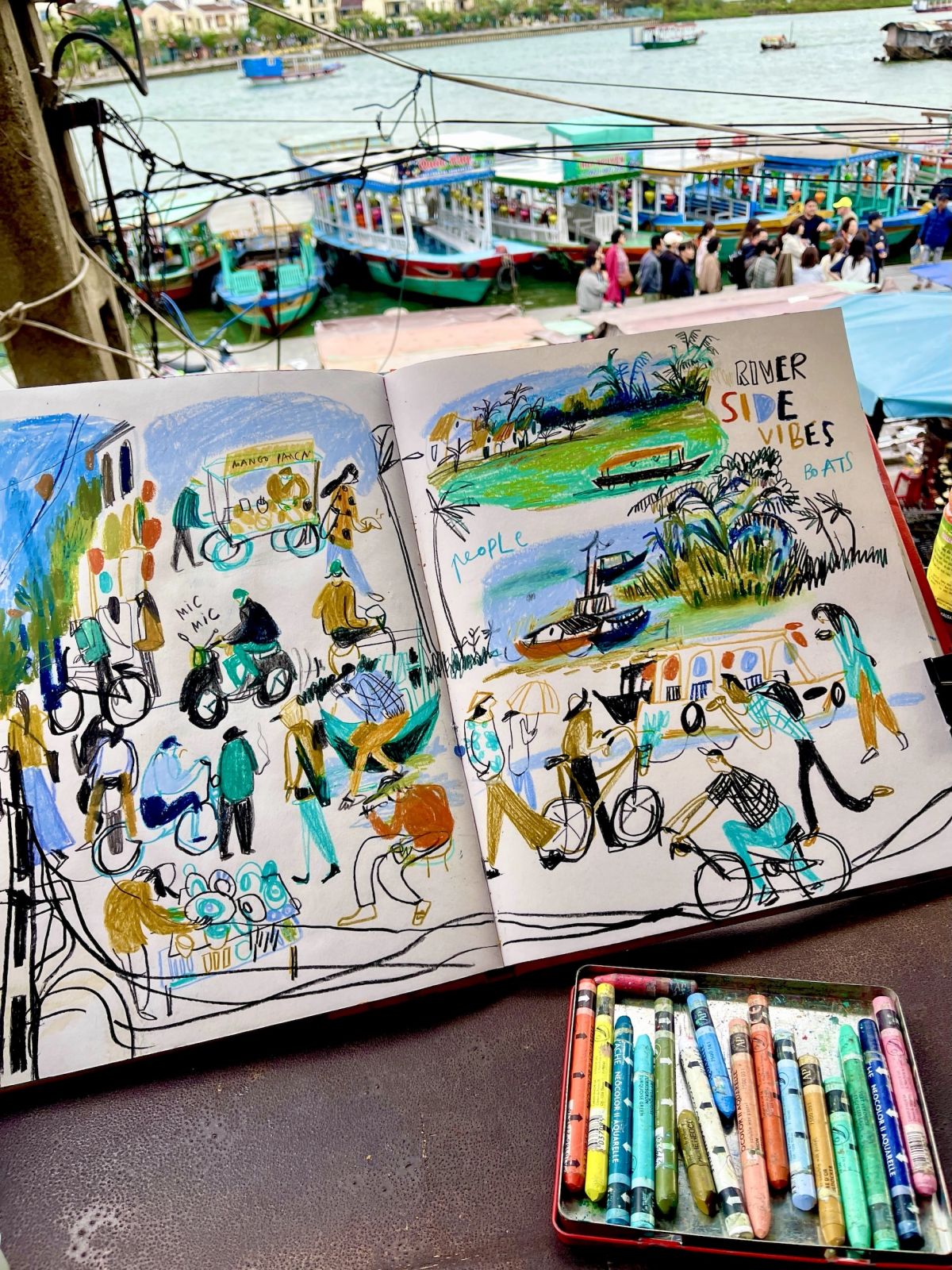
A Vietnamese street scene, by Maru Godàs.
Related Articles
.jpg?w=1000&q=80&fit=max&auto=format)
What's New at the New CitiesToBe?
Beyond Books and Shelves: Four Cities Reimagining the Public Library — and Public Life

The Infrastructure You Never Think About