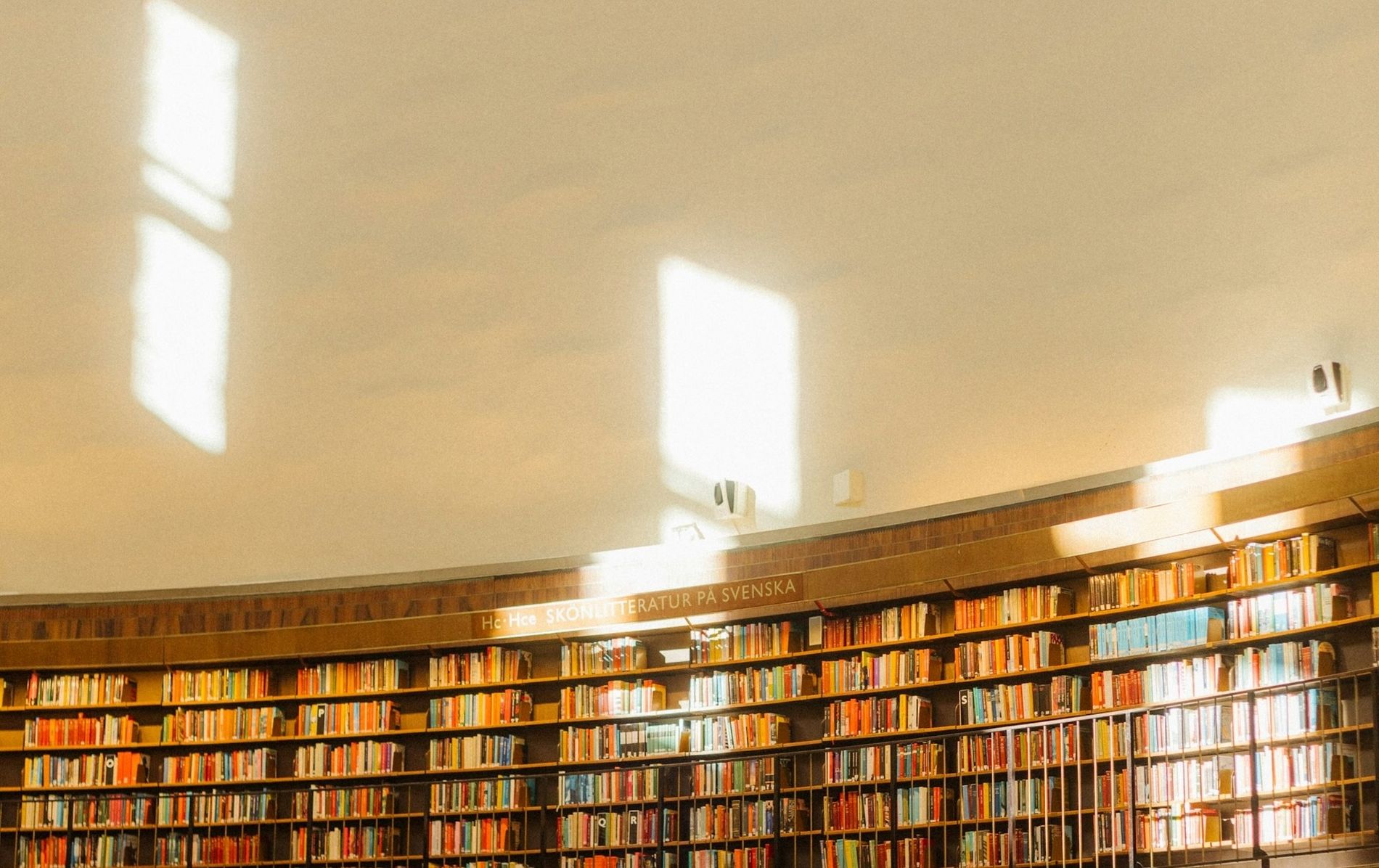
Beyond Books and Shelves: Four Cities Reimagining the Public Library — and Public Life
Beyond Books and Shelves: Four Cities Reimagining the Public Library — and Public Life
On a sunny spring afternoon in Madrid, before the attentive audience gathered at the Hotel Palace — myself among them — Tommi Laitio proposed a small game to break the ice during the panel he was moderating on public libraries at Bloomberg CityLab: turn to the person sitting next to you and share the first word that comes to mind when thinking of a public library. I turned to the woman beside me and, without a microsecond of hesitation, a crystal-clear answer came out of my mouth: happiness.
As simple as it was transparent, as hedonistic as it was unequivocal, my answer captured what libraries have always been to me: an ocean of delight to drift through weightlessly among books and stories; an oasis of calm where time slows down and curiosity takes over. My neighbour added another layer, sharper and perhaps wiser: community, she said. Around the room, other answers floated through the air — from “palace for the people” to “free internet”, including “one-stop-shop”, “fun”, and, of course, “books”.
Of course — or perhaps not only books.
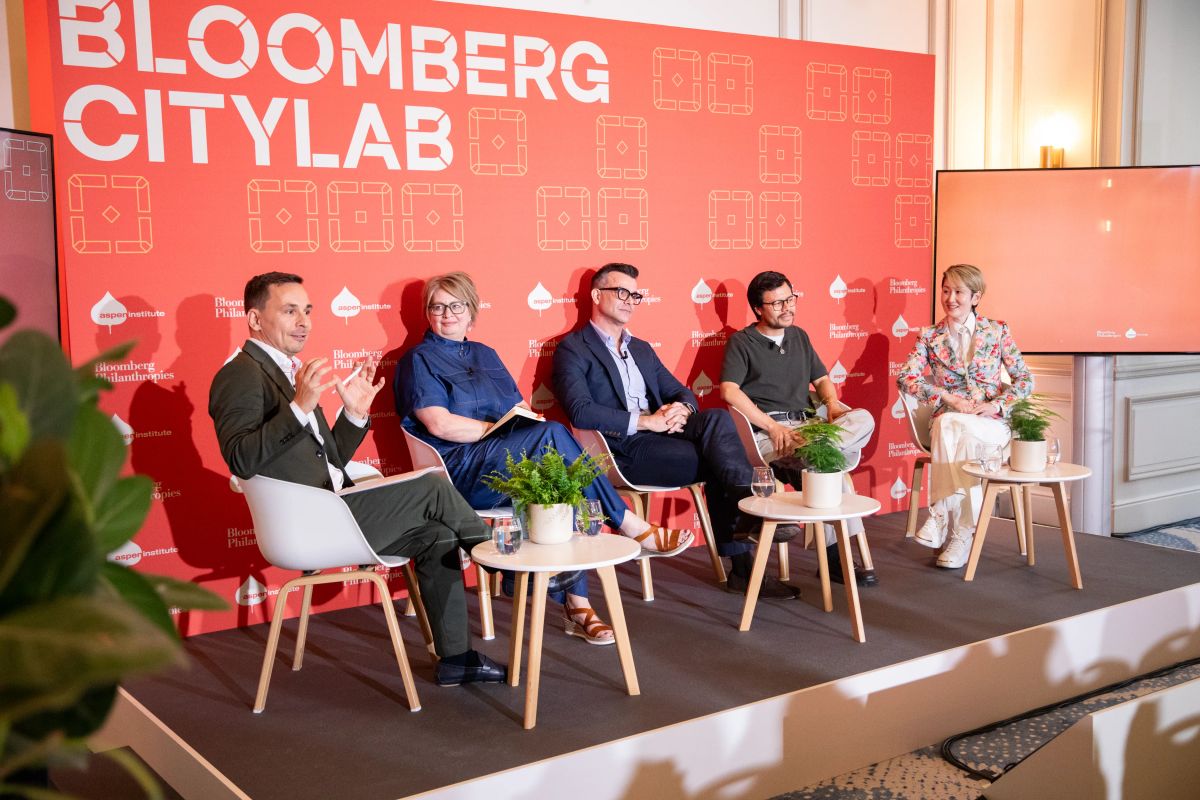
Tommi Laitio, Marie Østergaard, Brian Bannon, Alexander Zambrano and Gene Tan during the public libraries panel at Bloomberg CityLab Madrid 2026, April 27, 2026. Image by Bloomberg Philanthropies.
Laitio, who served as Helsinki’s first Executive Director for Culture and Leisure and oversaw the Finnish capital’s public library system, went on to present part of his research into the evolving role of libraries around the world. He spoke of libraries as places for growth and wonder, where reading becomes intertwined with learning, creativity, artistic experimentation and civic expression. Of libraries that function as civic centers — the social and cultural heartbeats of their communities. Of others that focus on accessibility and support for vulnerable populations, acting as liberators or support hubs far beyond the promotion of literacy or culture alone.
As always, context — and the political will behind a public library — determines the role it ultimately plays within the complex machinery of urban life. And as always, there is no single formula. Because, as Laitio — now principal at Studio Laitio, an urban consultancy focused on public life — put it: “There’s many ways of being a great library.”
As I listened, my mind drifted through all the different things libraries can become: libraries as civic laboratories, as spaces for personal growth, as democratic, accessible places. Places cities have long imagined as infrastructures for collective life and exchange — from the legendary Library of Alexandria in the third century BC, conceived as a beacon of Hellenistic culture and knowledge, to the extraordinary Gabriel García Márquez Library, inaugurated in Barcelona in 2022, which today serves equally as a study space, podcast recording studio and climate refuge during the Mediterranean summer heat.
Beyond theory, cities are developing hybrid strategies shaped by their own realities and urgencies, all trying to answer the same simple yet fundamental question: what should a public library be — and be for — today? New York, Singapore, Aarhus and Bogotá — all part of the same Bloomberg CityLab panel — offered four strikingly different, yet deeply connected answers.
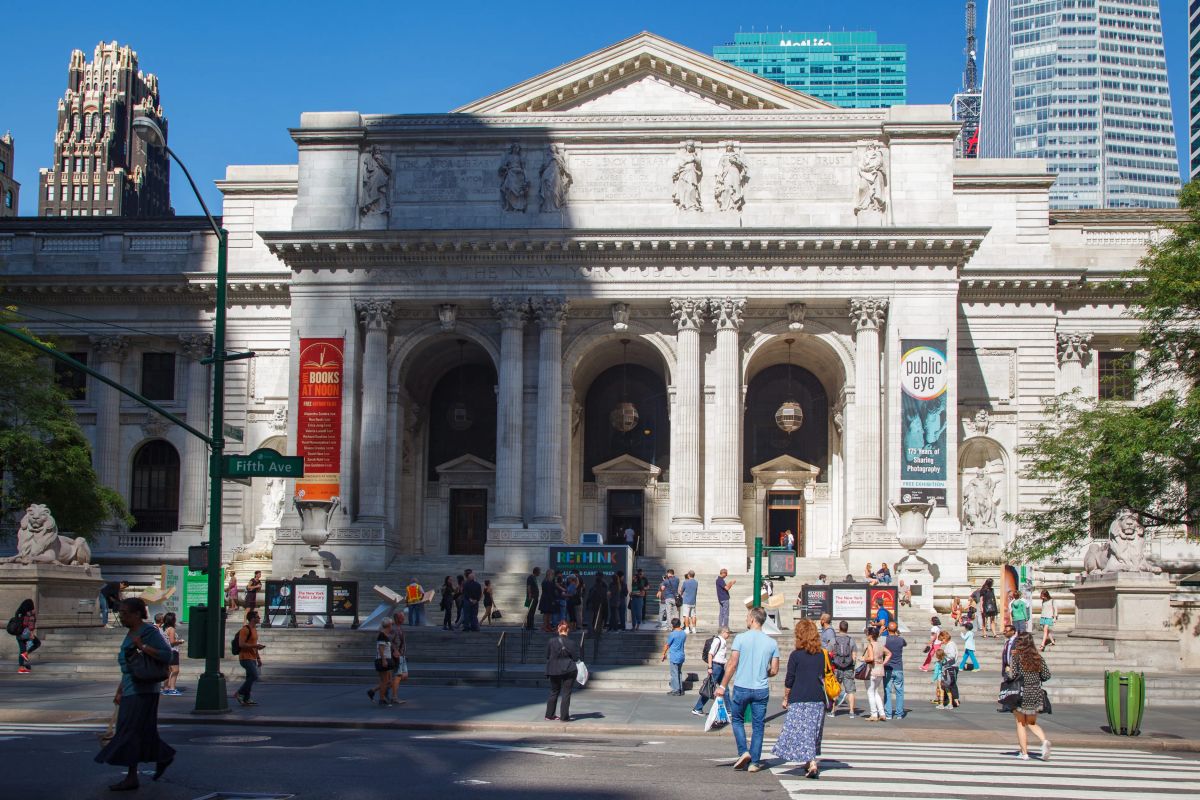
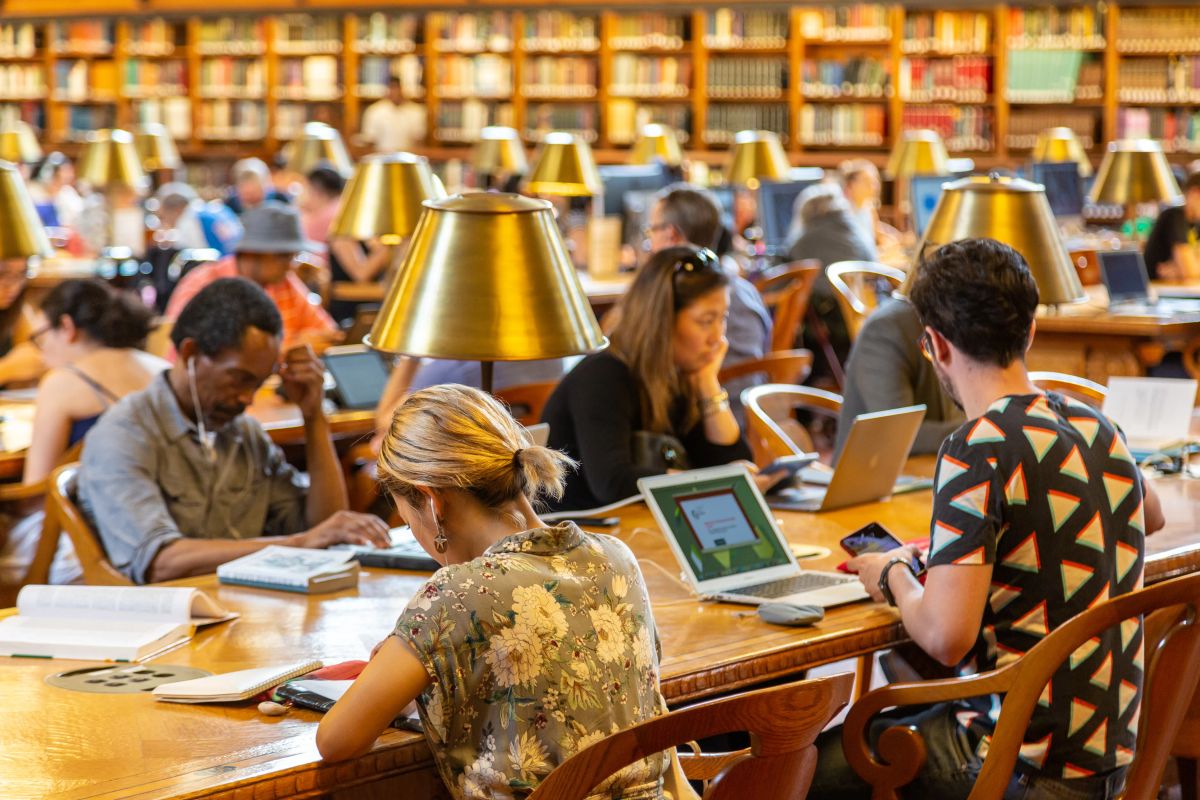
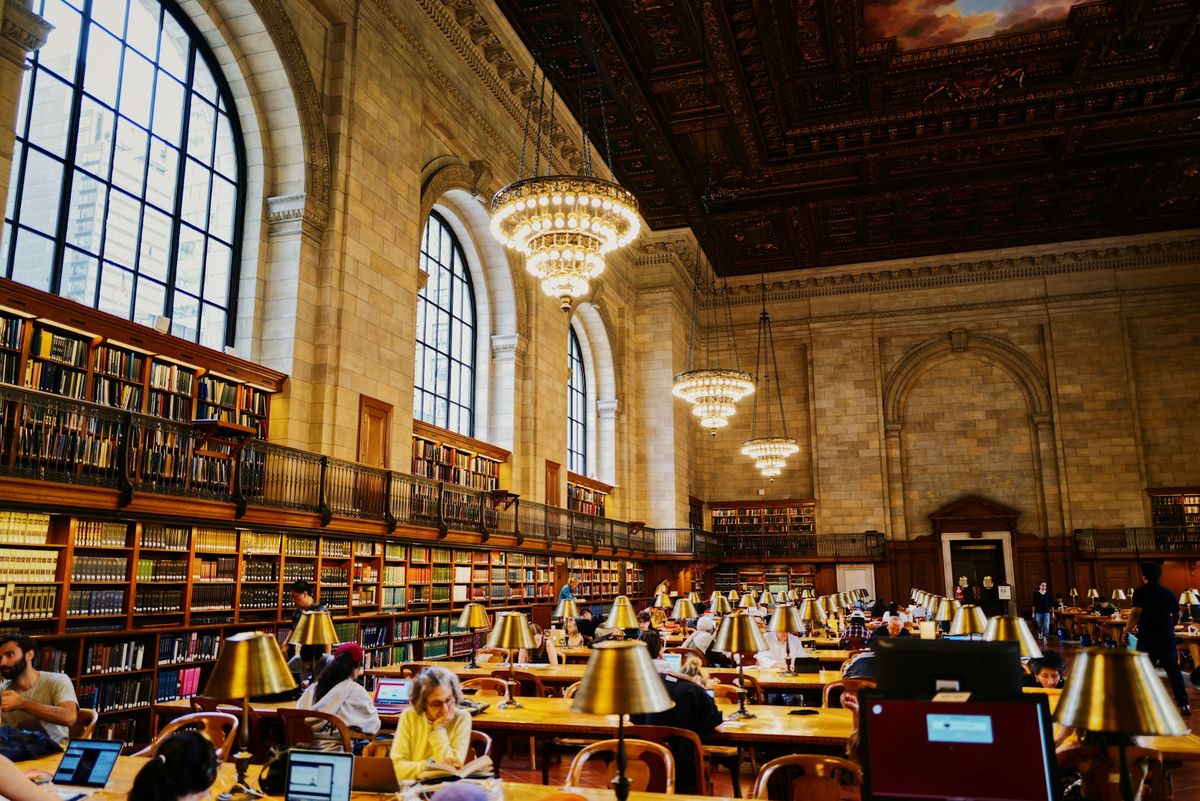
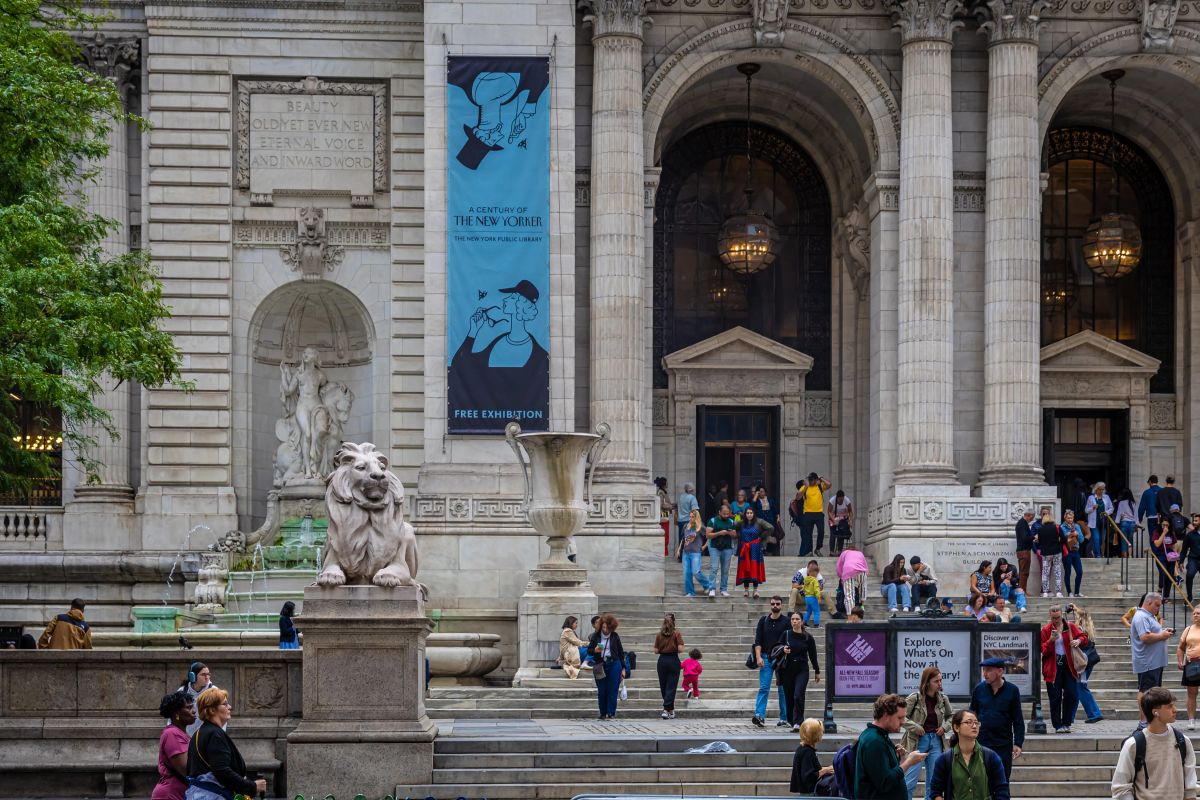
The New York Public Library Main Branch | Images by Alexandre F Fagundes (1), Sergii Figurnyi (2), Alexey Fedorenko (4) on Shutterstock, and Fan Yang (3) on Unsplash
At a moment when many institutions are rushing to reinvent themselves, New York is doing something almost counterintuitive: doubling down on reading.
Serving nearly four million people through 88 neighborhood branches, the New York Public Library (NYPL) has made a deliberate strategic choice to refocus on what might seem obvious — books. But not in a nostalgic sense. In a deeply social and political one.
“One of the things I’ve said throughout my career is libraries are more than books,” Bannon explained. “I changed that recently to saying libraries are books and more.”
Behind this shift is a growing concern: fewer people in the city — and even more worrying, fewer children — are reading for pleasure, and the consequences go far beyond literacy rates. Emerging neuroscience points to the cognitive impact of this decline: reading as a practice unlocks what researchers call deep reading, which in turn enables deep thinking. Without it, the implications ripple outward: weaker critical thinking, diminished empathy and, ultimately, fragile democracies.
Seen this way, the library becomes something essential — perhaps one of the last public institutions capable of defending reading as a collective, constructive practice.
And crucially, the desire is still there. NYPL’s “reading parties” — where thousands gather simply to read quietly together — reveal a latent demand for shared, focused attention. On a freezing winter Saturday night earlier this year, 4,000 mostly young New Yorkers lined up to do exactly that: sit, read and be together.
In New York, the future of the library may look surprisingly simple: people reading alone, but together. A quiet antidote to both digital noise and urban loneliness.
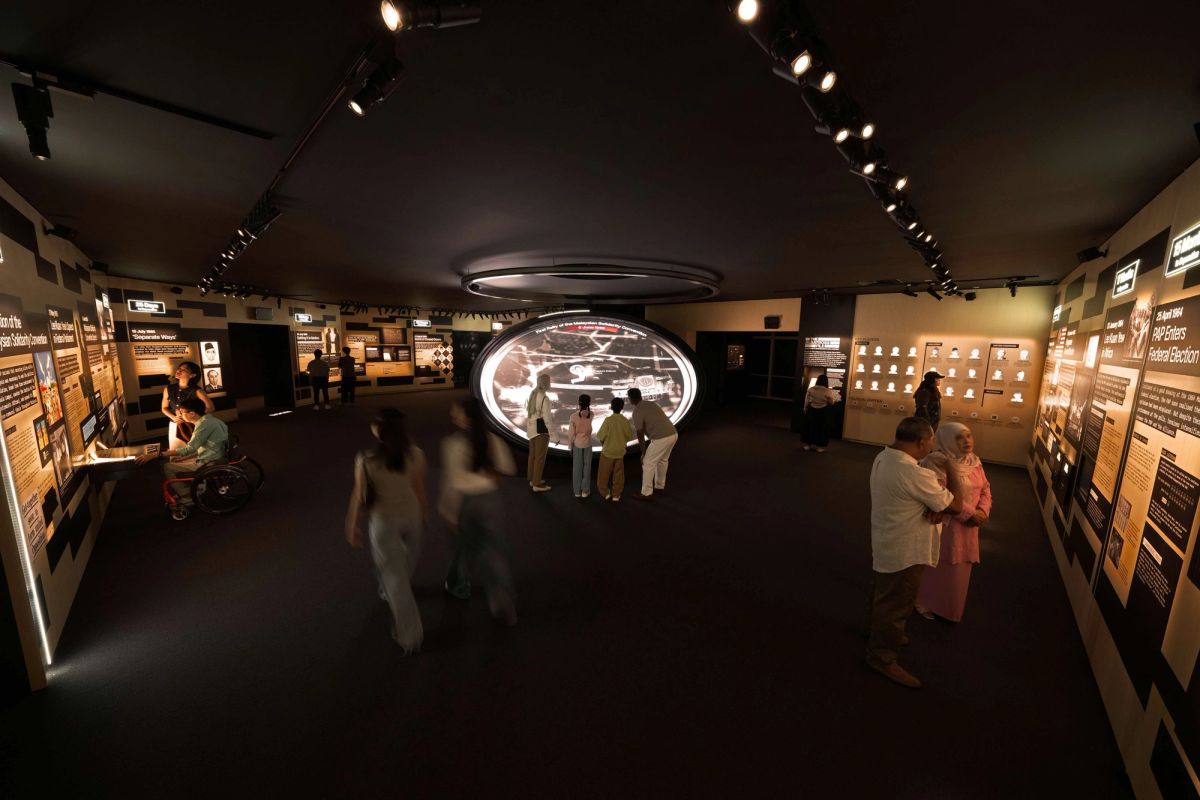
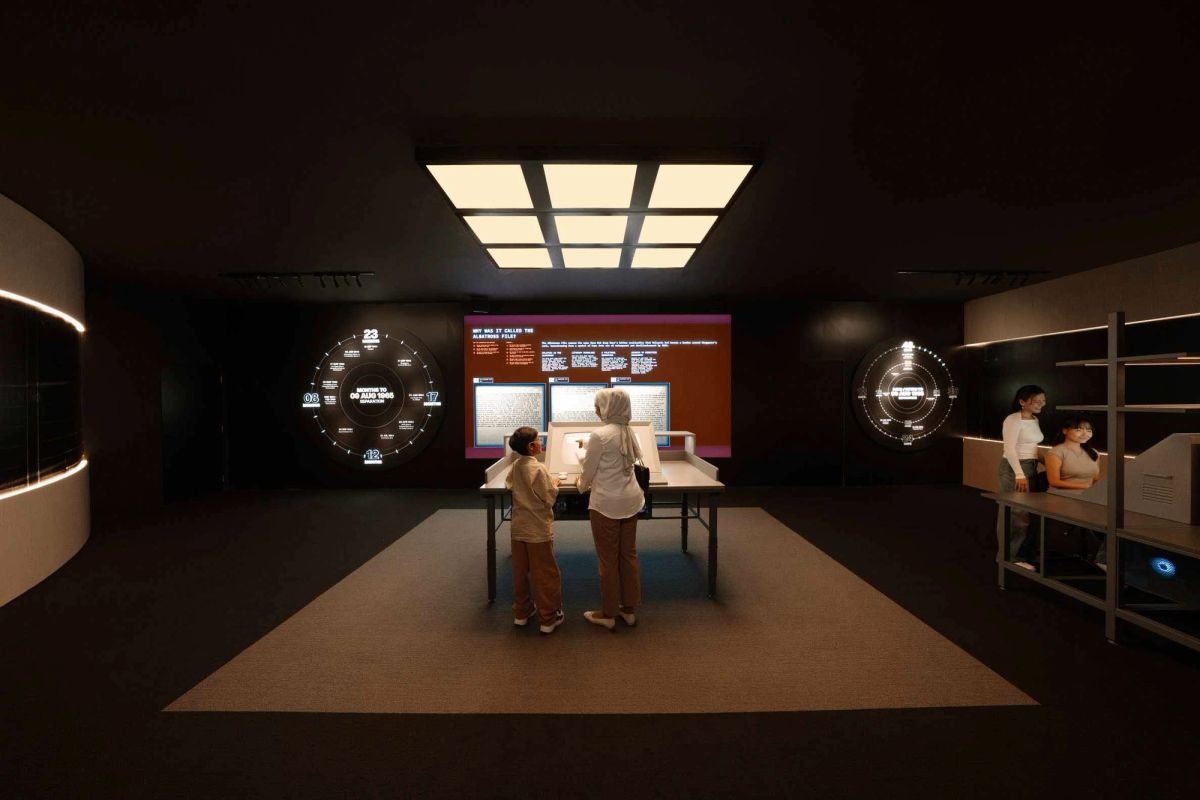
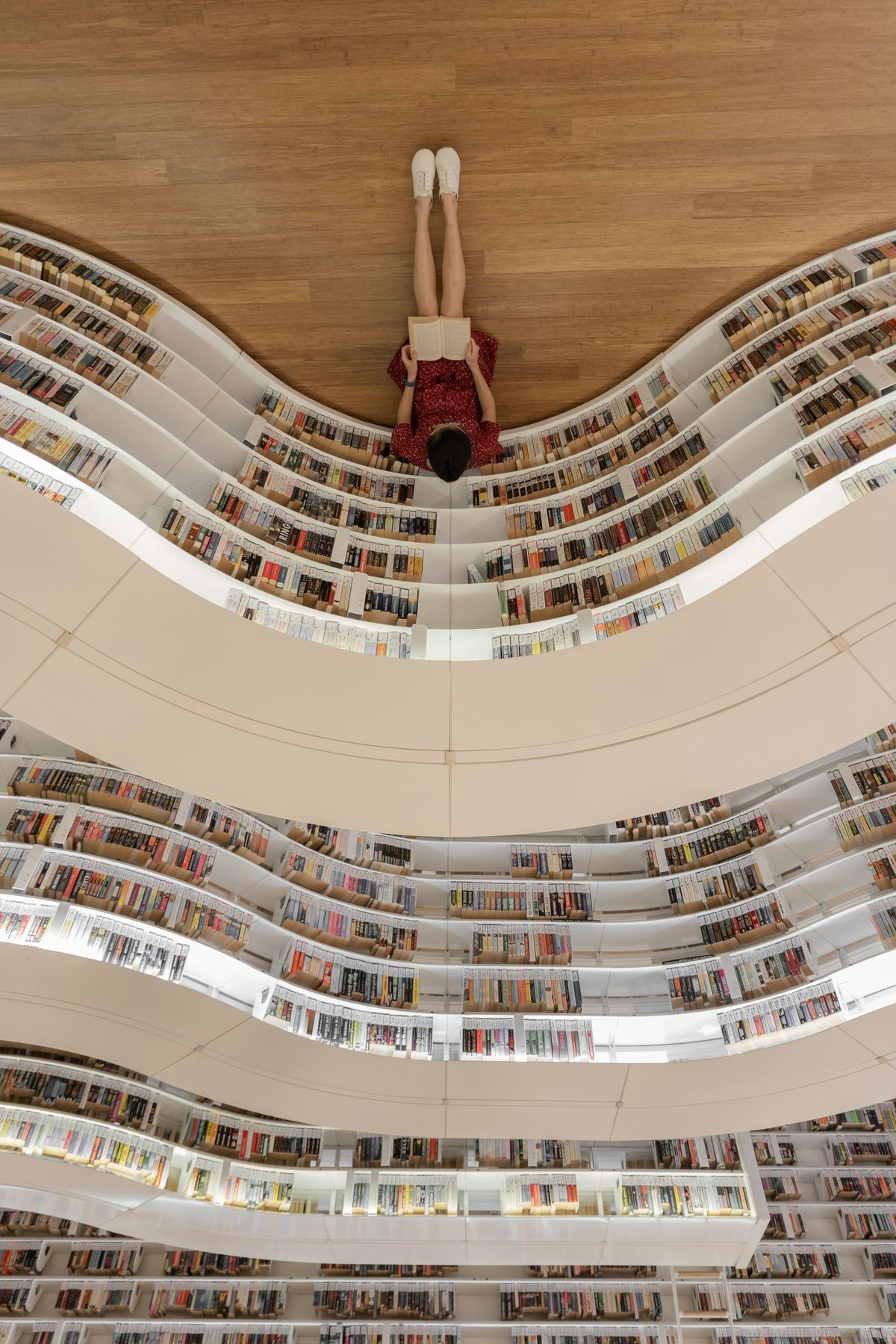
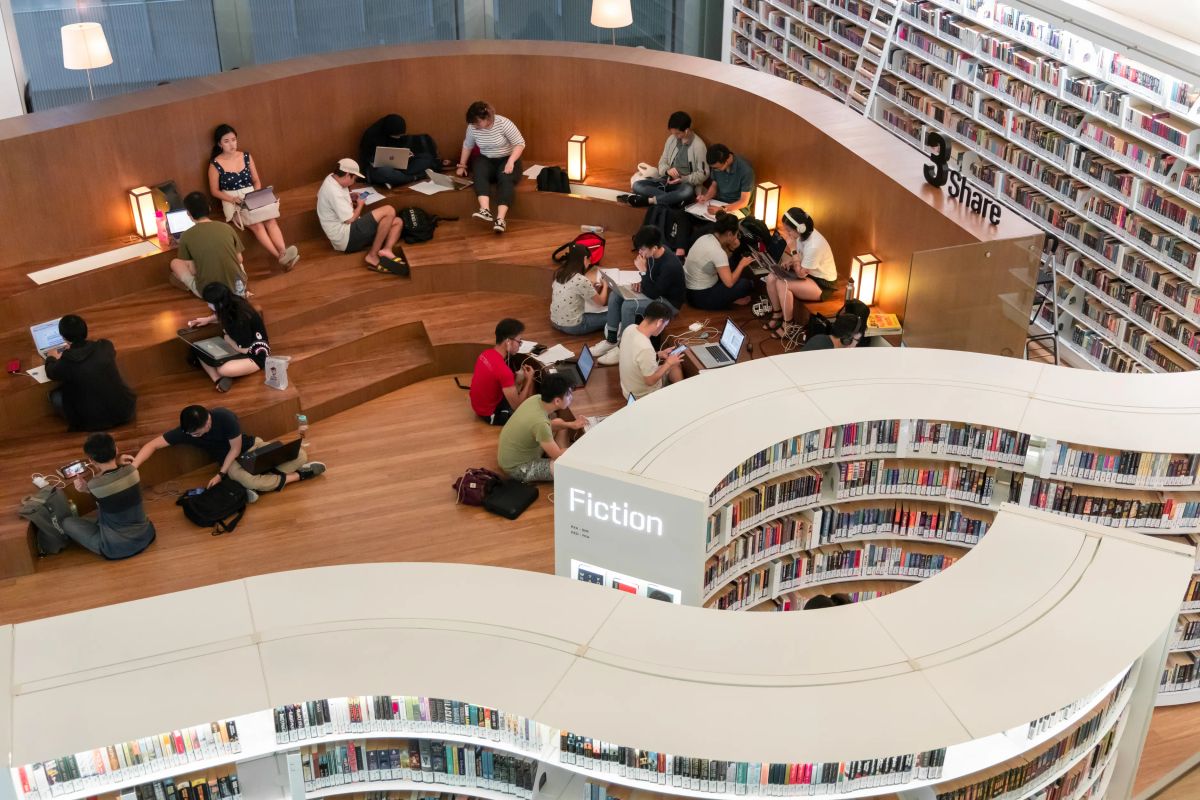
Images from top: The Albatross File exhibition (courtesy of the National Library Board Singapore) | Bottom: Orchard Library, a public library operated by Singapore’s National Library Board (Mark Sarmiento and Wengang Zhai via Unsplash)
If New York looks inward, Singapore looks forward.
Faced with the rise of generative AI — a technology capable of summarizing books, answering questions and arguably replacing certain forms of reading — Singapore’s National Library Board chose not to resist, but to engage.
“When ChatGPT came out, I told myself: I’m going to beat the beast,” Gene Tan recalled. “And the only way to understand the beast is to work with it.”
Rather than accepting a future where reading becomes obsolete, the library is reframing it as something emotional, experiential and collective. The question is no longer simply how to preserve reading, but how to transform it.
Their answer lies in immersive, AI-enhanced environments that turn archival material and historical knowledge into shared experiences.
Tan was commissioned to develop a creative project celebrating Singapore’s 60th anniversary of independence through the Albatross File — declassified documents related to the country’s separation from Malaysia. The result was an immersive installation in which visitors move through narrative spaces blending storytelling, pop culture references and generative AI.
What Tan describes is not passive consumption nor “classical” reading, but emotional engagement — experiences that, in Tan’s words, have made visitors cry. Only after that emotional journey are they invited into a final space — a “chatbook” — where they can interact with the content through AI.
The project captures the pioneering spirit shaping many libraries across Asia today: a shift from the library as a place of collection and access toward something more fluid — a space for generation, co-creation and collective reinterpretation of knowledge.
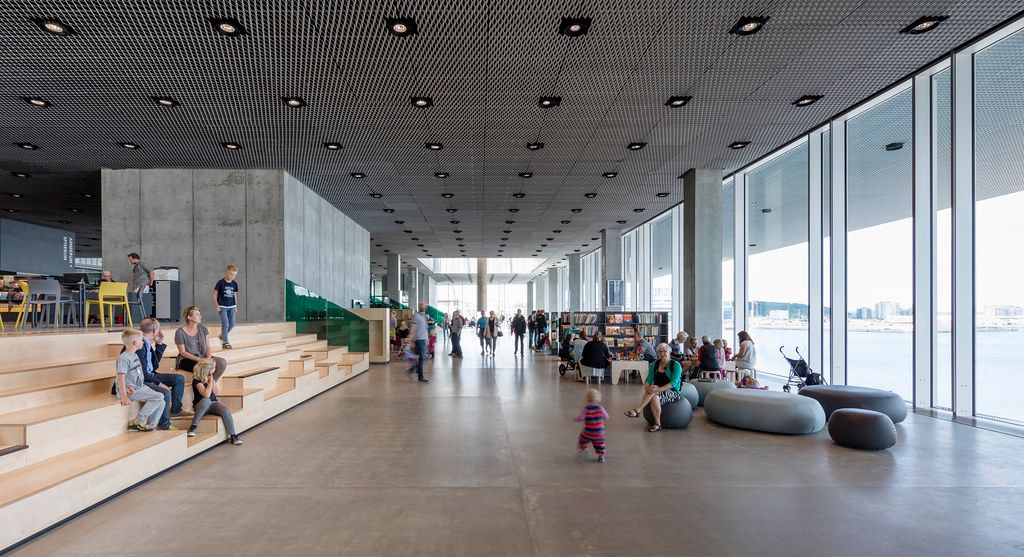
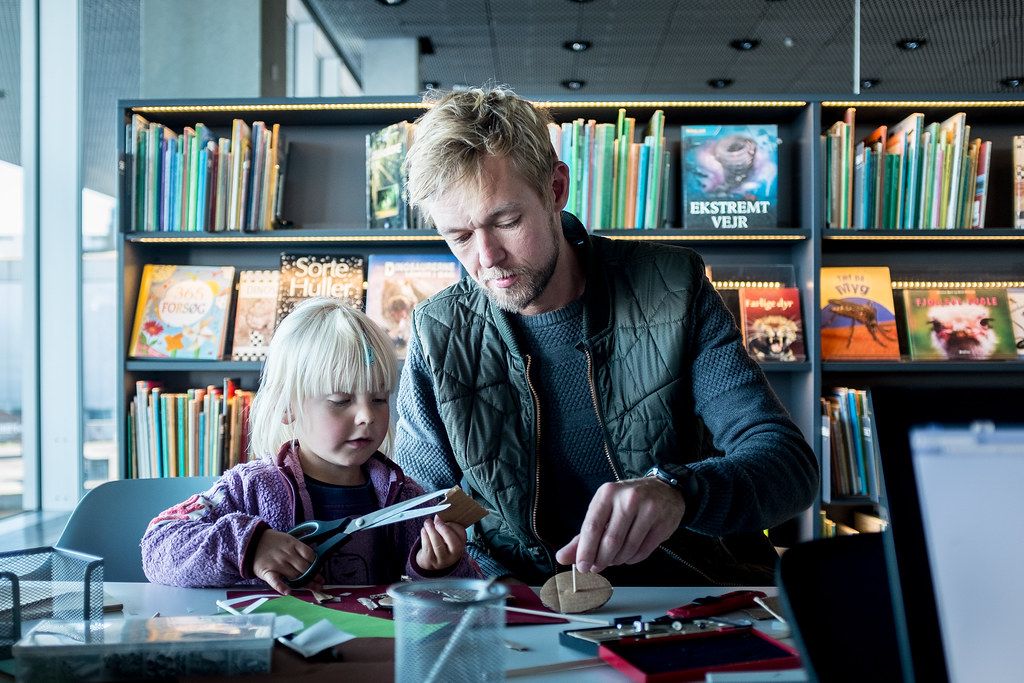
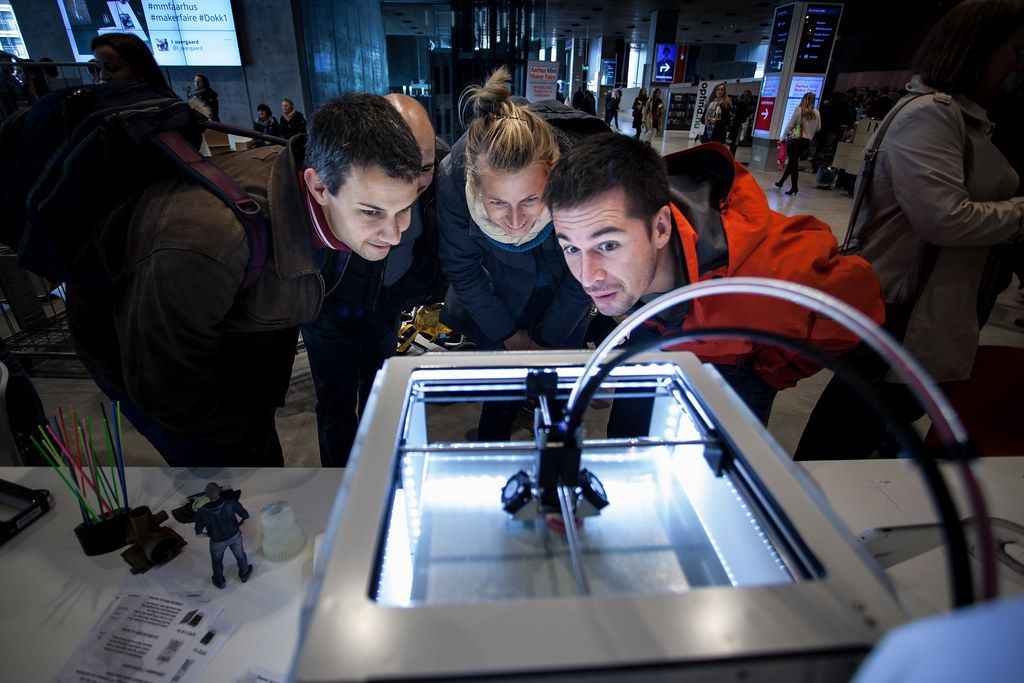
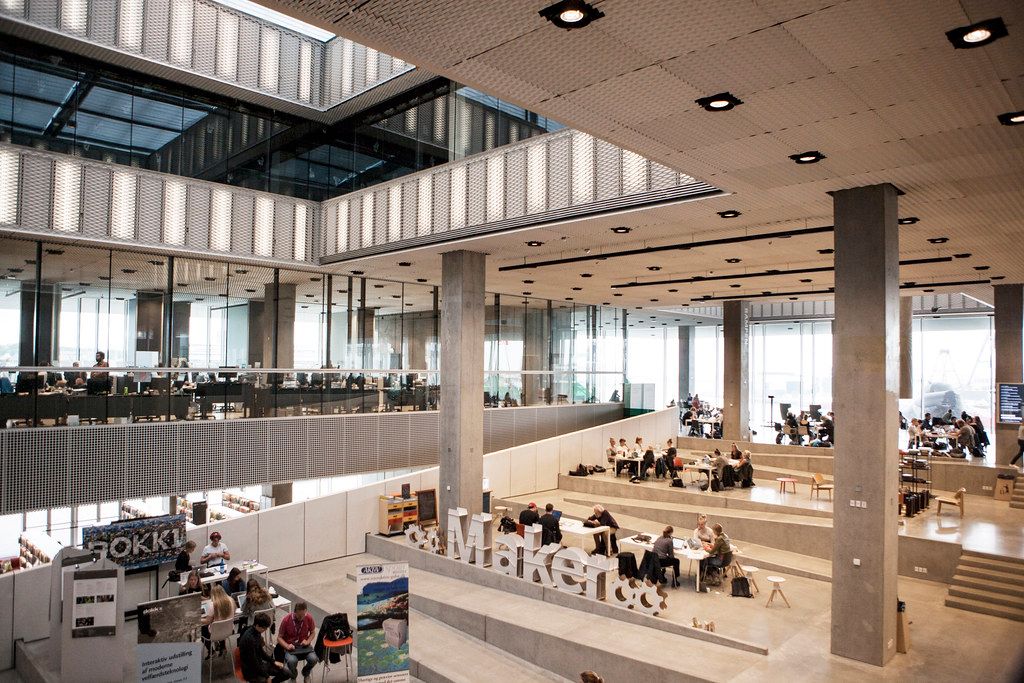
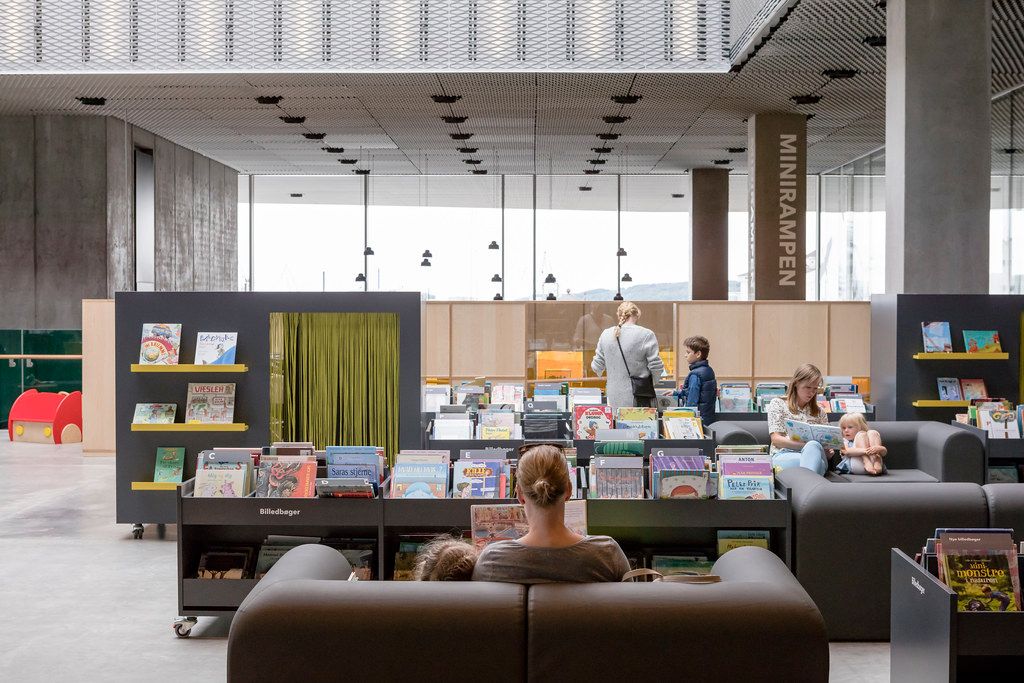
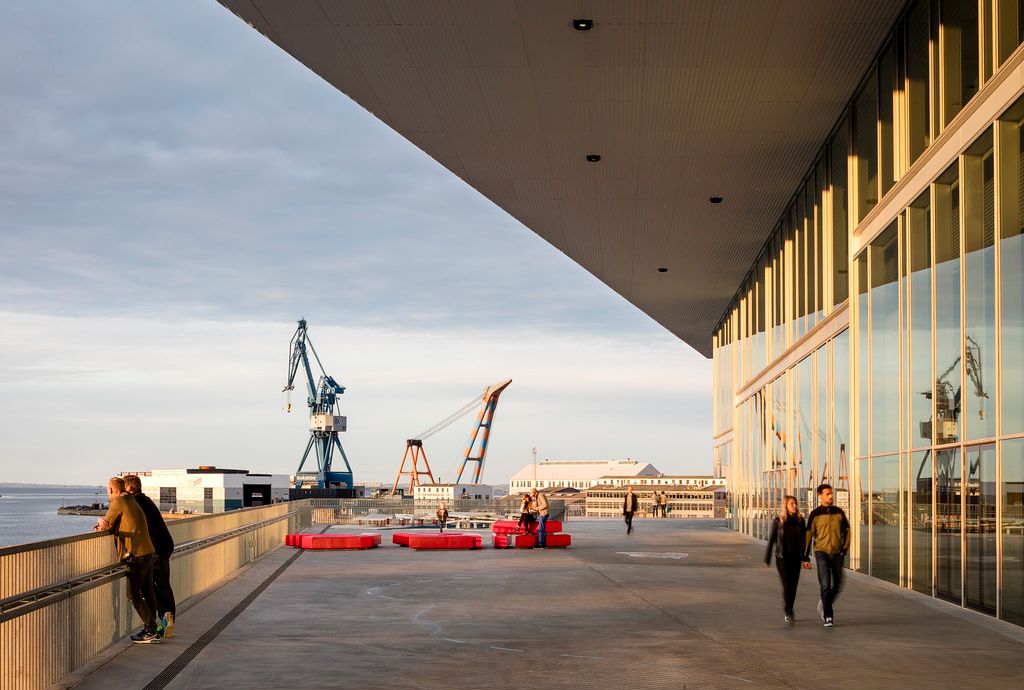
Images courtesy of Aarhus Public Libraries. All Rights Reserved.
If Singapore pushes boundaries, Aarhus focuses on the social foundations of public life.
Often cited among the world’s leading libraries, Dokk1 — the flagship library and civic hub in Denmark’s second-largest city — represents a fundamentally different vision: the library as democratic infrastructure.
“For me, the one word is democracy,” said Marie Østergaard.
Not as an abstract ideal, but as something spatial, tangible and lived.
Libraries, in this view, are among the few remaining non-commercial, politically neutral public interiors — places where people can gather without being expected to buy, consume or justify their presence. Scattered across the city and locally anchored, they form a network of trusted spaces where citizens feel safe.
And safety, here, is not about control, but about freedom.
At Dokk1, this philosophy is expressed physically. At its core lies a vast open staircase intentionally left unprogrammed. No shelves, no fixed function. A space that immediately signals that it can be filled with whatever people choose to bring into it: activities, experiments, conversations, collective paintings, dreams.
“We want it to be messy,” Østergaard explained. “We want people to experiment.”
And that, she added, requires “the urge to always say yes. Whatever people want to bring in, how can we make it happen? How can we help facilitate this so that people feel comfortable coming back?”
Because democracy, at its core, requires exactly that: spaces created both for and by people, where they can test ideas, engage with others and build confidence without pressure or commercial intent.
.jpg?w=1200&q=80&fit=max&auto=format)
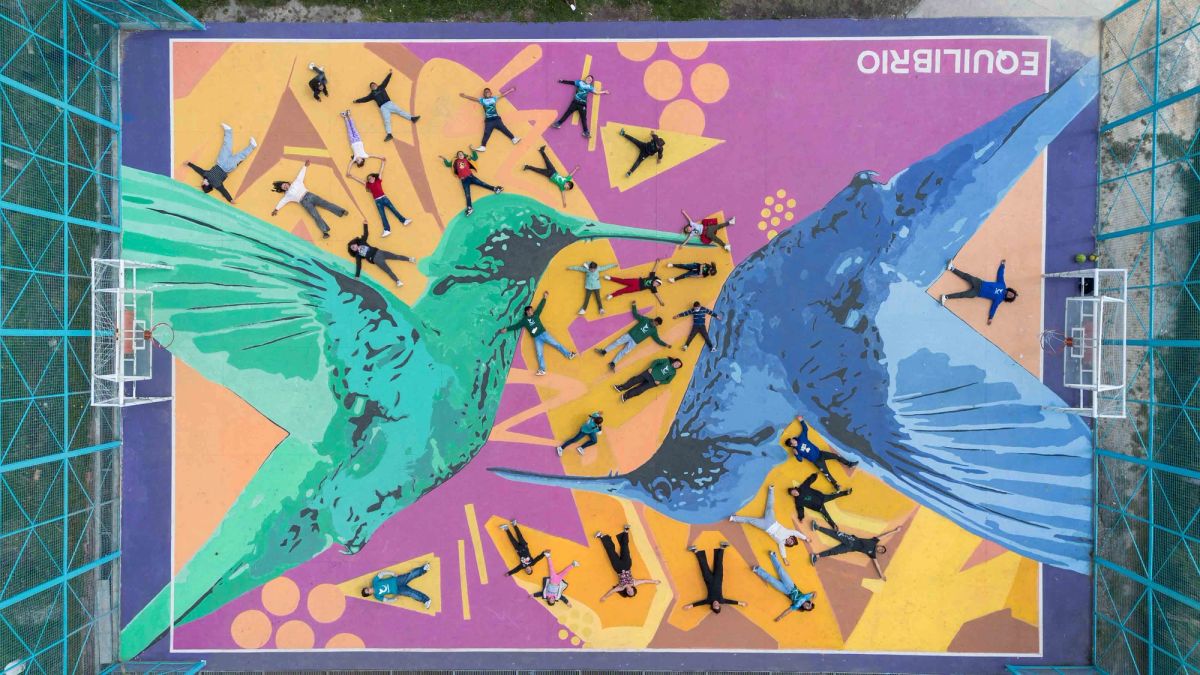
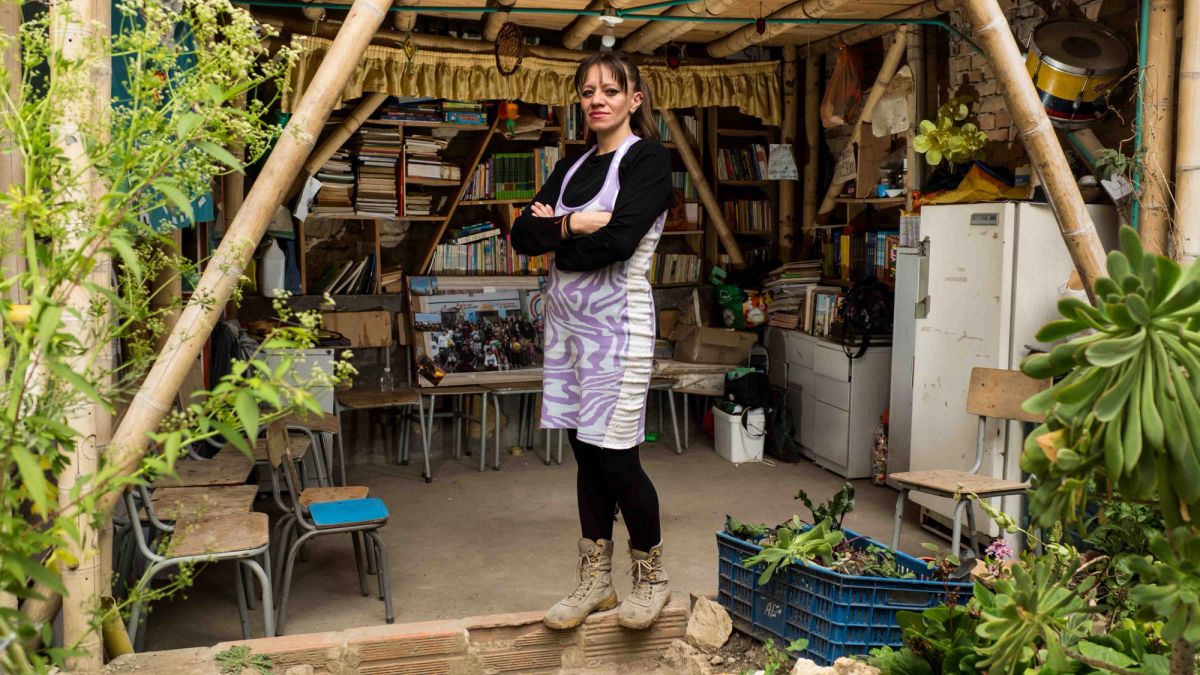
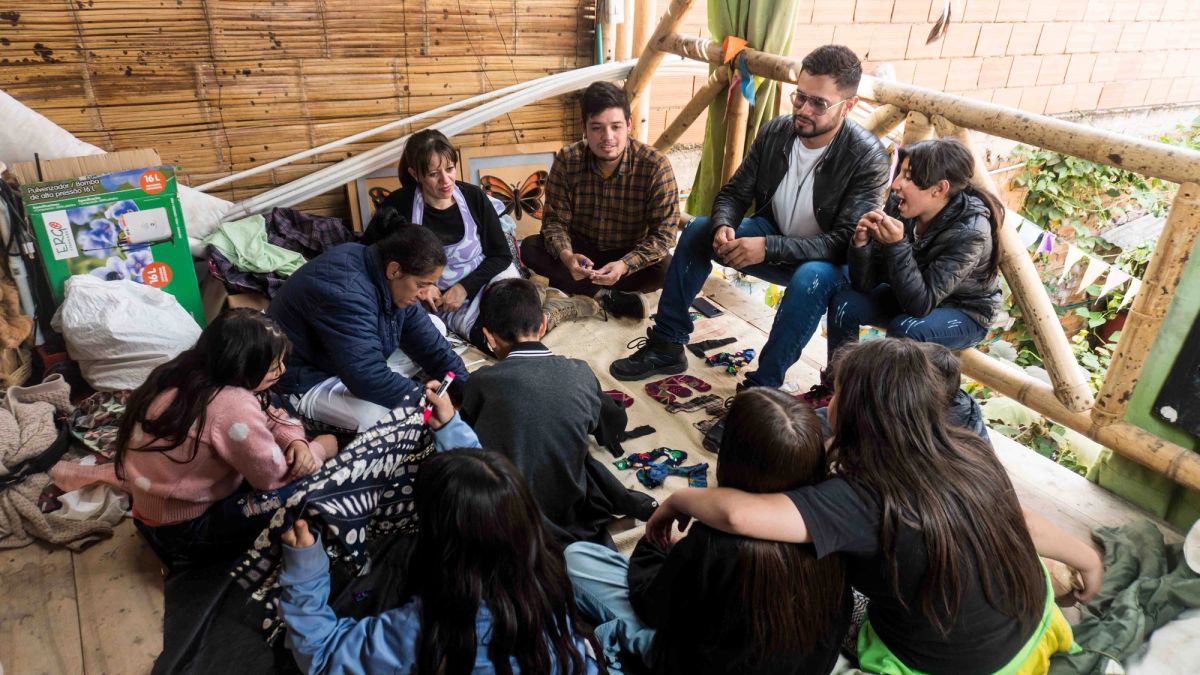
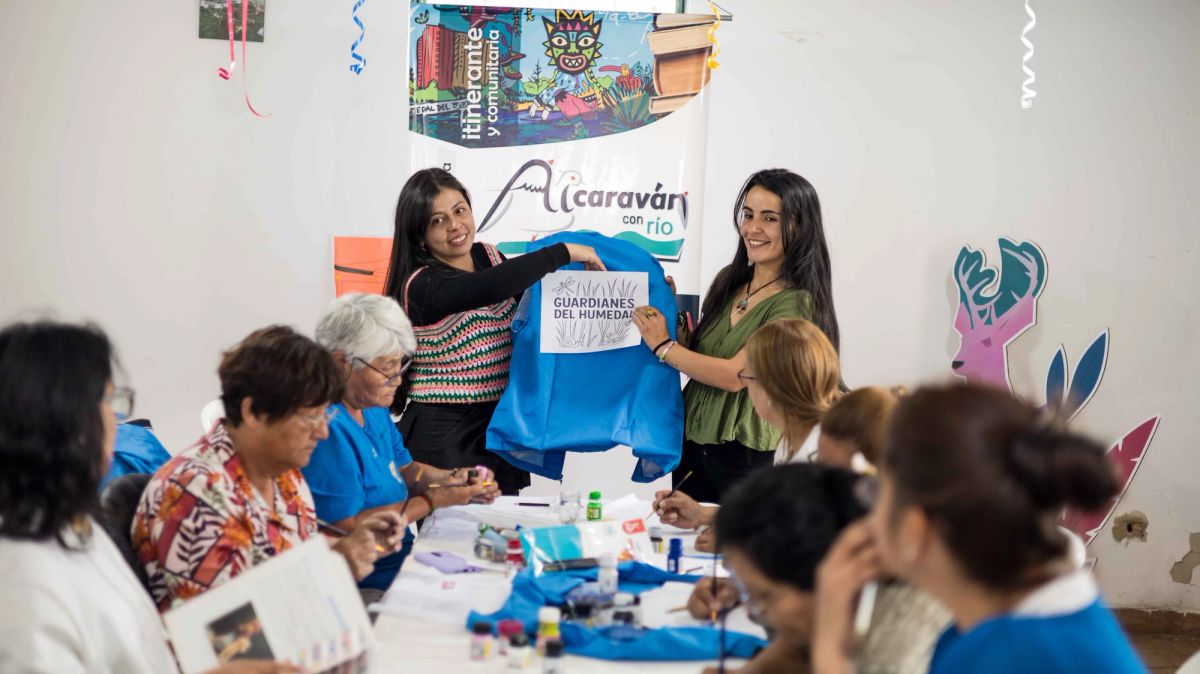
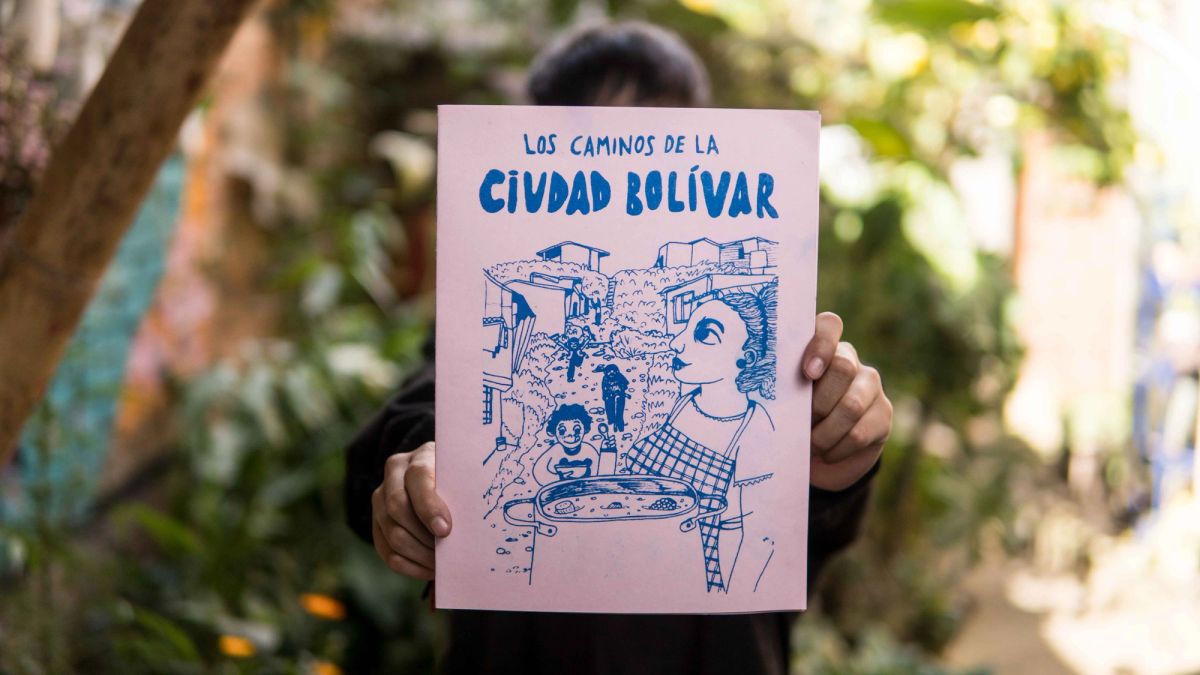
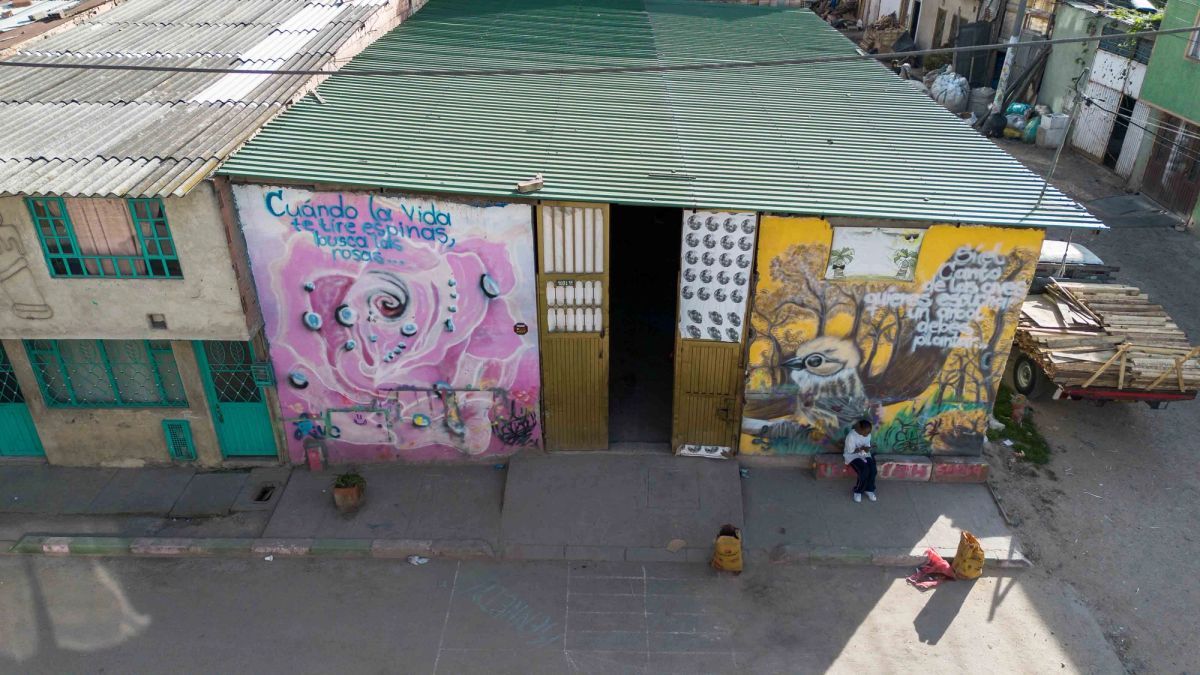
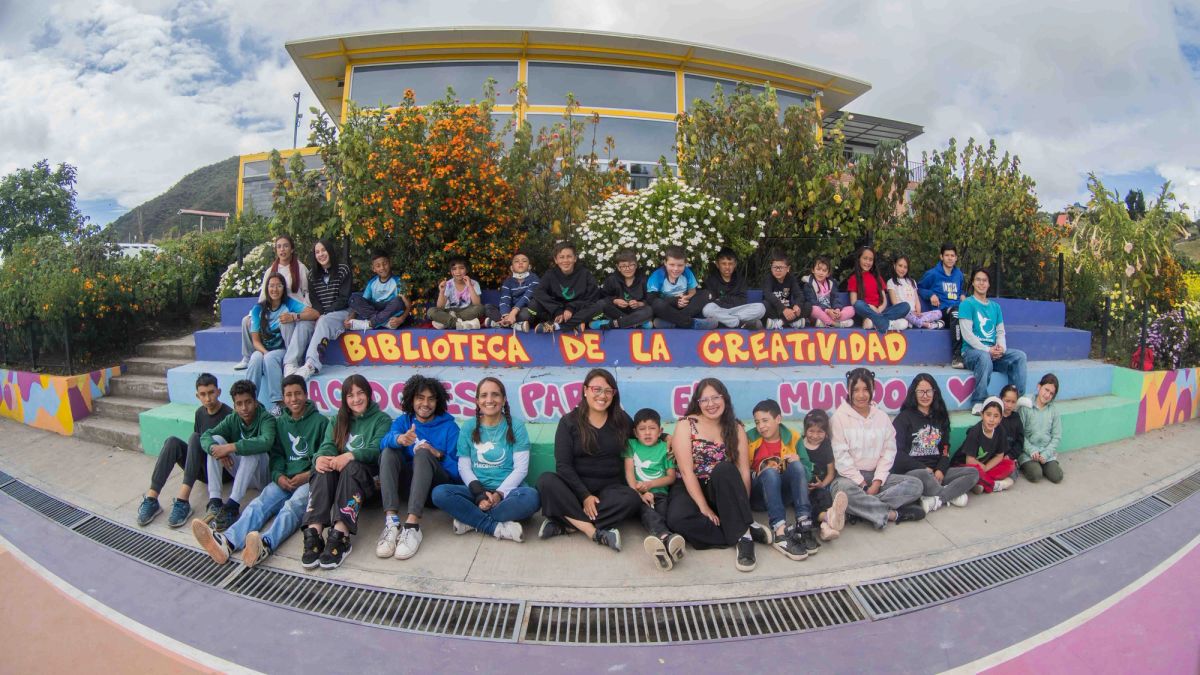
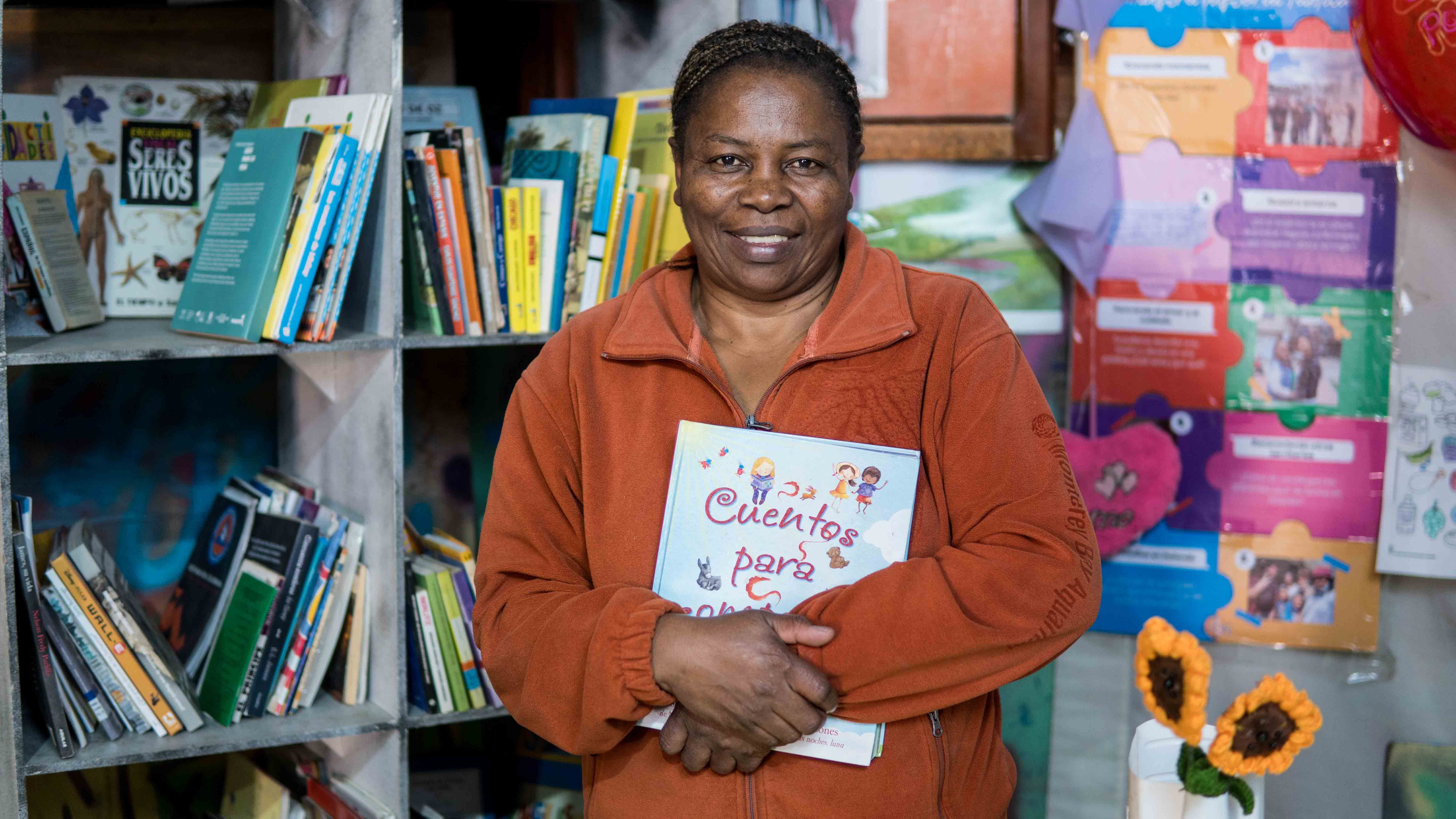
Images courtesy of Red Distrital de Bibliotecas Públicas de Bogotá - BibloRed. Special thanks to Alexander Zambrano!
In Bogotá, the question becomes more immediate: how do you build and sustain a library system when resources are limited, but both the city’s social and cultural needs — and its appetite for libraries — are not?
With a population of nine million and only 28 public libraries, the Colombian capital has had to think beyond traditional models. The answer has been to expand the very definition of what a library can mean within the city’s social fabric.
“We are trying to reach everyone, especially the people who need it the most,” explained Alexander Zambrano Salazar.
Central to this approach are community libraries — a network of 245 citizen-led initiatives created, funded and run by local residents. These are not top-down institutions, but grassroots infrastructures born from collective will and local necessity.
The relationship between these spaces and the public system has not always been easy, but it has produced powerful results. Through a collaboration program focused on environmental and biocultural awareness, citizen science, digital culture, leadership, heritage and memory, the public network provides participatory methodologies and design tools that allow communities to co-create meaningful spaces together.
The result is a hybrid network that stretches far beyond official library buildings — including remarkable spaces such as the stunning Virgilio Barco Public Library — ultimately becoming a powerful tool for inclusion, identity and social cohesion across the city, especially for the communities that need it most.
And then come the strategies that activate it.
From neighborhood competitions where young people play football, read and write stories, to initiatives that embed libraries into everyday life, Bogotá is using participation and gamification to build a sense of belonging.
In Bogotá, libraries are more than places you go to — they are something you build together. Libraries here are not only about access to knowledge, but about inclusion, identity and social connection, especially for the communities that need them most.
As the session came to an end, I stood up from my chair with a strangely sweet, renewed sense of optimism.
In a world increasingly shaped by conflict, polarization and the erosion of shared horizons, public libraries occupy a privileged — and beautifully rare — position. They remain spaces for civic participation removed from noise and spectacle: radically open, accessible environments for interaction, collective activation and discovery.
Despite their different visions, methodologies and political contexts, all these libraries seem to defend the same underlying idea: that people still deserve places where they can encounter knowledge, curiosity, difference and one another freely.
In many ways, they feel like the clearest expression of Ray Oldenburg’s idea of the third place in its purest form — public, democratic and fundamentally non-exclusive.
Imagine if cities — and public space more broadly — took the library as their archetype: a model not only for knowledge, but for coexistence itself.
Our cities would probably become far more generous, kind, tolerant places. ●
Related Articles

From Thermal Gaps to Biomimicry: The New Vocabulary of Urban Climate Action
«Urban sketching is a form of love towards the city, to things that are not perfect»

The Infrastructure You Never Think About
.jpg?w=1000&q=80&fit=max&auto=format)