«When it comes to data, cities should shift from surveillance towards services»
«When it comes to data, cities should shift from surveillance towards services»
Cities have always been spaces for experimentation and innovation. In recent years, the accelerated technological adoption has been a common thread. The maturity of IoT and sensors in Barcelona allows the city to holistically manage everything from parking to streetlights. The digital twin of the nation-city of Singapore integrates 3D models with real-time data to support urban planning and disaster management. Or Boti, the chatbot of Buenos Aires, uses AI to handle over 300,000 interactions per month, including appointment requests, complaints, and inquiries — all through WhatsApp.
But every sensor is a choice. Every camera is a choice. Every connected device is a choice — about what to measure, what to optimise, and who to watch.
In our conversation with Kate O'Neill, also known as the "Tech Humanist", founder and CEO of KO Insights — a strategic advisory firm dedicated to improving human experience at scale — we explore how cities can harness data and AI to genuinely improve human lives.
Image by Taso Katsionis on Unsplash
In order to build more effective smart cities, we require a lot of data. One of the most useful pivots cities can make is to shift data collection away from people and towards objects and things. It seems like a natural starting point to monitor a lot of human activity to be human-centric, but this pivot inherently moves the focus away from surveillance and towards services.
The other is to recognise that the city itself is modellable. Digital twins are something many cities are already experimenting with. And that opens up incredible opportunities: if we were to shift a particular investment in utilities from one area to another, how would that affect resources elsewhere?
Those are incredible opportunities to think about how AI or other tools can help us get clarity and insights about what’s really serving people, rather than monitoring people.
Every city is dealing with its own unique set of challenges, so it’s hard to compare. A city facing flooding risk is in a very different situation from one dealing with drought or extreme heat. But what we do see in common is that many cities are levelling up their use of technology and monitoring to make more resources available to people when they need them most. Whether that's knowing where cooling shelters are during a heat wave, or accessing support during a flood.
We also have a housing emergency in many cities. We know that more and more people will be living in cities over the coming decades, and there are real opportunities here: reclaiming existing buildings or making sure that what can be renovated is renovated rather than demolished.
Rotterdam is using public land in a very useful way. They built a floodable square that collects rainwater during flooding events and functions as a usable park in ordinary times. This kind of thinking, using whatever resources you have in is a good answer to the issues cities face.
I think about this through what I call a circle model. You start with thinking human outcomes: what are we really trying to achieve for people? A clean city? A safe city? A city where people can have meaningful experiences? To do that we need to know the amount of data we need to collect, what services you want to provide, what kind of infrastructure you need to deliver, what governance structures are required, and what feedback mechanisms will tell you how well you're doing.
If you start there — with human outcomes — then AI becomes part of that model in meaningful and practical ways. You're asking: if we invest more in trash collection in this neighbourhood, are we actually improving cleanliness and hygiene for the people who live there? Is water quality better because of the monitoring we're doing? Those are demonstrable improvements in people's lives.
And then you go through the circle again. Maybe this time it's about jobs — how do we connect more people with employment opportunities? How do we make reskilling programmes available through public libraries? Each time you go through it, you're levelling up across utilities, traffic, green spaces, cycling infrastructure, housing — everything that makes a city more liveable, safer and more equitable for everyone.
Images by Yunus Tuğ & Tom Barrett on Unsplash
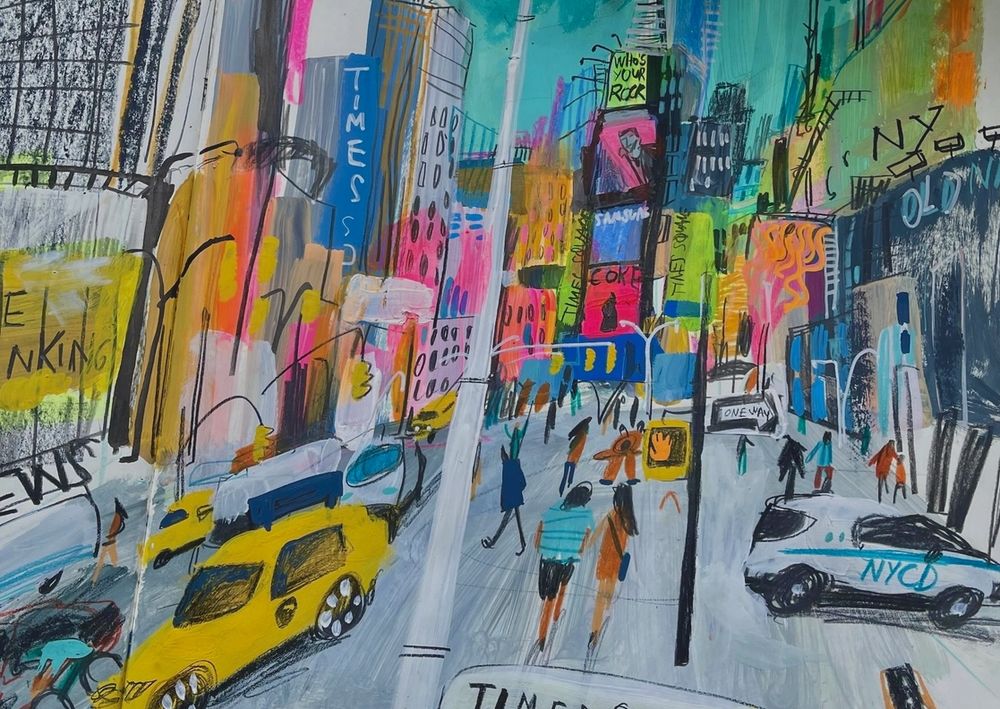
My city is New York and I feel it is whatever person you want it to be. New York is a multiple personality kind of city. It’s a peaceful city if you stroll through Central Park. Or a hectic one if you’re strolling through Times Square. A very connected city if you take the subway from one end to the other for less than three dollars.
The Luxembourg Gardens in Paris. That has to be my favourite place in the whole world.
I like birds in the urban space. Being able to hear the sounds of traffic, infrastructure, even construction. Or a squirrel chattering away. I think it’s wonderful how it reminds us that it’s not just us in cities. ●
Related Articles
.jpg?w=1000&q=80&fit=max&auto=format)
What's New at the New CitiesToBe?

Beyond Books and Shelves: Four Cities Reimagining the Public Library — and Public Life

The Infrastructure You Never Think About