
«Authenticity is not something a city can simply conceive or manufacture»
There is one question that keeps coming up in conversations about tourism and cities: why do some places feel alive and others like a stage set? Centuries ago, Romans had a word for it: genius loci or the spirit of a place. What it names is not a list of monuments or a set of experiences to be curated, but something slower and harder to account for: the particular combination of landscape, memory, daily rhythm and human presence that makes a place irreplaceable. And yet cities keep trying to manufacture exactly that — through strategies, campaigns, curated experiences. And something, somehow, keeps slipping through.
Yeon Sue Park — anthropologist and founder of Culture Matters, a consultancy at the intersection of cultural policy and the creative industries — has a metaphor for this. Even if you use exactly the same ingredients and the same container, you cannot reproduce exactly the same fermentation. Air, humidity, temperature, microorganisms — conditions you do not fully control all participate in the process.
Cities, she argues, work in the same way.
To answer this question, what it comes to mind is Appadurai’s reading of modernity (1996). He describes modernity as a landscape shaped by flows and circulation — of capital, media, people, technology, and ideas.
Within this framework, tourism can be understood less as an expression of individual desire, and more as a natural consequence of this very structure of flows.
And among these flows, I believe media plays a particularly influential role. Through films, television, and now social media, distant places are constantly entering our everyday lives. These representations do more than inspire curiosity, they normalize the idea that places beyond our immediate environment are accessible, movable, and even temporarily “belonging” to us. In the age of social media, this dynamic has only intensified.
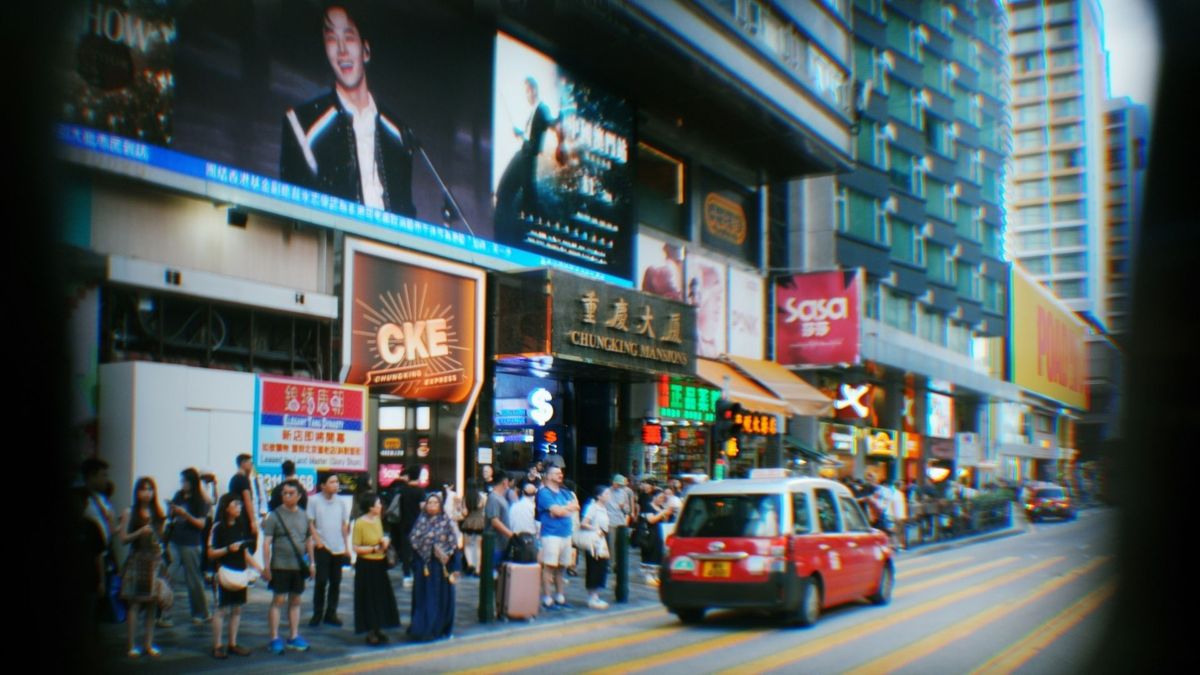
Image by Cai Fang on Unsplash
What tends to leave the most lasting impression in travel, I believe, is an unexpected human connection — what we might call rapport.
I see this as closely related to anthropological fieldwork. One of the things that distinguishes anthropology from other social sciences is that the researcher's own emotions and presence are not a contamination to be eliminated, but an inevitable part of the process. In fieldwork, researchers do not remain distant observers; they enter into relationships with the people they study. Through this process, they build rapport, and it is within these relationships that the deeper narratives of a place - what we call culture - begin to emerge. Because of process, the researcher’s own identity inevitably shapes what they see and how they interpret it, which is why reflexivity becomes an important part of anthropological practice.
Travel works in a similar way. You can form a kind of rapport with a place itself. But when a person enters that equation — an unexpected conversation, a moment of genuine kindness, a brief but real human connection — the experience shifts from observation to relationship, and far more likely to stay with you over time.
Frankly speaking, I find it interesting that we ask whether authenticity is a “useful concept” for cities, because this seems to assume that authenticity is something that can be designed, managed, or used. I would approach it somewhat differently.
For me, authenticity is not something a city can simply conceive or manufacture. It is closer to a form of singularity — something that emerges from the particular combination of people, histories, encounters, practices, memories, and time that accumulate in a place.
Perhaps fermentation is a useful metaphor. Even if you use exactly the same ingredients and the same container, you cannot reproduce exactly the same result. Air, humidity, temperature, microorganisms, and many other conditions that we do not fully control all participate in the process. The result emerges from this accumulation of conditions over time.
I think cities work in a similar way. Their singularity emerges from the layers created by the people and the time that have accumulated in a particular place.
So yes, I think this is something worth preserving — not as a fixed image of “authenticity” to be presented to visitors, but as the particular layers and conditions that have made a place what it is.
Absolutely. This connects directly to everything we’ve discussed earlier. What circulates globally — whether capital, media or ideas — does not move on its own. It is carried by people, and people are beings who carry culture with them. In this sense, what is truly circulating is not just information or resources, but culture itself.
We often say we travel to discover another culture. But what does that actually mean? I think what we’re really looking for is the everyday narratives of others — what they eat for breakfast, how people interact, how they respond to climate, how the architecture reflects their environments. These seemingly ordinary elements, when experienced together, form what we recognize as culture.
Tourism, then, is not just about visiting a place, but about experiencing how other people live, even if only for a short time.
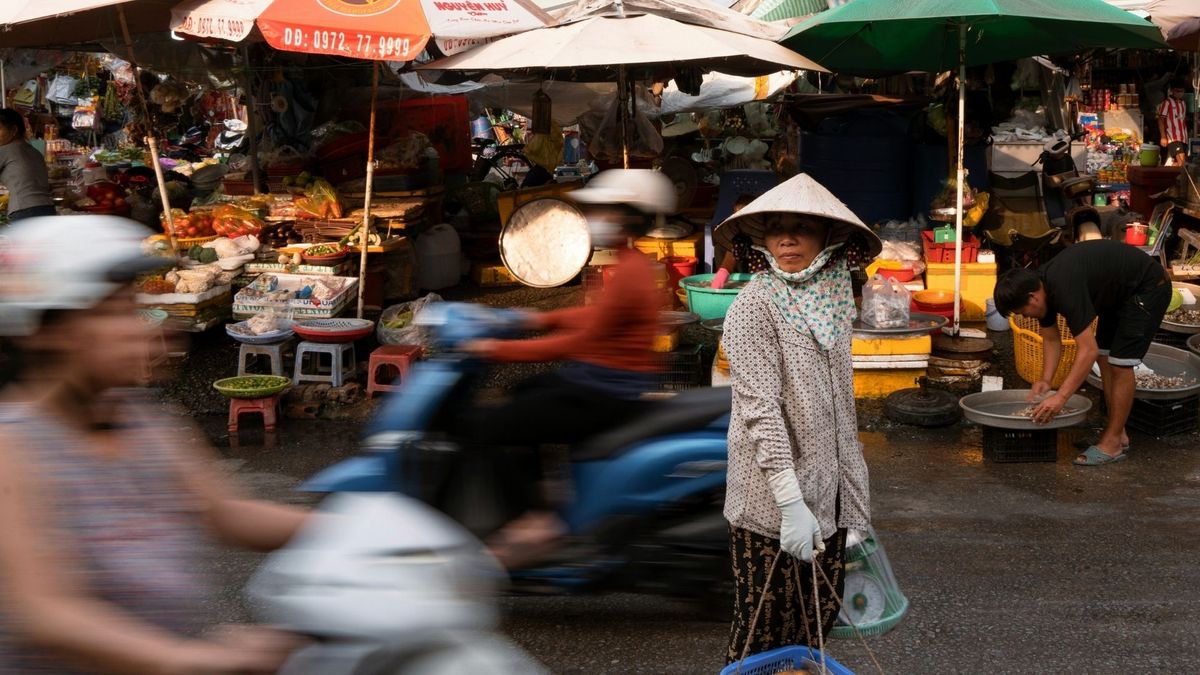
Image by Evgeny Matveev on Unsplash
Paris would probably be my answer. It is one of the most visited cities in the world, yet it has managed, relatively speaking, to retain a strong sense of its own character.
But this is not simply because the city has managed tourism well. Tourists themselves also contribute to producing the character of a destination.
The same group of people can behave very differently depending on what they expect from a city and what kind of experience they are looking for there. For example, a group of tourists who may be noisy late at night and cause disturbance to residents in Barcelona might behave quite differently in Paris - visiting the Louvre and the Musée d’Orsay, and having a quiet beer by the Seine river.
These expectations are partly shaped by the character of the city itself and the image it projects to the outside. People also sense what is acceptable in a particular place and adjust their behaviour accordingly.
This is something worth reflecting on in Barcelona, where we have witnessed in recent years quite intense tensions between residents who feel that tourism is disrupting their everyday lives and a tourism industry that continues to promote the city as a place of leisure and consumption. It is also worth considering how the atmosphere of a city shapes the behaviour of those who visit it.
In this sense, a city remaining “itself” is not simply a question of how well it manages tourism, but also of what kind of relationship develops between the people who live there and those who visit. ●
Related Articles
«Urban sketching is a form of love towards the city, to things that are not perfect»

The Infrastructure You Never Think About

Beyond Books and Shelves: Four Cities Reimagining the Public Library — and Public Life
