
«AI-powered garbage trucks and robots operating in the built environment: these things are coming»
«AI-powered garbage trucks and robots operating in the built environment: these things are coming»
A Spanish newspaper recently reported on a newly built school where temperatures inside classrooms reached more than 37ºC. The building, completed only a few years ago, has large, bright windows covering entire walls, allowing sunlight and natural light to flood in. Its thermal insulation and façades comply with Spain’s Technical Building Code. And yet, children have suffered headaches and even fainted because of the extreme heat. The school has become, in practice, a giant greenhouse. A building designed for a climate that no longer exists.
At first glance, this story might seem disconnected from our conversation with Nikki Greenberg, futurist, innovation strategist, and founder of Real Estate of the Future and Women in PropTech. But it captures a much wider urban paradox. Cities around the world have long been designed to last, preserve and endure. Yet the conditions they were built for are changing faster than any masterplan anticipated.
In our conversation with her, we explore what it really means for a city to be future-ready — and why the gap between urban ambition and urban action is wider than most cities are willing to admit.
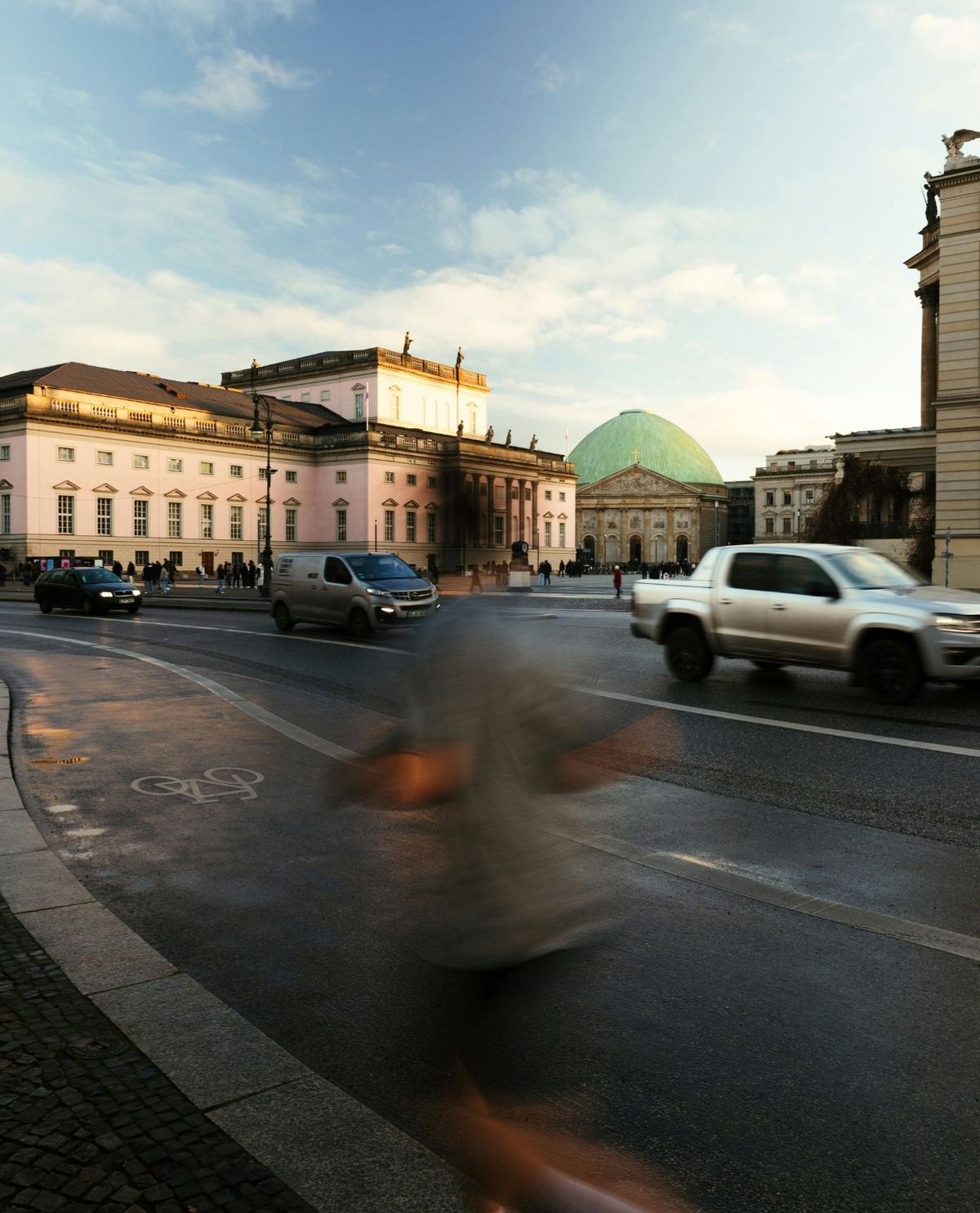

Images by Nikita Pishchugin & Kateryna Hliznitsova on Unsplash
Being future-ready is a mindset. It's about where you're putting your thoughts, your budget, your planning, your priorities — whether you're solving for the world that already exists or preparing for what's coming next. And to be future ready means that you have a willingness to leave things in the past that didn't work well, or aren’t necessarily relevant for what's coming up next.
The risk of not doing that is ending up investing in things that aren't necessarily relevant for where the world is going. We know that how people live, work, shop and move is changing fast. Cities need to be part of that network — or they risk falling behind.
The challenge is to balance being risk-averse with being innovative, two things that don’t necessarily go hand in hand. The advantage is that there are examples from other cities, there are technology vendors who have worked through these problems before. So it's really about identifying your needs, speaking to the right experts, and starting to test and learn. Because once you start a project, you begin to understand what else needs to happen for it to succeed. It's better to start early, learn the lessons, and let each project make the next one easier.
And when something doesn’t work out, cities and constituents need to understand that it doesn't mean you didn't learn from it. You might launch an initiative that fails, but as part of that process you cleaned up your data, built an asset register, understood what technology you actually have. Those components remain useful even if the project is seen as a failure. And just because something didn't work before doesn't mean it won't work now: the technology is moving so fast, especially with AI, that things that failed two years ago might succeed today.
I was in Riyadh a couple of years ago and could see Saudi Arabia’s strategic vision for 2030. It's not perfect — there are always problems along the way, and priorities shift. But what they're doing is being genuinely ambitious about where they want to go as a city. They're investing in future technologies, not just solving for today. And they’re being bold and visionary designing with future technologies in mind: just because a technology doesn't make sense right now doesn't mean it won't be mature by the time we've finished building. I think this is very brave.
For 2030, I'd start with a quick win — something constituents can see and feel immediately, because that builds trust for everything that follows. I’m a big fan of autonomous shuttles — also nicknamed trackless trams. Putting a train line in a city is a huge capital investment, it takes decades to plan and construct, and it’s enormously expensive. But an autonomous shuttle runs on existing roads.
For 2040 I’d focus on building what I call an AI factory. That means cleaning up and integrating data from across city departments, third-party sources, everything — and structuring it in a way that resembles a tech company. These companies are infinitely scalable because of how they manage data.
And going towards 2050 any city needs to ask: where are we going? I use a three horizons framework. The first one is: if nothing changes, where do we end up? The second one is where one major thing changes. In the third a lot of things change.

Image by Scandinavian Photography on Unsplash
My favourite one is physical robots. The impact they can have in cities is incredible! A robot is essentially the physical manifestation of AI. We know how fast AI is advancing; physical robots bring that AI brain into the built environment, out into the streets.
I’m fortunate to travel a lot and speak in different cities, and I read their strategies for the future, their 2040 or 2050 plans. I look for keywords: technology, innovation, autonomous vehicles, flying taxis. Most of the time they don’t appear even in 2050 strategies. AI-powered garbage trucks or snow ploughs, robots operating in the built environment — these things are coming. We’re just not talking about them enough.
I live in New York. I'd describe it as a mad scientist genius, like and Einstein-Picasso brain that walks around barefoot.
I'd take them to my neighbourhood, the Upper East Side. Specifically to my favourite cocktail bar, Café Boulud, for a Gibson martini. That’s what locals do: we have our spot, it’s beautiful, and we never go to Times Square.
Helsinki at midnight. Or even Helsinki at 7pm. You don't hear anything. It's beautiful.
Related Articles
«Urban sketching is a form of love towards the city, to things that are not perfect»
.jpg?w=1000&q=80&fit=max&auto=format)
What's New at the New CitiesToBe?

The Infrastructure You Never Think About