Fresh Ideas from Naarm Melbourne: How Urban Play Can Help Us Shape the Future of Cities
Fresh Ideas from Naarm Melbourne: How Urban Play Can Help Us Shape the Future of Cities
When we are children, we are constantly playing. We use our imagination to invent characters, build imaginary worlds and futures that do not yet exist. When we reach adulthood, many of us are told to stop, “grow up” and be “serious”.
But what if play never really disappears? What if that same imaginative impulse that we used as kids could help us rethink the cities we live in — imagine and rehearse what urban life can be?
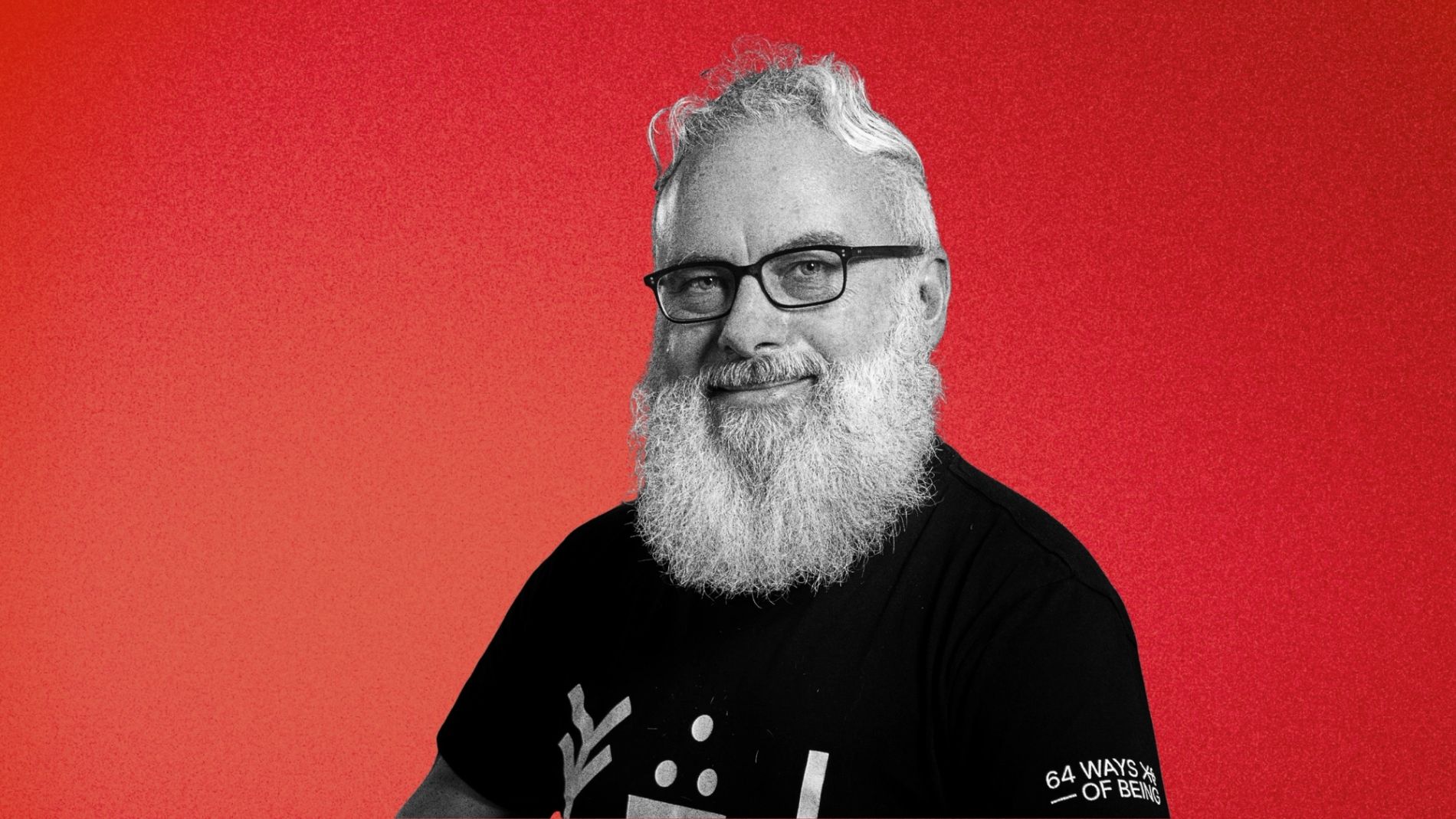
This premise lies behind urban play, a field explored by artist and designer Dr. Troy Innocent, associate professor at RMIT University (Royal Melbourne Institute of Technology in Australia) and director of the ‘future play lab’ — a diverse community of researchers, students, industry leaders, and policymakers focused on the social, cultural, and economic opportunities of urban play. Innocent’s work connects people and place through playful and speculative practices that treat the city as a material. Through this approach — which he calls “reworlding” — urban environments become spaces where the creative, linguistic, cultural and social diversity of our world can be reimagined. He is also the creator of 64 Ways of Being, an innovative augmented reality platform that invites those interacting with it to listen, play and explore cities through new perspectives.
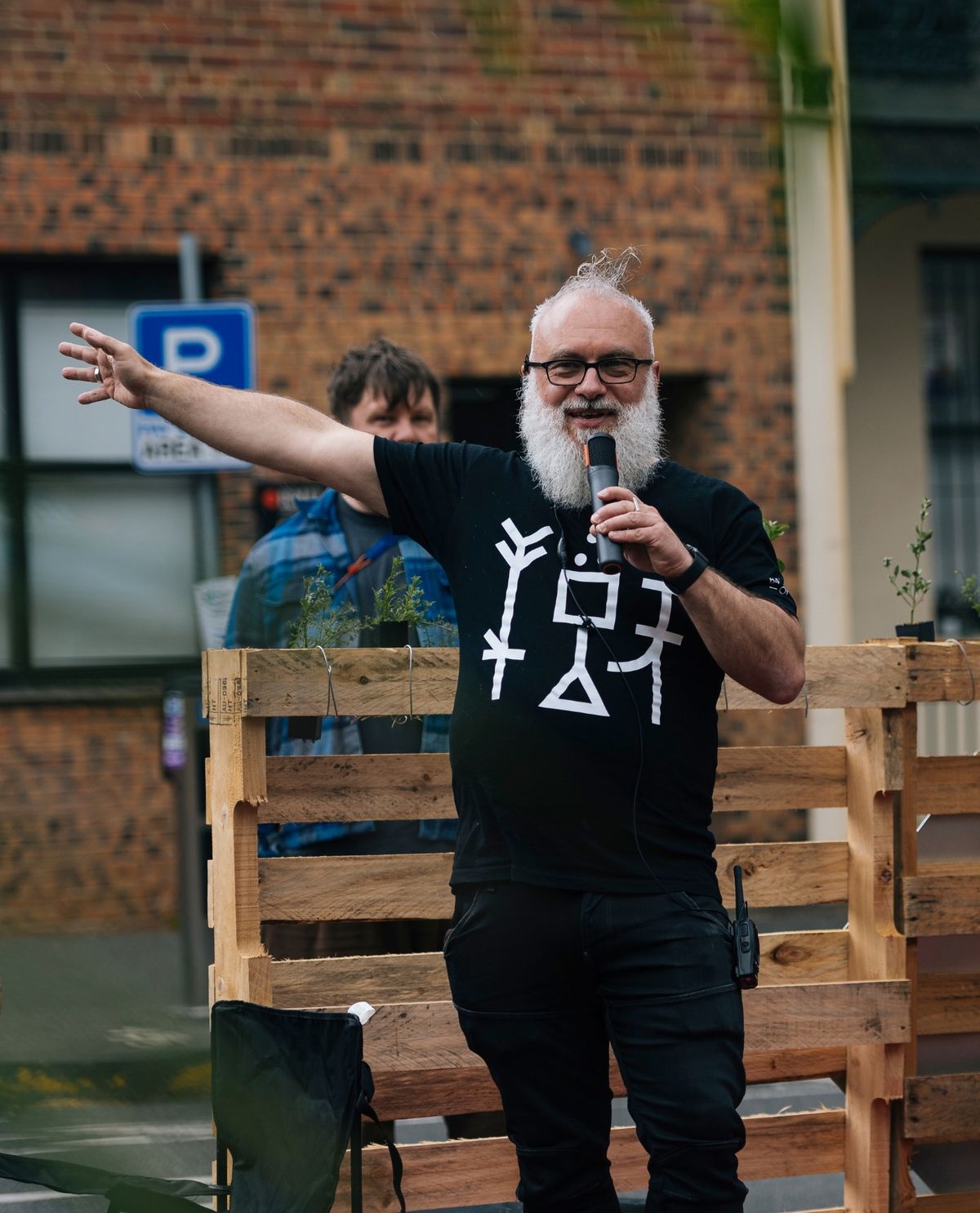
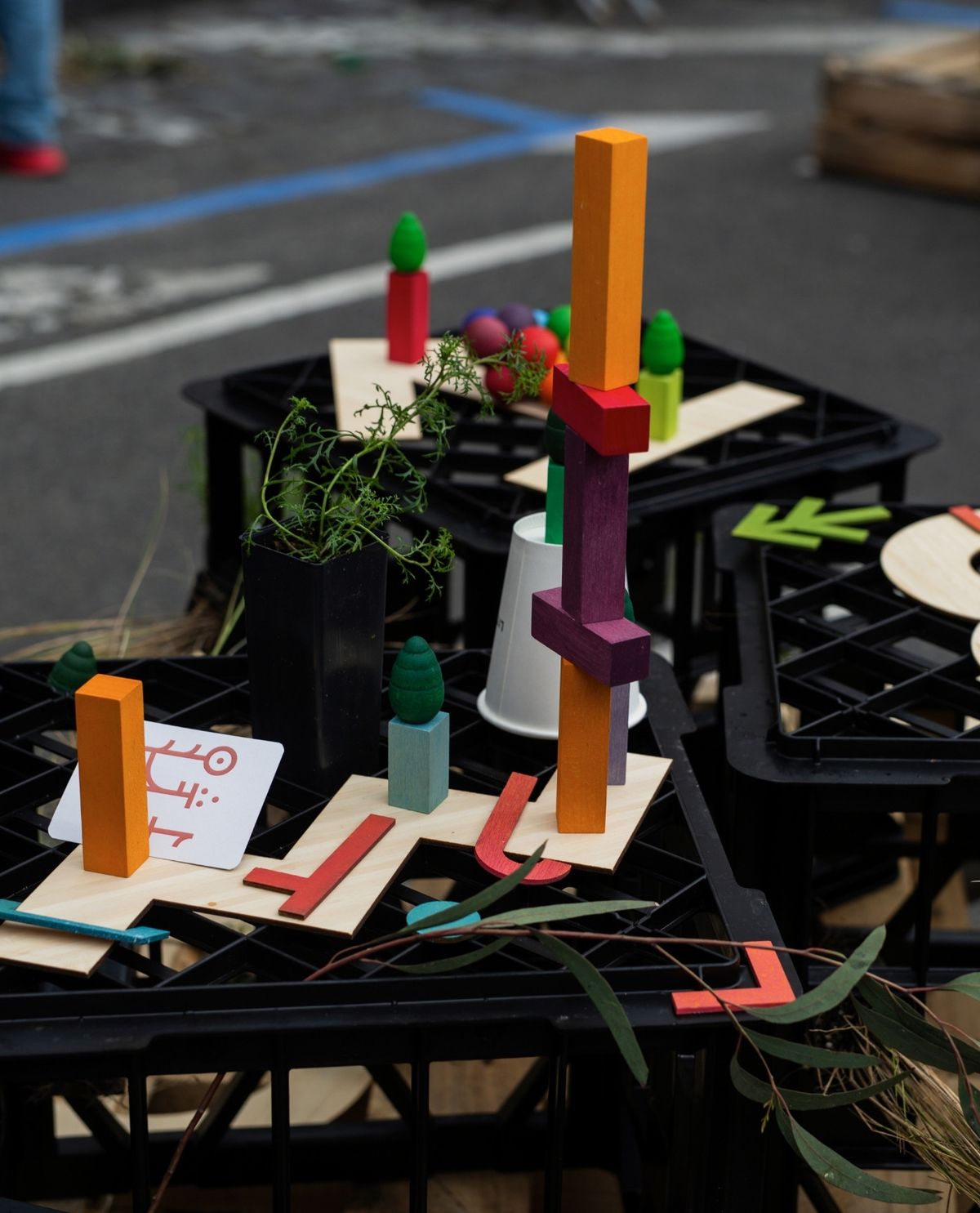
Reworlding City North. future play lab. Naarm Melbourne 2024-25
Shaping, breaking and experimenting
Troy Innocent had been working with urban play for more than two decades before the Covid-19 pandemic, from one day to another, transformed cities around the world. Emptier streets, daily routines vanished and the usual rules governing public space were temporarily suspended.
Many of the assumptions shaping urban life turned outdated. Cities began to experiment. In Barcelona, the pandemic accelerated a transformation of the public space that saw streets being pedestrianised and the flourishing of tactical urbanism initiatives, giving barcelonins and barcelonines more space to walk and occupy the city differently.
Today, however, Innocent argues that we do not need to wait for another “life-changing event” to rethink how cities function. Yet urban environments continue to be under stress and constant transformation, facing profound challenges — extreme weather or increasingly frequent and intense heatwaves, to name a few.
Innocent and the team at the ‘future play lab’ bring creativity into the search for solutions. Through urban play methodologies — combining both digital and analogue methods —, they bring neighbourhoods, communities and local governments into speculative and participatory design processes that allow them to explore how cities might evolve and how its citizens and infrastructures might adapt. This collaboration transforms the present streets into testing grounds where collective imagination gives rise to different urban futures. As Innocent summarizes, “urban play brings the capacity to not only imagine that something is possible, but to live within it”.
Reworlding and playing with the future…
The idea of reworlding emerged from Innocent’s artistic background, as well as from conversations with N’arweet Carolyn Briggs, a descendant of the First Peoples of Melbourne from the Yaluk-ut Weelam clan of the Boon Wurrung, who they collaborate with at RMIT. The concept challenges what he describes as the “current view” that history and progress follow a single, “linear path”.
In many First Peoples’ cosmologies, “there is not one world but many worlds existing simultaneously”. This perspective invites people to recognise these multiple ways of being and to become aware of possibilities that often remain unnoticed. Through play, participants are encouraged to sense that the future is not fixed, but something that can be collectively explored and reshaped. As Innocent notes, many First Nations communities have already experienced forms of world-ending change, “through acts of colonization or other violence”.
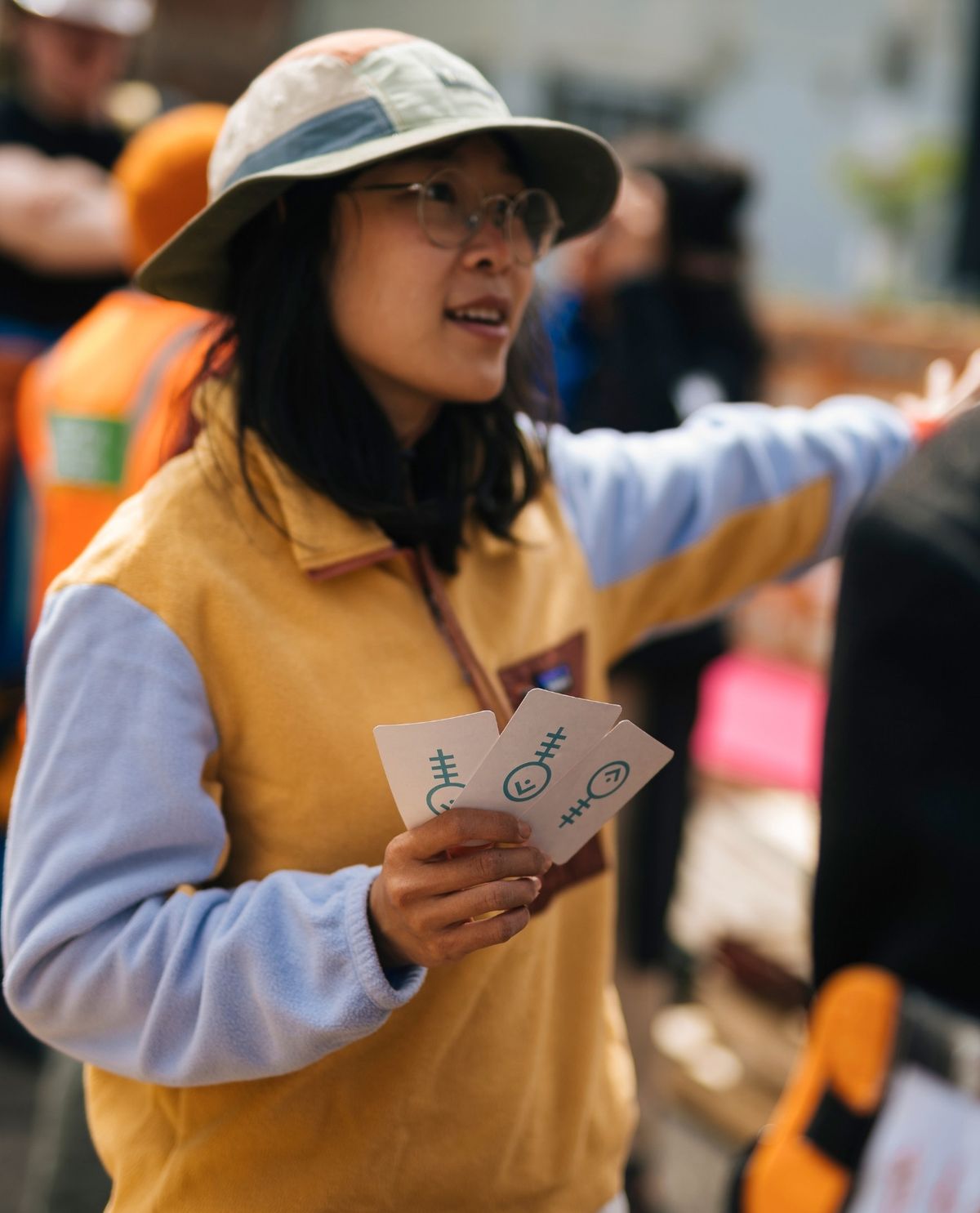
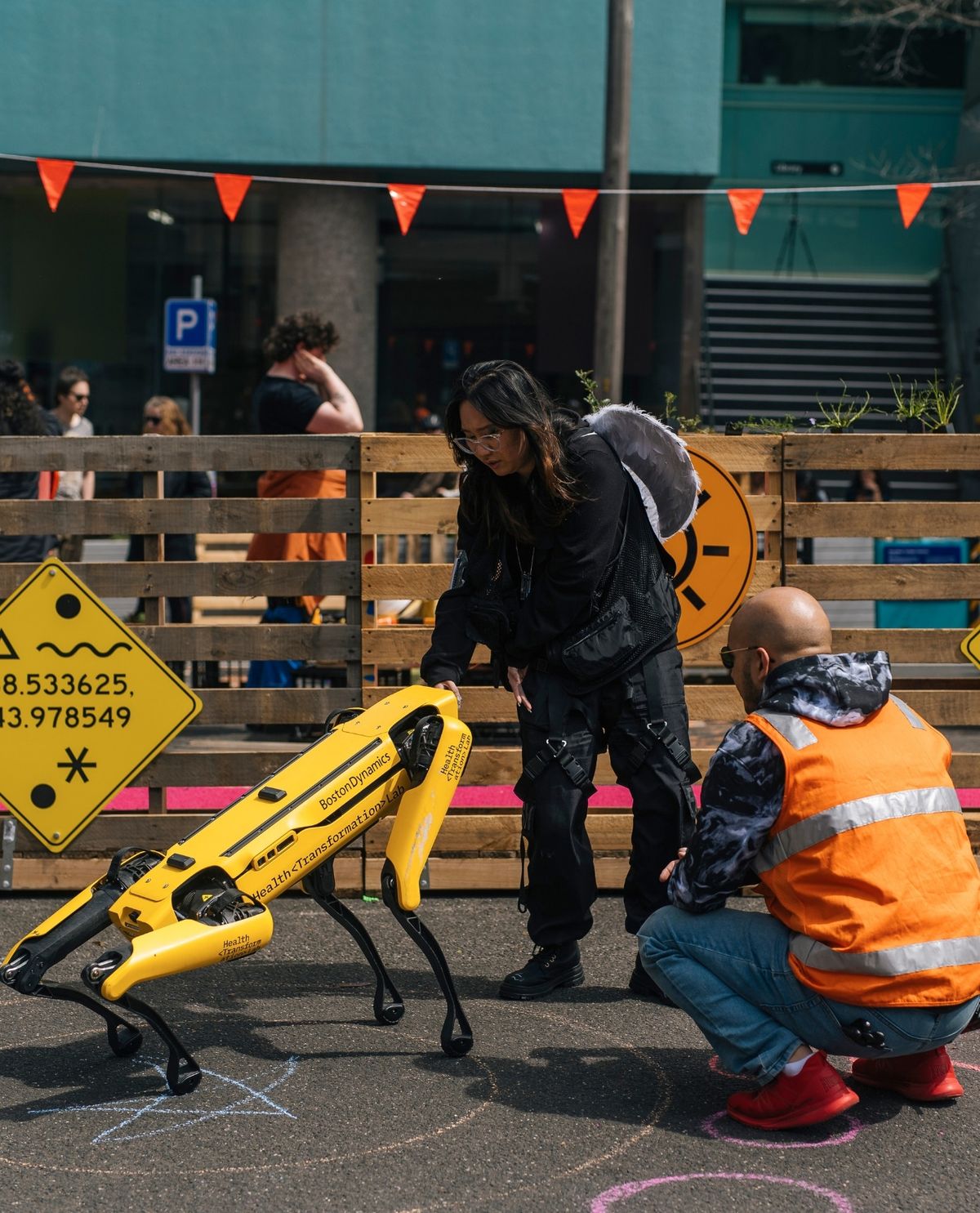
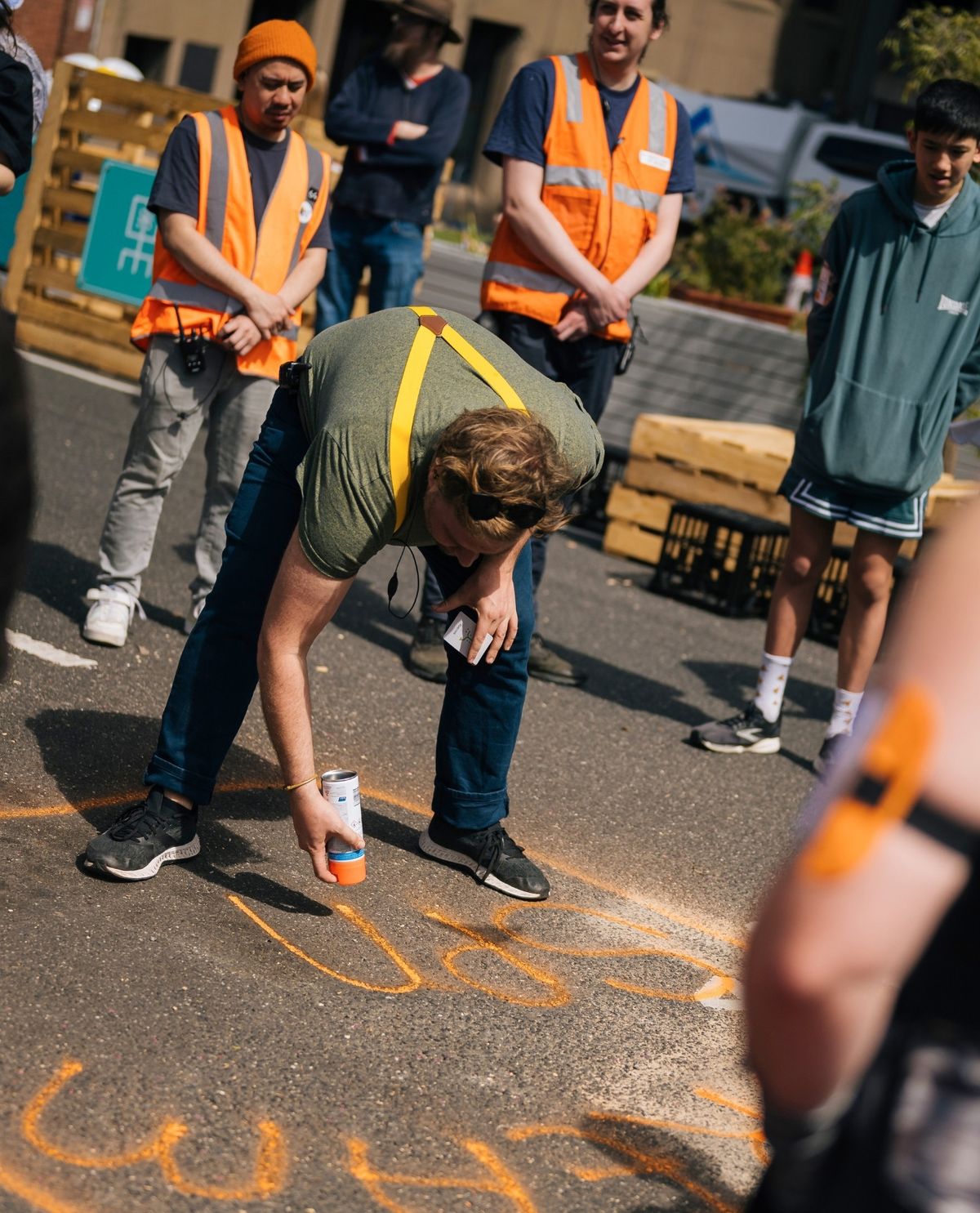
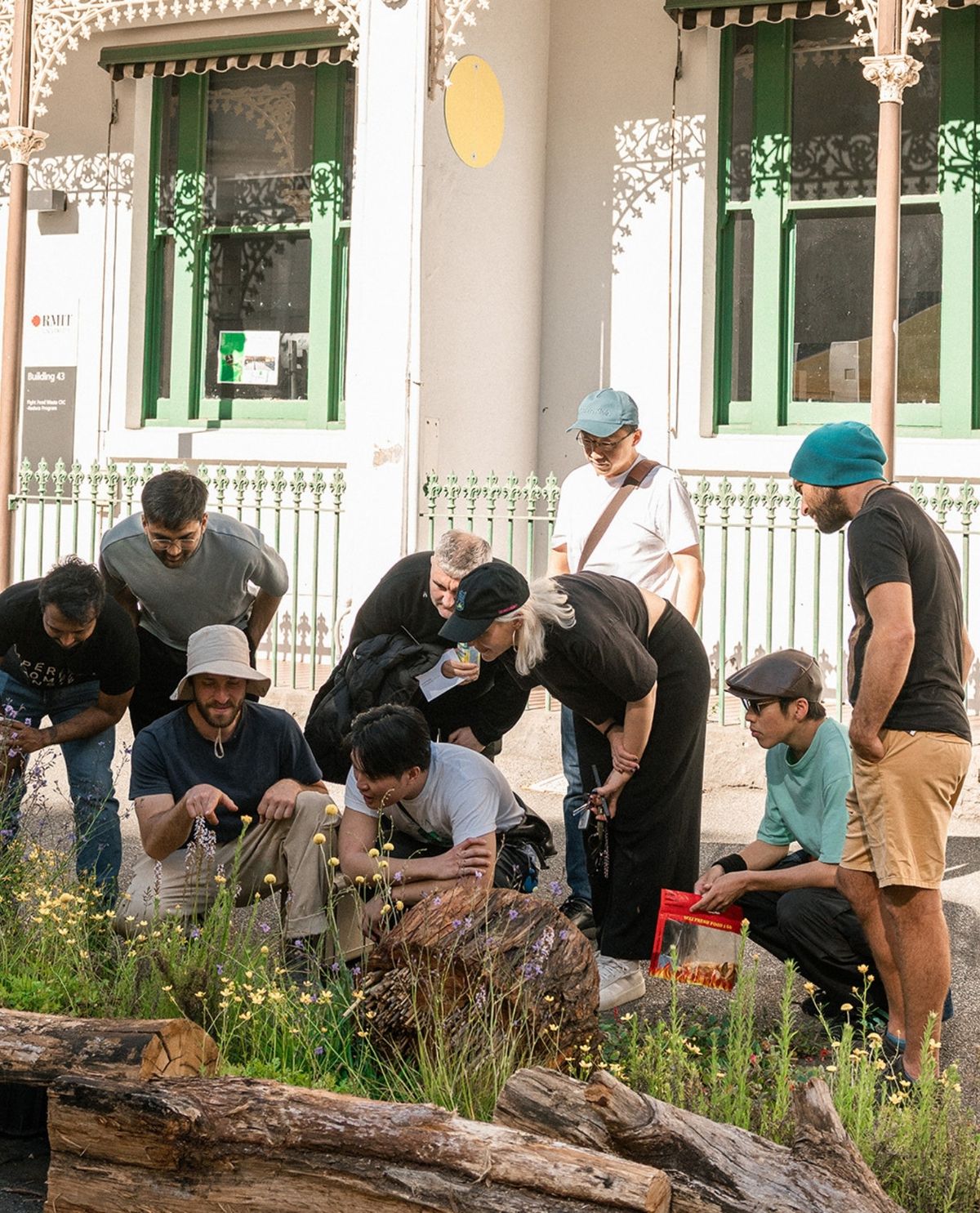
Reworlding City North. future play lab. Naarm Melbourne 2024-25
…in Naarm Melbourne
For Innocent, working with Naarm Melbourne means working with “two places at once”. The “modern city is less than 200 years old, yet the land holds tens of thousands of years of Indigenous history”. In this sense, the city carries “layers of knowledge that already exist”, even if they have often been overlooked. The pandemic, which reshaped the city centre and its economic fabric, opened a moment to rethink and innovate around Melbourne’s social infrastructure.
Through urban play, participants were invited to reconsider their relationship with the city, not only as residents but as caretakers of a shared environment. The experience began in a library — a space loaded with significance of knowledge, community and refuge — before gradually unfolding across the city.
As the group moved through the urban landscape, play interventions introduced unfamiliar ideas about the future of the city. In a park, the conversation turned toward regenerative design and the possibility of nature-positive cities. There, participants encountered a fictional character representing someone who had become so deeply attuned to the city that they had also become vulnerable to it.
Participants were given the task of escorting this character back to the refuge of the library. Taking responsibility for the character created a sense of care and urgency, drawing participants emotionally into the narrative and allowing them to experience a more intense and reflective way of inhabiting the city.
…in Poblenou
In Poblenou, a neighbourhood in our home city of Barcelona that has undergone significant transformation since the pandemic, Innocent’s approach took a more explicitly speculative turn.
Residents were invited to answer a simple question: “Who will you be in 2050?” Through a collective urban role-play event, participants walked through their neighbourhood embodying these imagined future identities while being confronted with challenges that cities are increasingly facing (and that are expected to intensify in the coming decades).
In this temporary shared future, residents collectively imagined how their neighbourhood might evolve by reflecting on question about its capacity to adapt to different scenarios, or the embedded resilience in streets or buildings.
Building the future of cities
As put in practice in Naarm Melbourne and Poblenou, at the ‘future play lab’ urban play projects continue to test with communities and place the impact creativity can bring into the public spaces. Organisations have approached the lab to bring these methods into their own contexts. Regen Melbourne — a non-profit organisation working to move Greater Melbourne towards a resilient and regenerative future —, for instance, collaborated with Innocent “on engaging publics with regenerative futures”, while the City of Greater Dandenong invited the lab to “work with their creative communities, libraries and youth services to kickstart public art programs”.
These projects — bridging academia, public institutions, the private sector and communities — contribute to a growing body of shared knowledge within the Urban Play Network, through which Innocent aims to “share what we have learned with the global urban play community”.
At a time when cities are under increasing pressure to adapt to the daily challenges they and their citizens face, urban plays offers a distinct way of navigating uncertainty. This is where its strength lies: not in providing immediate answers but in opening a collective space to explore futures that can begin to be shaped together. ●
Related Articles

Beyond Books and Shelves: Four Cities Reimagining the Public Library — and Public Life

The Infrastructure You Never Think About
«Urban sketching is a form of love towards the city, to things that are not perfect»
.jpg?w=1000&q=80&fit=max&auto=format)