
«Well-being is physiological, psychological and spatial — and it can be measured»
«Well-being is physiological, psychological and spatial — and it can be measured»
In the evolving landscape of cities, traditional metrics like GDP are no longer sufficient to capture the full spectrum of urban success. Measuring economic output alone fails to reflect how people feel in their cities — whether they are safe, healthy, and connected to their environment.
To explore this shift in focus, we speak with Anneli Simm, Business Development Manager at the FinEst Centre for Smart Cities — an international research and development centre at Tallinn University of Technology (TalTech), founded in 2019 by TalTech, Aalto University (Finland), Forum Virium Helsinki, and the Estonian Ministry of Economic Affairs and Communications. With her, we delve into how tools like the Well-being Score are transforming urban planning in Estonia, Finland, and beyond.
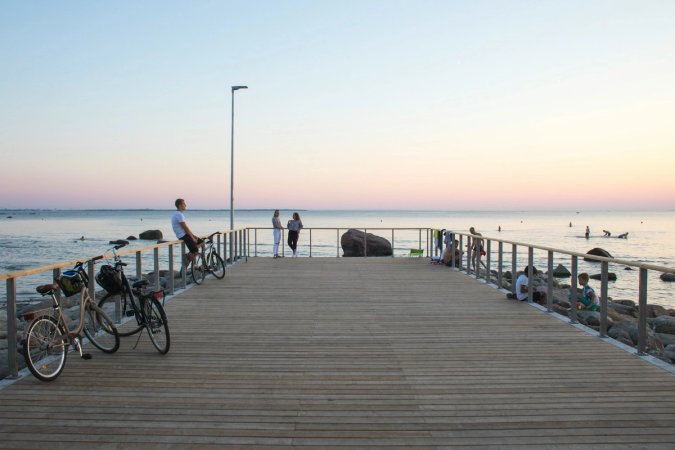
People relaxing by the Estonian coast. Image by Julius Jansson on Unsplash.
Traditionally we measure success of the city or country by financial terms like the GDP of the specific city, but however, it does not give you a full understanding how people feel in the city. Even though that the GDP may be significant, you still may have high noise levels or low green areas or safety security issues.
The 'Well-being Score' was developed as part of the Smart City Challenge, a pilot project initiated by the FinEst Centre for Smart Cities in collaboration with academic researchers and the Estonian city of Narva. The 'Well-being Score' is a groundbreaking tool designed for cities as an objective measure to see how urban environments impact the mental and physical well-being of citizens.
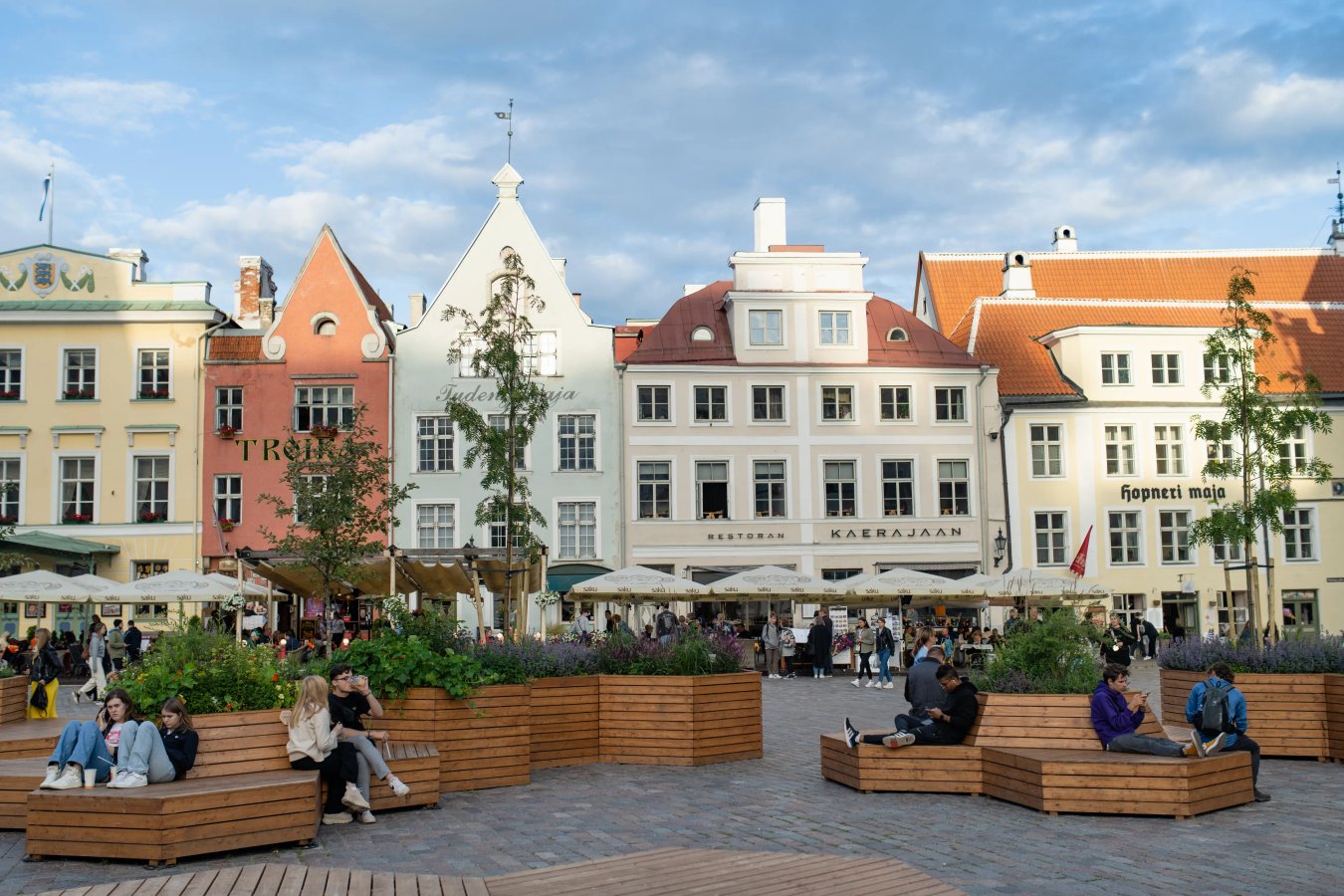
Tallinn's main square. Image by MNStudio on Shutterstock.
It’s physiological, psychological and spatial.
So with the physiological measurements, you use sensors attached to the body, and the sensors measure how your brain or heart reacts to certain environments.
With the psychological measurement, you use surveys, where people answer questions regarding whether they feel relaxed, whether they have a spatial interaction with this specific location.
And then you have spatial characteristics, which take into account what the noise level is, whether there is enough green area, and whether there are sidewalks or whatever is in the spatial environment.
Well, obviously, first of all, we have to have that strategy and you have to involve the citizens itself in order to focus on the well-being. Citizen engagement is a very, very critical factor.
And I also believe that, I mean, once the strategy is there, you build a roadmap, you involve critical content parties, including citizens, NGOs, municipality levels, government levels.
It’s important that in one city you may have different districts where the issues are different. So it can’t be just one holistic roadmap for the entire city, but it has to take into account the specifics of each area or region or district of the city. ●