From Thermal Gaps to Biomimicry: The New Vocabulary of Urban Climate Action
From Thermal Gaps to Biomimicry: The New Vocabulary of Urban Climate Action
Are we finally tired of traditional buzzwords such as sustainability and resilience? In the last decades, our vocabulary has remained static, but thermometers have not. As the climate crisis has outpaced how we talk about it, cities have now started taking ambitious action that in recent years has also translated into new words to describe it.
Take Athens as a prime example. Facing soaring summer temperatures, Europe’s hottest metropolis didn't just plant more trees; it fundamentally rewired its administration. By appointing a Chief Heat Officer, categorizing heatwaves with severity levels just like hurricanes, and transforming its historic layout to protect the most vulnerable, Athens realized a crucial truth: surviving a new climate era requires a completely new operational blueprint.
Urban action is (fortunately) advancing so quickly that our vocabulary is racing to catch up. Cities are no longer just diagnosing climate challenges; they are actively engineering relief, embedding equity into the pavement, and mimicking nature. Alongside this shift, a fresh lexicon is taking shape to capture a new phase of rapid urban response to the climate crisis. From “climate stress” to “sponge cities,” this is the essential glossary redefining urban survival and transformation.
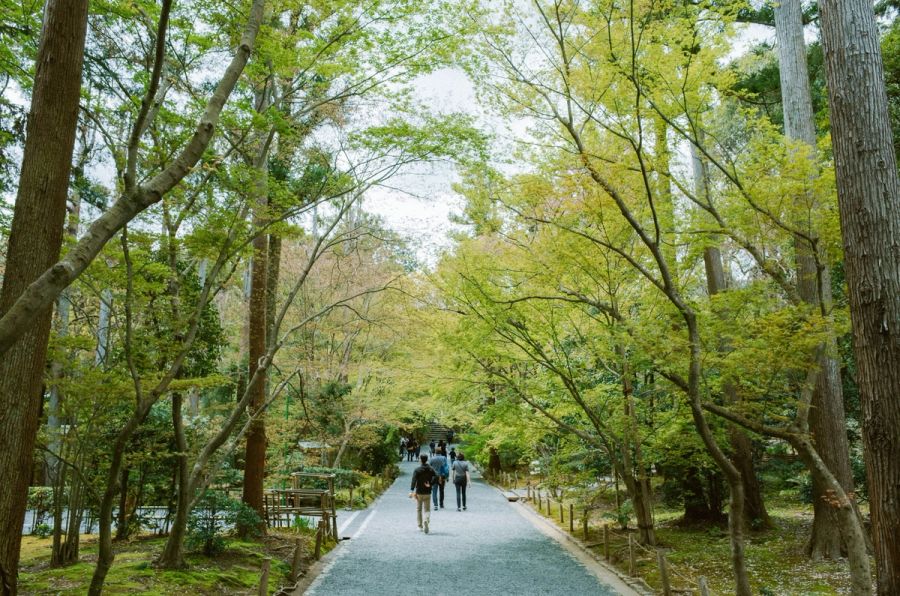
Image by PJH on Unsplash
Climate change is exposing new pressures within the urban environment. Rising temperatures and more frequent extreme weather events are not only a matter of meteorology; they are reshaping how cities function and who is most affected. From hidden health risks to uneven exposure and unintended social consequences, a new vocabulary is emerging to describe these urban climate stresses.
● Silent killer
While floods and storms capture the headlines with their visible wreckage, extreme heat operates as a quiet, systemic strain on the urban environment. This 'silent killer', responsible for over 489,000 deaths annually according to The Lancet, represents the most significant climate-related health risk in our cities, and stands as an invisible pressure point that tests the limits of our public health systems and the resilience of our most vulnerable communities.
● Eco-gentrification
Environmental improvements such as parks, green corridors, or pedestrianized areas can unintentionally drive rising property values and displacement. 'Eco-gentrification' describes this paradox, where climate-friendly interventions risk excluding the communities they aim to benefit.
● Thermal gap
The thermal gap refers to the unequal exposure of different communities to urban heat. The hottest areas often coincide with the most vulnerable populations, highlighting the need for heat justice: public policies and urban design that actively reduce this inequality and ensure that cooling strategies reach those who need them most.
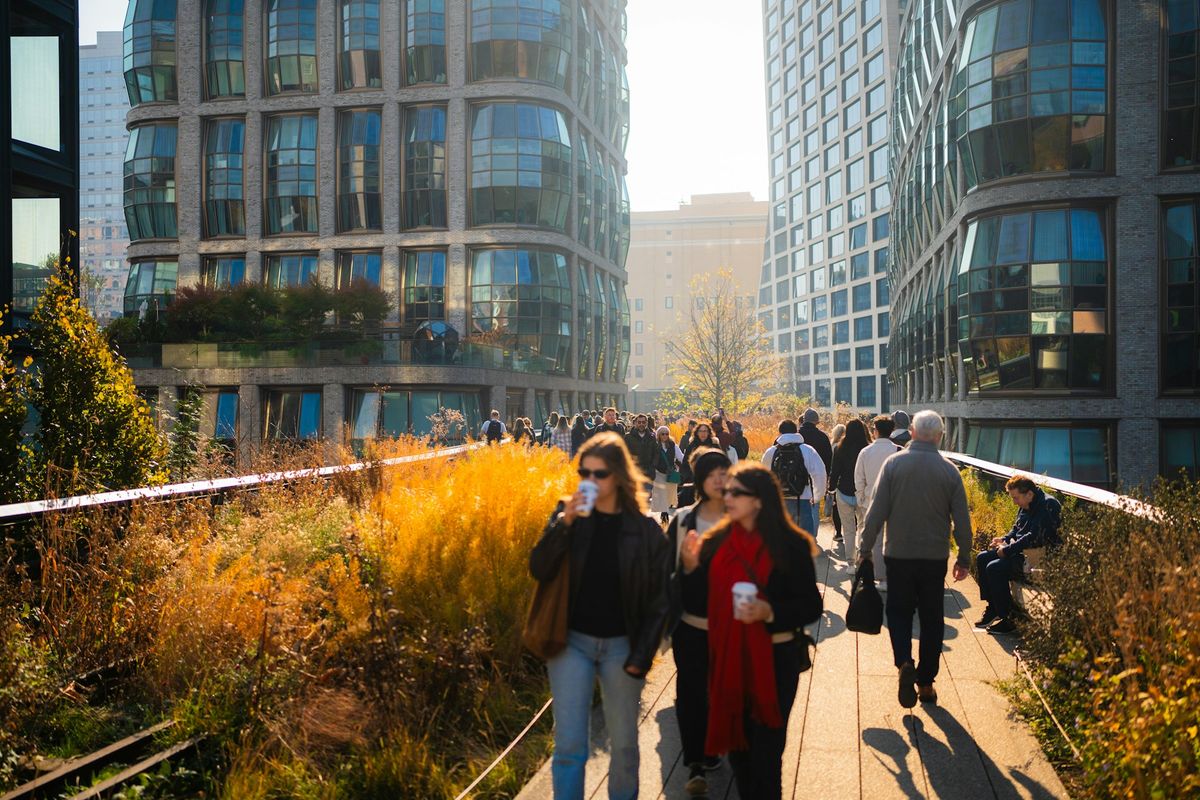
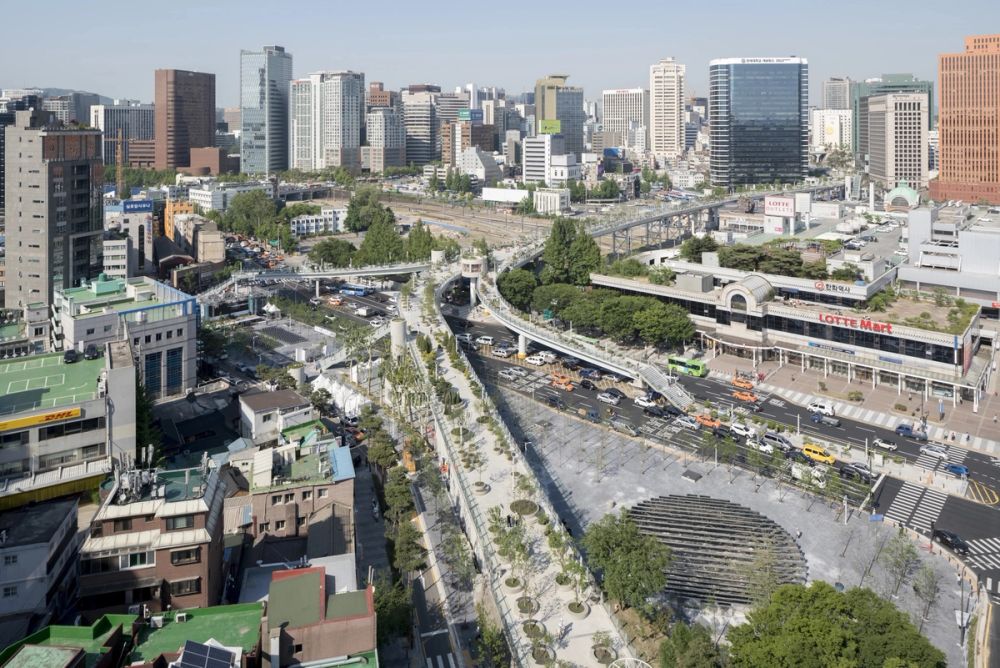
The High Line in New York serves as a recurring example of eco-gentrification. Image by Mason C on Unsplash
In the face of these climate stresses, new concepts around urban justice and new forms of governance have stood up as the first immediate response: first, by codifying the rights of citizens, recognizing that safety from life-threatening heat is a matter of equity; and second, by reinventing how cities are managed. From simulating extreme scenarios to creating dedicated institutional roles, the following terms describe a new frontier where policy and planning act as proactive defenders of citizens’ rights and city readiness.
● Climate habitability
Beyond the metrics of sustainability, we are now entering the era of urban viability. Climate habitability measures the essential thermal threshold that determines whether a city remains environmentally functional for its citizens. Driven by initiatives like the 'Cooling Singapore' project, which uses a digital urban twin to simulate and measure heat limits, cities are now actively mapping these survival thresholds to ensure their streets can continue to support the simple rhythms of daily life.
● The 'Right to Shade'
In the face of extreme heat, access to cooling is the new frontier of urban justice. The 'Right to Shade', popularized by the urbanist and climate designer Clément Gaillard, advocates for an equitable distribution of thermal protection, ensuring that the ability to walk, wait, or rest in the city without health risks is a guaranteed public service, not a geographical privilege.
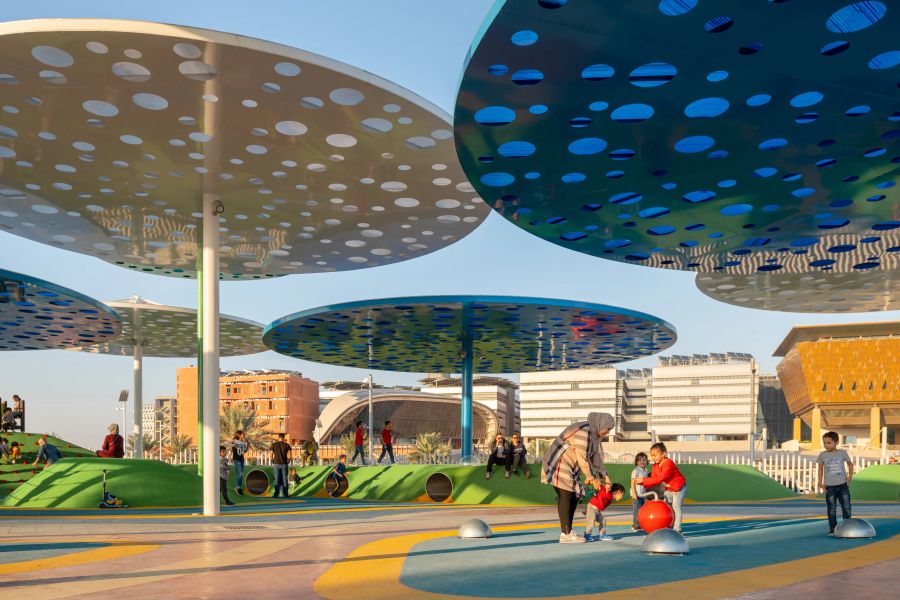
Public playground in Masdar, Abu Dhabi. Image by Bojani on Shutterstock
● 50º drills
As 50°C slowly shifts from dystopian fiction to an increasingly recurring headline, cities must rehearse for the extreme. These '50º drills' are urban stress tests designed to rethink community response for a future of unprecedented heat peaks. Paris has led this effort with its 'Paris à 50°C' simulation, an exercise that forced planners to adapt the city’s historic architecture and create cooling islands to protect citizens during future climate emergencies.
● Heat Governance
More than a set of emergency protocols, heat governance is the structural backbone when it comes to cooling cities. It encompasses the cross-cutting policies, real-time data integration, and institutional roles required to manage urban temperatures as a permanent factor in urban planning, such as the increasingly frequented role of Chief Heat Officers that has already been appointed in cities such as Athens, Los Angeles, Freetown or Melbourne.
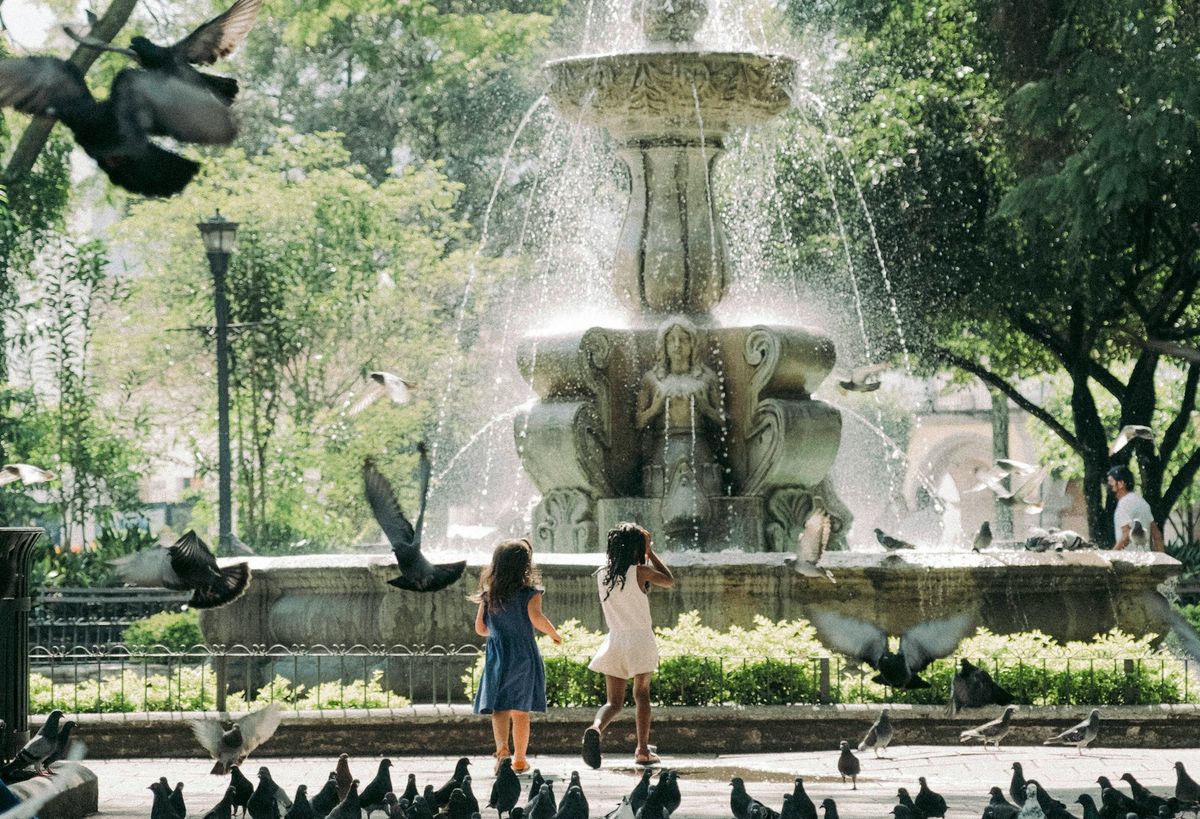
Image by Colin + Meg on Unsplash
Alongside new governance models and a growing focus on urban justice, cities are also rethinking how the urban environment itself functions. If extreme weather is the new urban condition, cities must move beyond rigid infrastructures and start behaving more like living systems. The following terms reflect this shift from grey infrastructure toward ecological intelligence embedded in the urban fabric.
● Urban biomimicry
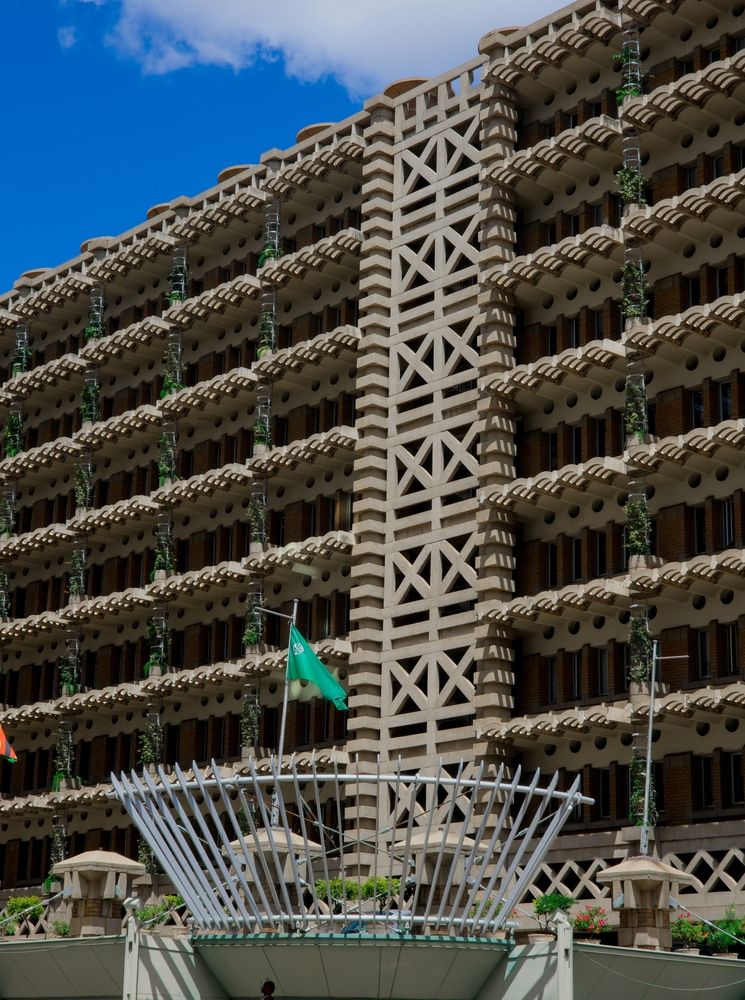
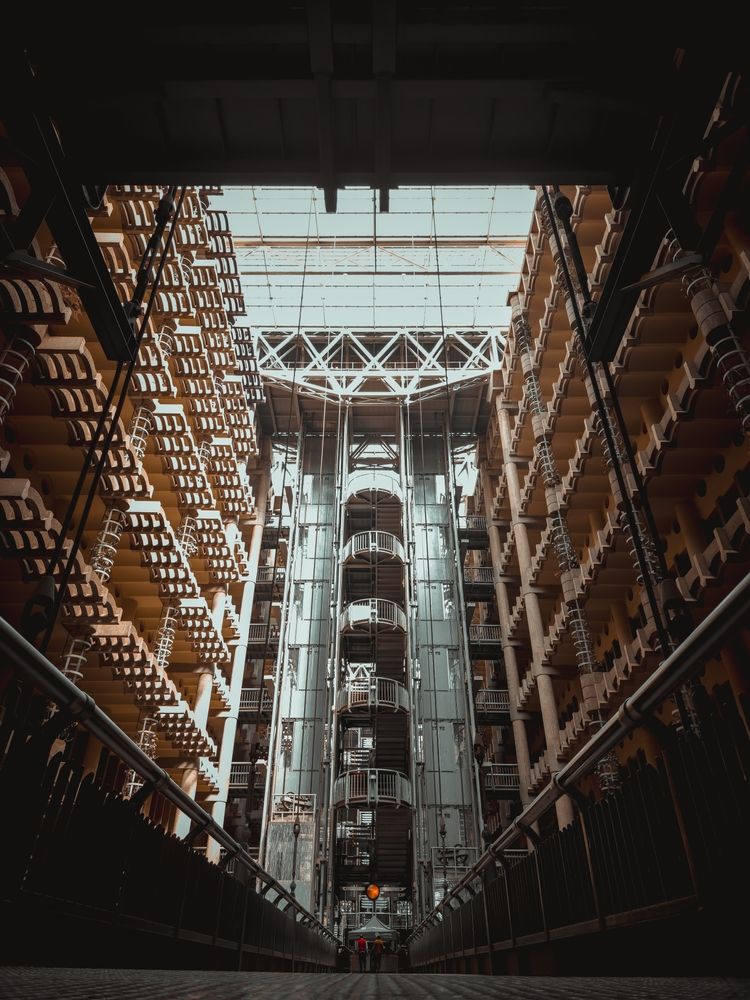
Biomimicry in cities means designing urban systems that emulate the strategies of natural ecosystems to improve adaptation and resilience. An example is Eastgate Centre in Harare, Zimbabwe, whose ventilation system mimics termite mounds to regulate indoor temperature with minimal energy.
.jpg?w=1200&q=80&fit=max&auto=format)
.jpg?w=1200&q=80&fit=max&auto=format)
The Eastgate Centre in Harare, Zimbabwe | Images by Tee2045 and Carlos Takudzwa on Shutterstock
● Climate oases (or shelters)
Climate oases are transforming our most cherished civic spaces (from local libraries to schoolyards and concurred squares) into a life-saving network of thermal sanctuaries. These aren't just emergency drop-ins; they are vibrant, reimagined civic hubs where community life continues to thrive even on the hottest days. Projects like KlimaKover, a modular low-energy pavilion developed by Danish Urbanism Studio Henning Larsen, demonstrate how public spaces can provide shaded and radiant-cooled relief in urban environments.
● Sponge cities
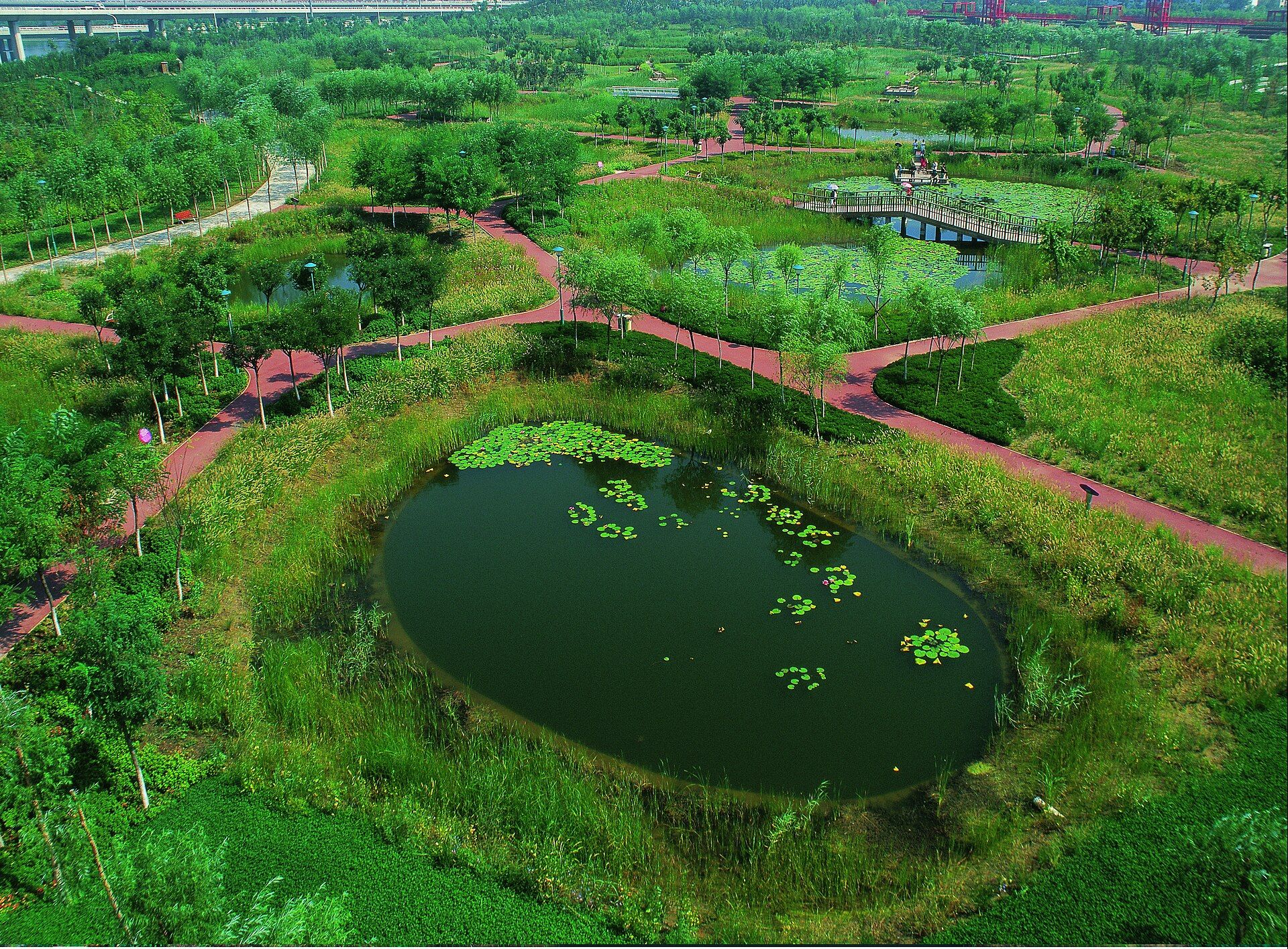
A concept developed by landscape architect Kongjian Yu in 2000, sponge cities designed to absorb, store, and reuse rainwater through green infrastructure and permeable surfaces, reducing flood risk while improving urban cooling and biodiversity. Copenhagen’s cloudburst plan, with streets and floodable parks designed to temporarily store stormwater, is a well-known example.
.jpg?w=900&q=80&fit=max&auto=format)
Tianjin Qiaoyuan Park, in China: a pioneering example of sponge infrastructure. Image by Mydogistiaotiaohu on Wikimedia Commons (CC BY-SA 4.0)
● Living labs
Urban living labs turn parts of the city into real-world experimentation spaces where governments, researchers, businesses, and citizens co-create and test climate solutions before scaling them. In Amsterdam’s Buiksloterham district, for example, a former industrial area has become a testbed for circular construction, renewable energy systems, and closed-loop material use—demonstrating how cities can prototype sustainable neighbourhoods in real urban conditions. Other cities such as Singapore and Barcelona are using similar approaches to explore questions around urban cooling, mobility, energy systems, and nature-based infrastructure. As climate action evolves, so does the language cities use to describe it — but the challenges continue to grow, making these experimental spaces crucial for testing and refining the solutions of tomorrow. turning experimentation into a core tool for navigating the uncertainties of climate change. ●
Related Articles
Much More Than Meeting Places: 5 Public Spaces Redefining City Life
.jpg?w=1000&q=80&fit=max&auto=format)
What's New at the New CitiesToBe?
«When you ride a bike, the city opens itself to you»