
The Monthly Question: Is Tourism Compatible with Keeping Historic City Centers Alive?
Venice is often cited as a paradigm. Since 1950, its historic center has lost around 72% of its population — more than 126,000 residents. Over time, tourism has transformed a growing share of the city’s housing into temporary accommodation, displacing residents and making stable living increasingly difficult. Despite efforts to regulate short-term rentals, illegal listings and weak enforcement continue to accelerate depopulation and social hollowing. Streets and canals have gradually shifted toward near-exclusive tourist use, while local commerce and everyday life recede — feeding the perception of a city slowly turning into a theme park. The process is not new: as early as 2009, Venetians symbolically staged what they called a “funeral for Venice.”
When a city begins to operate primarily for visitors, its local identity risks becoming a curated product. The social dynamics that define urban life — and sustain quality of life for residents — start to erode. The disappearance of neighborhood commerce in favor of souvenir shops and 24-hour convenience stores, rising rents, displacement, and increasing pressure on public services all point to broader disruptions that extend beyond tourism itself.
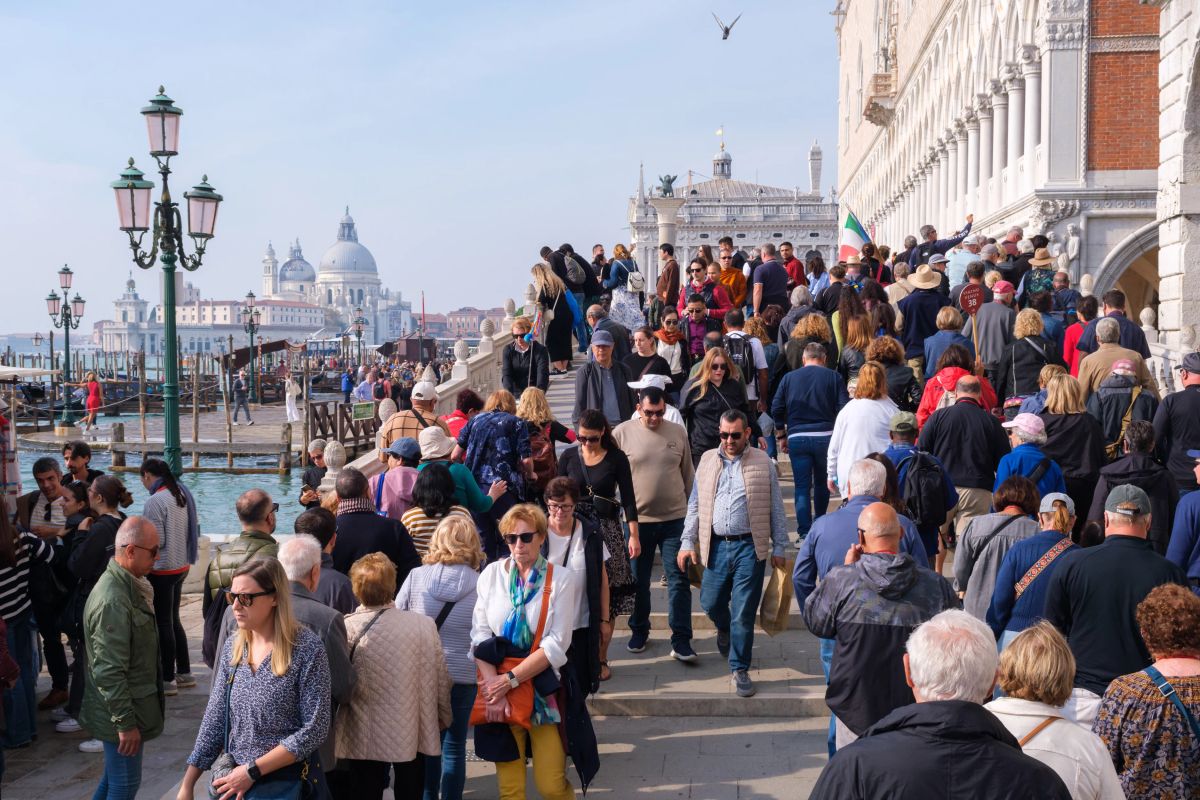
Venice serves as an example of tourism taking over a fragile historic city center | Image by Marc Bruxelle on Dreamstime.com
In this sense, tourism is closely tied to the right to the city. And in many historic centers, the prevailing model is generating growing friction. Venice is not an isolated case. Similar pressures are evident in cities such as Barcelona, Rome, Lisbon, Amsterdam, and Paris — and increasingly beyond Europe. Housing offers a clear indicator: between 2020 and 2025, rents for three-bedroom apartments in European city centers rose sharply, with increases of around 60% in cities like Barcelona and Madrid, and up to 60–80% in Lisbon, Prague, or Edinburgh, according to the Deutsche Bank Research Institute.
And yet, tourism remains a powerful economic engine. In 2025, the global travel and tourism sector contributed $11.7 trillion to global GDP, continuing to generate employment, investment, and opportunity. The question, then, is not whether cities should have tourism — because they will anyway — but how.
Across contexts, cities are searching for ways to rebalance this relationship. Moving toward more sustainable urban tourism models — ones that consider environmental, social, and economic impacts holistically — implies not only minimizing negative externalities, but potentially reversing them. Tourism, in this view, could become a tool for regeneration rather than extraction.
What would this require?
Part of the answer lies in defining intent. Not simply identifying target audiences, but clarifying the kind of value a city seeks to create through tourism — and for whom. What kind of visitors does a city want to attract? What role should tourism play in its economic, social, and cultural fabric?
But defining the “what” is only part of the equation. The other lies in how tourism is governed.
Protecting local economic, social, and cultural fabric from the pressures of gentrification and overcrowding is essential if tourism is to remain compatible with everyday life. Some cities have begun to act: Amsterdam can restrict the opening of tourist-oriented shops in certain areas; Buenos Aires legally protects its historic “bares notables”; Santiago de Compostela preserves traditional shop signage in its historic center to maintain its visual identity.
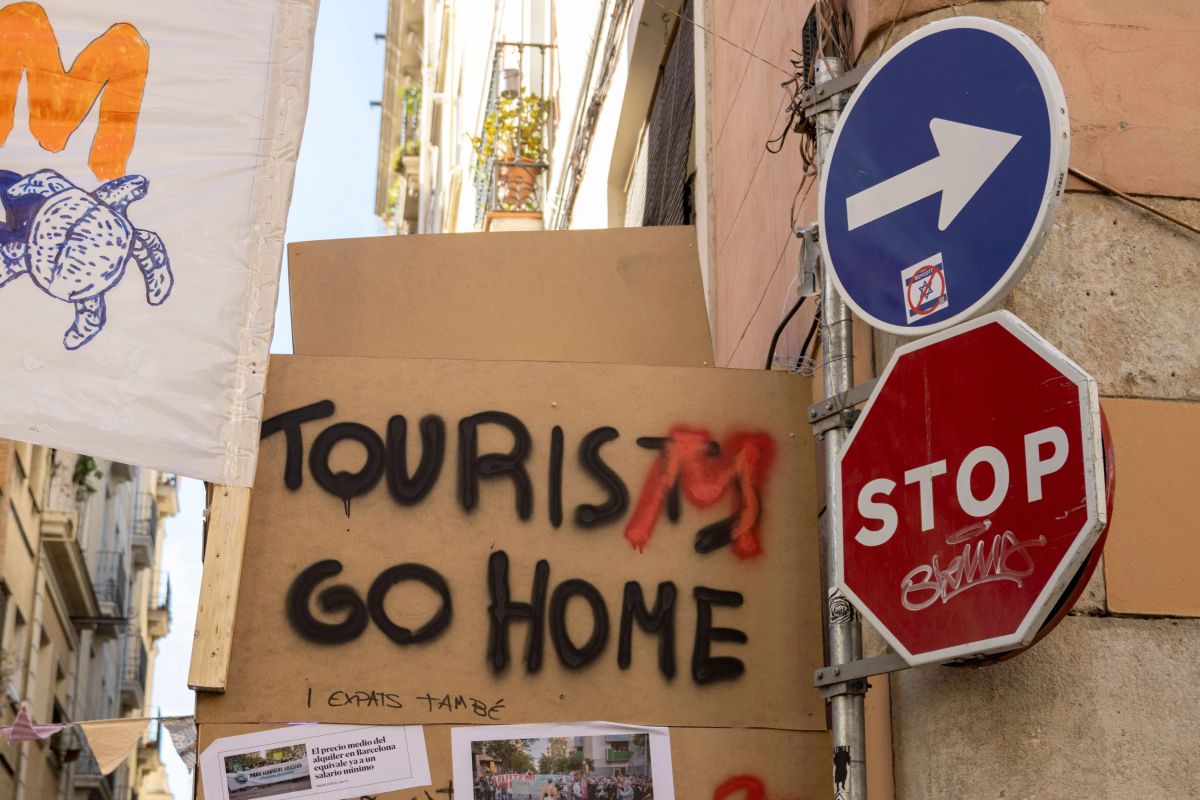
Image by Wirestock on Dreamstime.com
Flow regulation also plays a role. Rome has introduced fees to access major landmarks such as the Pantheon or the Trevi Fountain. Barcelona has limited access to sites like Park Güell, developed specific management plans for high-pressure areas such as the Sagrada Família or La Rambla, and is progressively increasing tourist taxes.
Yet isolated measures are rarely sufficient. What emerges instead is the need for a more systemic approach — one that integrates governance, economic activity, cultural preservation, and everyday life. Such an approach inevitably involves multiple actors: public institutions, the private sector, the tourism industry, academia, and citizens themselves.
In this context, data becomes a key enabler. It allows cities to understand flows before, during, and after the tourist experience; to measure impact; and to incorporate both resident and visitor perspectives. Combined with shared governance, it can inform more strategic policies — helping reposition tourism not as a destabilizing force, but as a potential contributor to urban vitality.
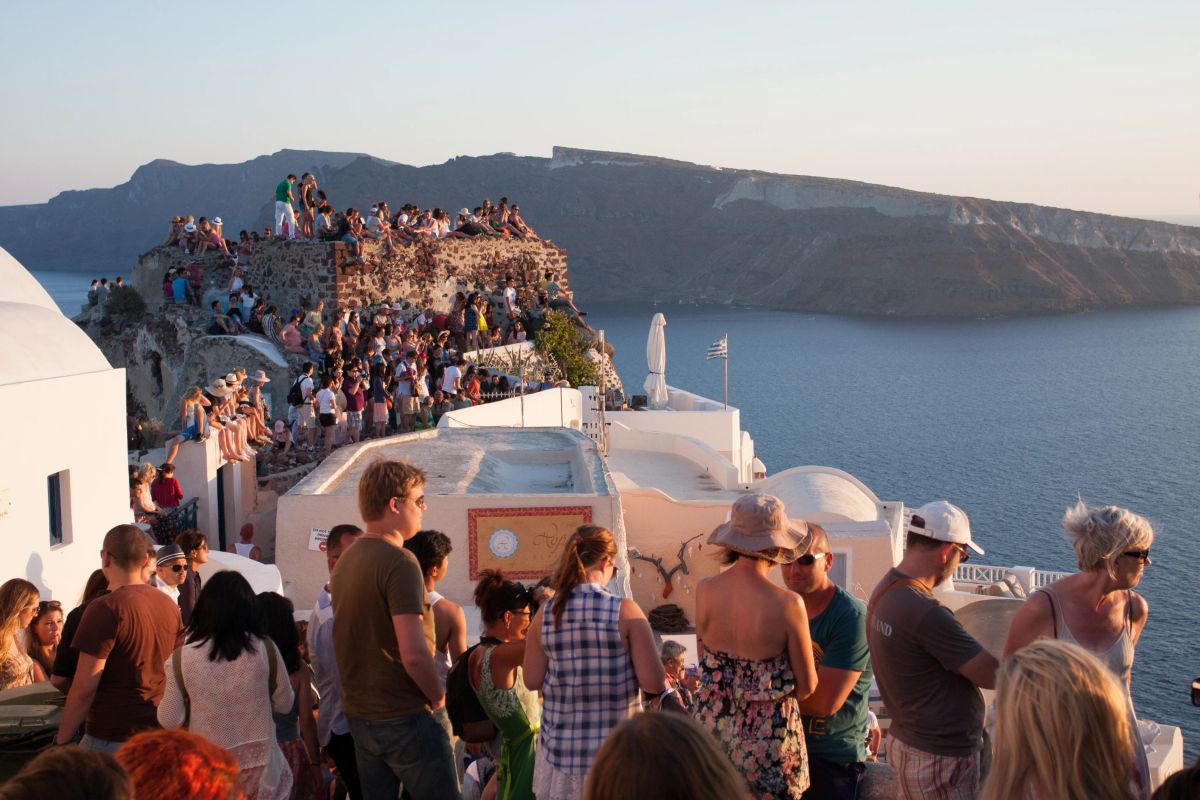
Visitors enjoy a sunset from Oia, Santorini, Greece | Image by Wojciech Grabowski on Dreamstime.com
If managed carefully, tourism can generate tangible local benefits: economic diversification, new business ecosystems, and reinvestment in historic areas. In some contexts, it can even help sustain identity. In Japan, initiatives such as Shunran-no-Sato’s farm inns have revitalized depopulated rural areas, preserving traditions while creating employment. In Donostia–San Sebastián, the “Gurera” model places residents at the center, regulating flows and accommodation to ensure that tourism supports — rather than disrupts — daily life.
A more balanced volume of visitors can also improve both the resident and tourist experience, reinforcing a city’s global reputation and its capacity to attract investment and talent. From a cultural perspective, tourism remains a key mechanism for preserving heritage, supporting the arts, and maintaining historic sites — often funded directly or indirectly through visitor activity.
As global tourism flows are expected to continue growing, the challenge becomes less about choosing between tourism or no tourism, and more about defining its role. What kind of tourism do cities want? How should it be governed? And ultimately, who should it serve?
Public leadership, shared responsibility, and the intelligent use of data will be critical in shaping answers to these questions. The outcome will determine whether tourism continues to act as a source of tension — or evolves into a strategic lever for sustaining the life, identity, and resilience of historic city centers. ●
Related Articles
Cities in 2026: 5 Urban Tensions That Will Make Headlines — And 5 Ways to Move Forward
.jpg?w=1000&q=80&fit=max&auto=format)
What's New at the New CitiesToBe?
Much More Than Meeting Places: 5 Public Spaces Redefining City Life