.webp?w=1425&q=85&fit=max&auto=format)
Lovable Bikeways, Livable Cities: 10 Stories of Beauty, Cycling and Urban Value
If we gathered one hundred people who perfectly represented the global population, only one of them would enjoy a privilege that should never be exclusive: breathing decent-quality air. It sounds dramatic — and it is. Today, 99% of the world’s population is exposed to air that fails to meet the World Health Organization’s quality standards, and every year seven million people die because of it.
How we move around our cities is closely tied to this reality. In Europe, for example, transport accounts for roughly one quarter of the EU’s total CO₂ emissions, and 71.7% of those emissions come from cars, motorcycles and trucks.
Yet if we flip the narrative, a huge opportunity comes into view: urban mobility is one of the most powerful levers we have to improve the health of our cities. And alongside e-mobility efforts or simply walking, one mode stands out as remarkably beneficial for the body, the mind and the planet: the bicycle.
Today, according to the Institute for Transportation & Development Policy, only 7% of urban trips worldwide are made by bicycle. If that figure rose to 23% by 2050, the world could save up to 300 megatonnes of CO₂ every year — roughly equivalent to the annual emissions of a country like Spain.
You don’t need to be a genius to connect the dots: investing in urban infrastructure that makes cycling possible and attractive is an investment in long-term health. But cities that are already taking action reveal something even more powerful: building cycling infrastructure isn’t just about health or emissions — it’s about creating urban value. A bikeway can stitch together fractured urban fabrics, enhance public space, spark new interactions, new forms of affection and new ways of living and experiencing the city. And it can be, in addition to sustainable, beautiful and enjoyable.
An urban win-win-win, right? Here are 10 examples that prove it.
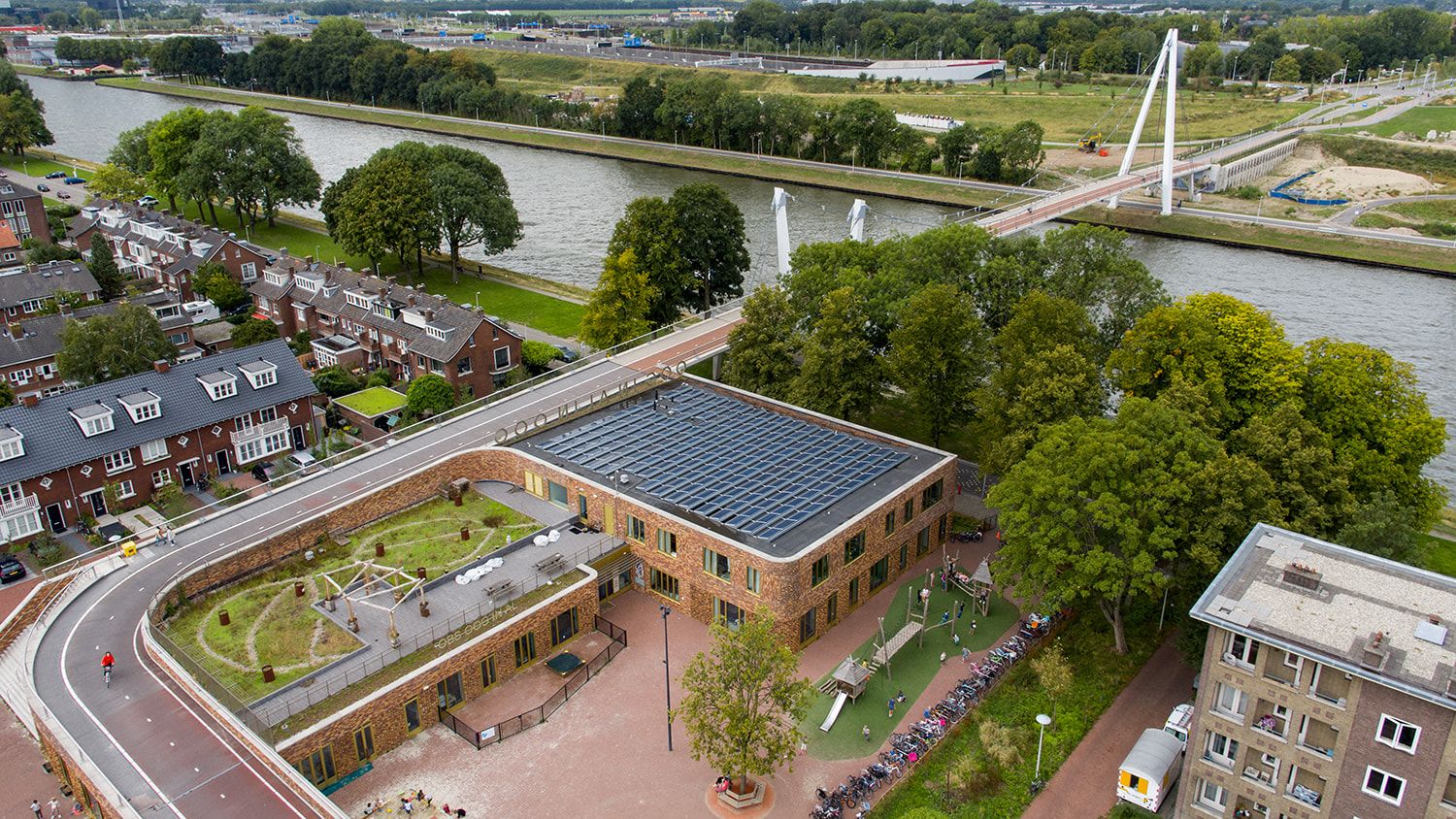
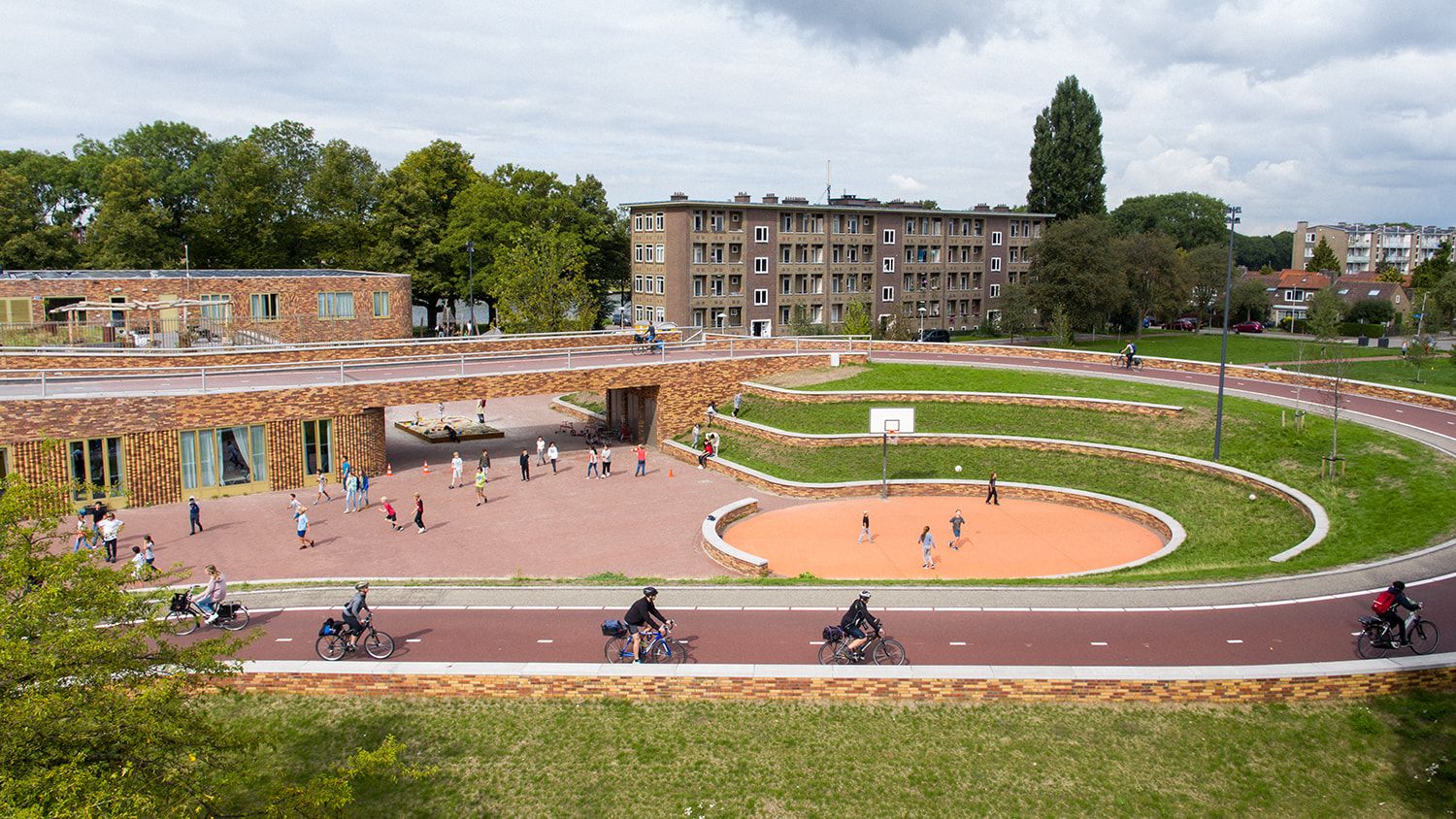
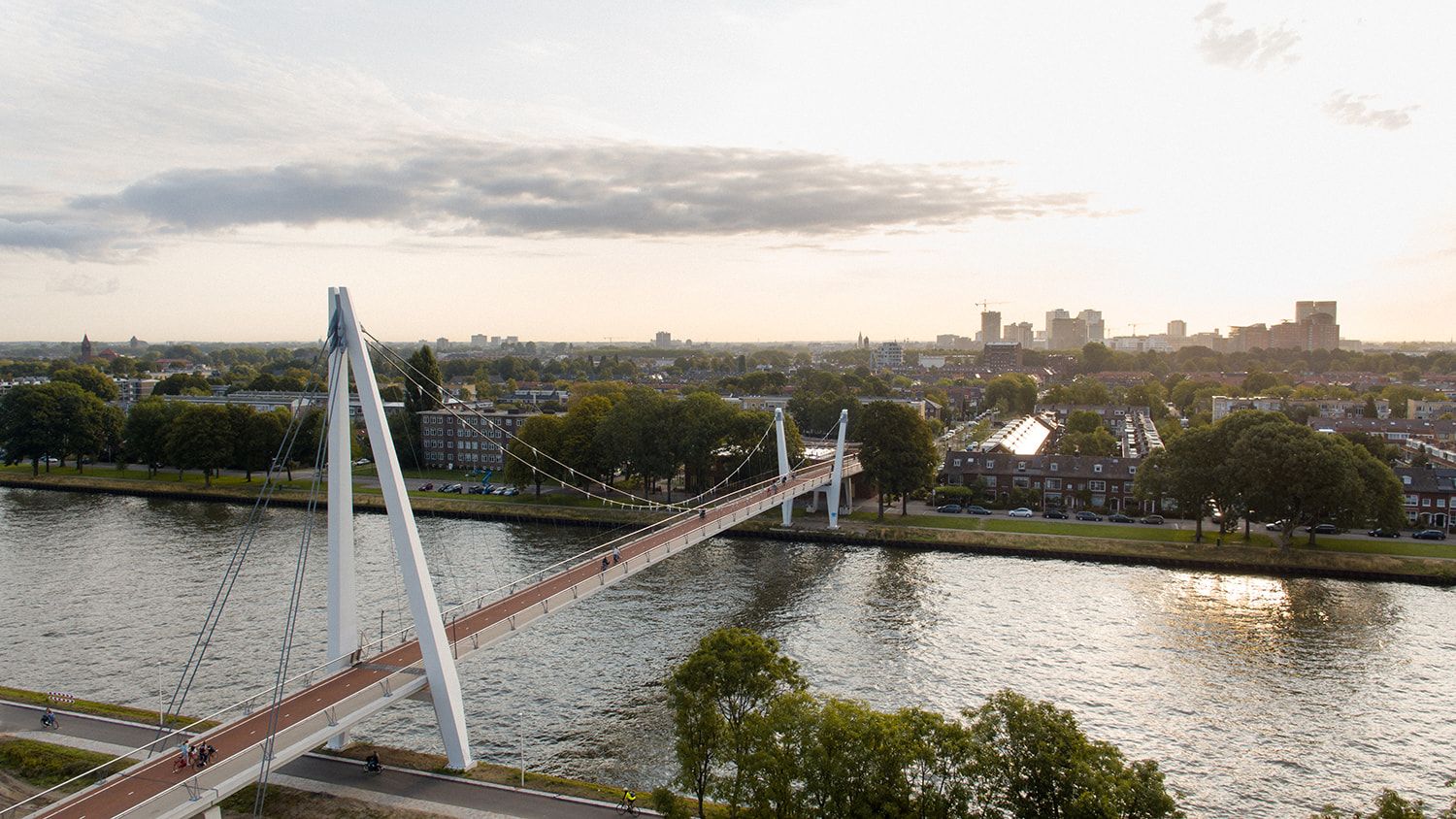
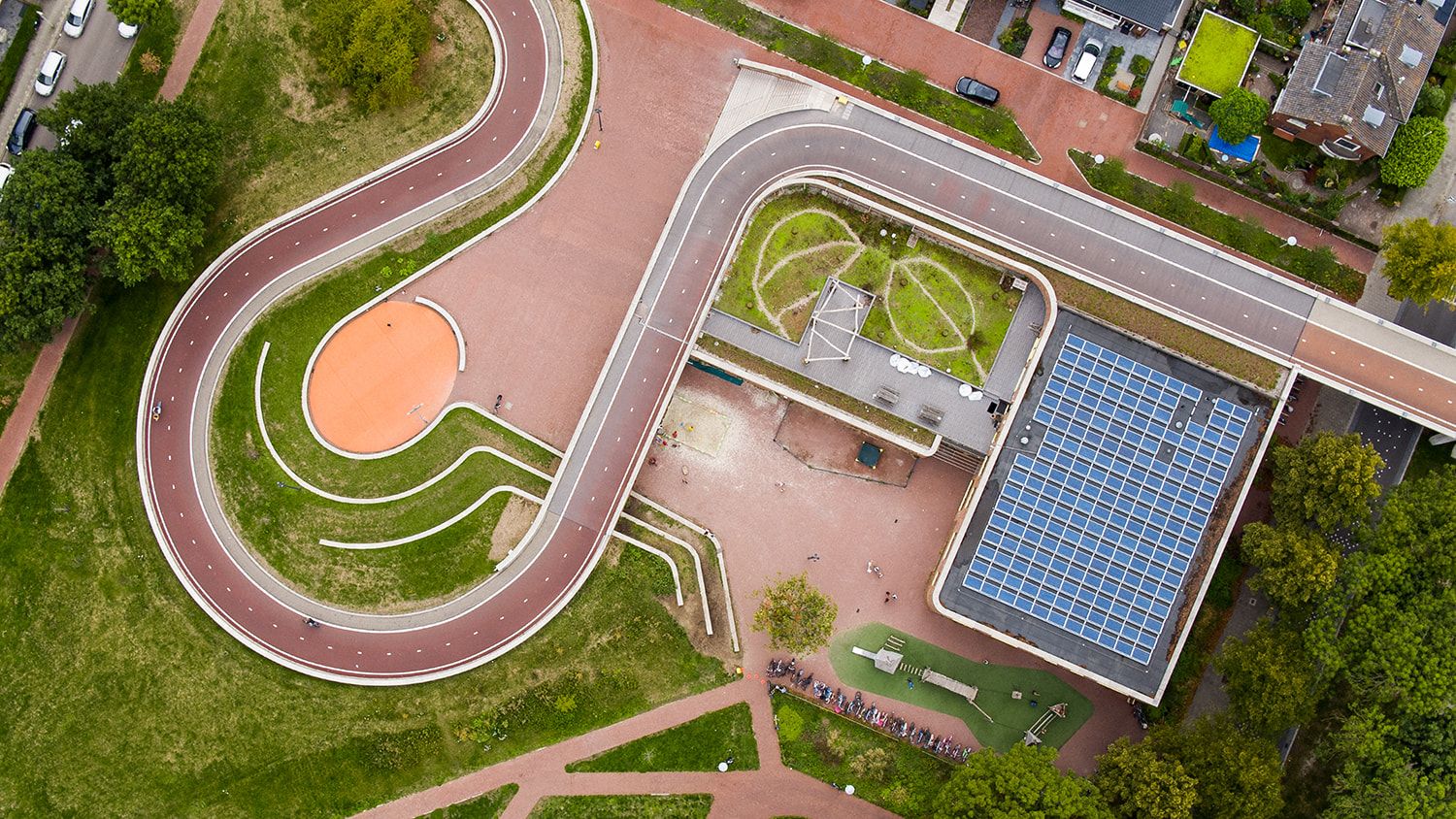
Is it a bridge for cyclists and pedestrians? The roof of a school? A panoramic viewpoint? A new seam in the urban fabric of the fourth-largest city in the Netherlands? Since 2017, the Dafne Schippers Bridge is — and does — all of the above. It showcases the multiplying, connective power that infrastructure design can bring to a city.
Every day, 7,000 cyclists cross it between Utrecht’s historic centre and the growing district of Leidsche Rijn, across the Amsterdam–Rhine Canal. With its iconic curved shape, the bridge takes advantage of the surrounding topography and built environment to integrate seamlessly into a primary school’s structure, form a new neighbourhood park and energise an area of the city long overlooked.
.jpeg?w=675&q=85&fit=max&auto=format)
.jpeg?w=675&q=85&fit=max&auto=format)
.jpeg?w=675&q=85&fit=max&auto=format)
.jpeg?w=675&q=85&fit=max&auto=format)
Images by Marcel Ijzerman
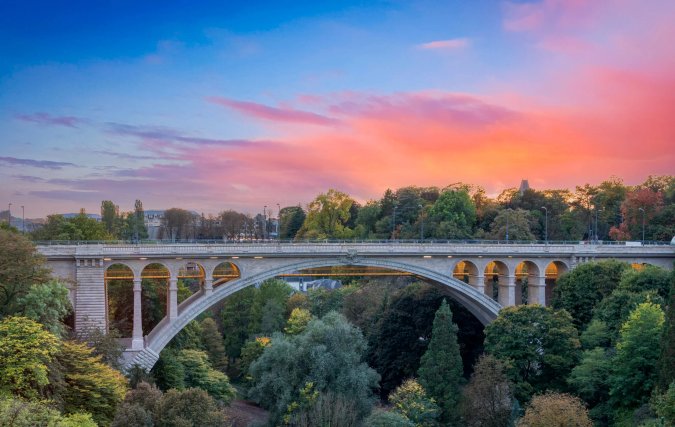
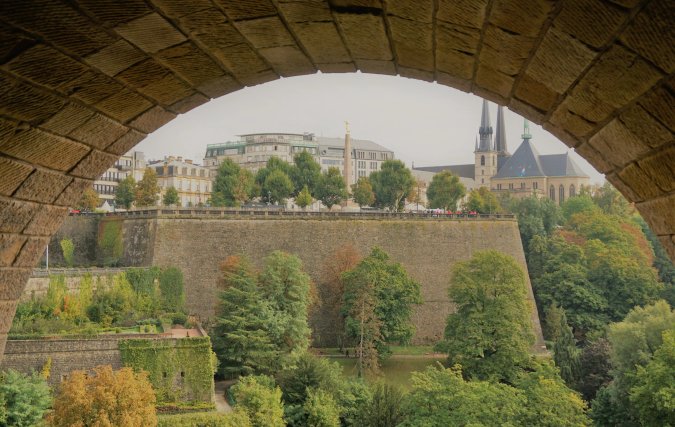
A decade ago, Luxembourg City needed better connectivity between the historic Ville Haute and the 19th-century Plateau Bourbon neighborhood, separated by the Pétrusse Valley. The iconic 1903 Pont Adolphe could not accommodate more tram, pedestrian and cycling lanes — and building a new bridge would have had too much visual impact on this UNESCO World Heritage city.
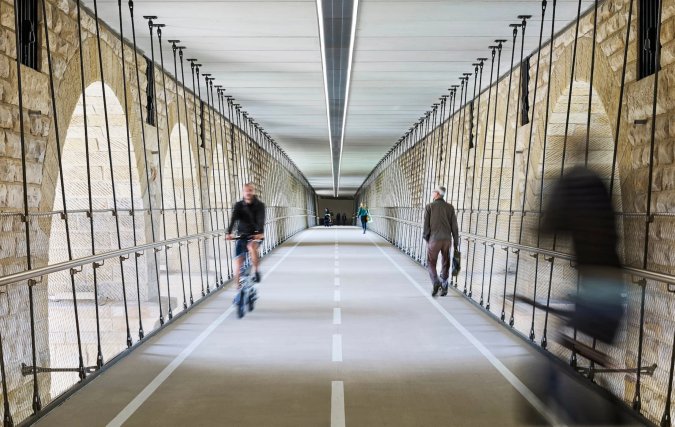
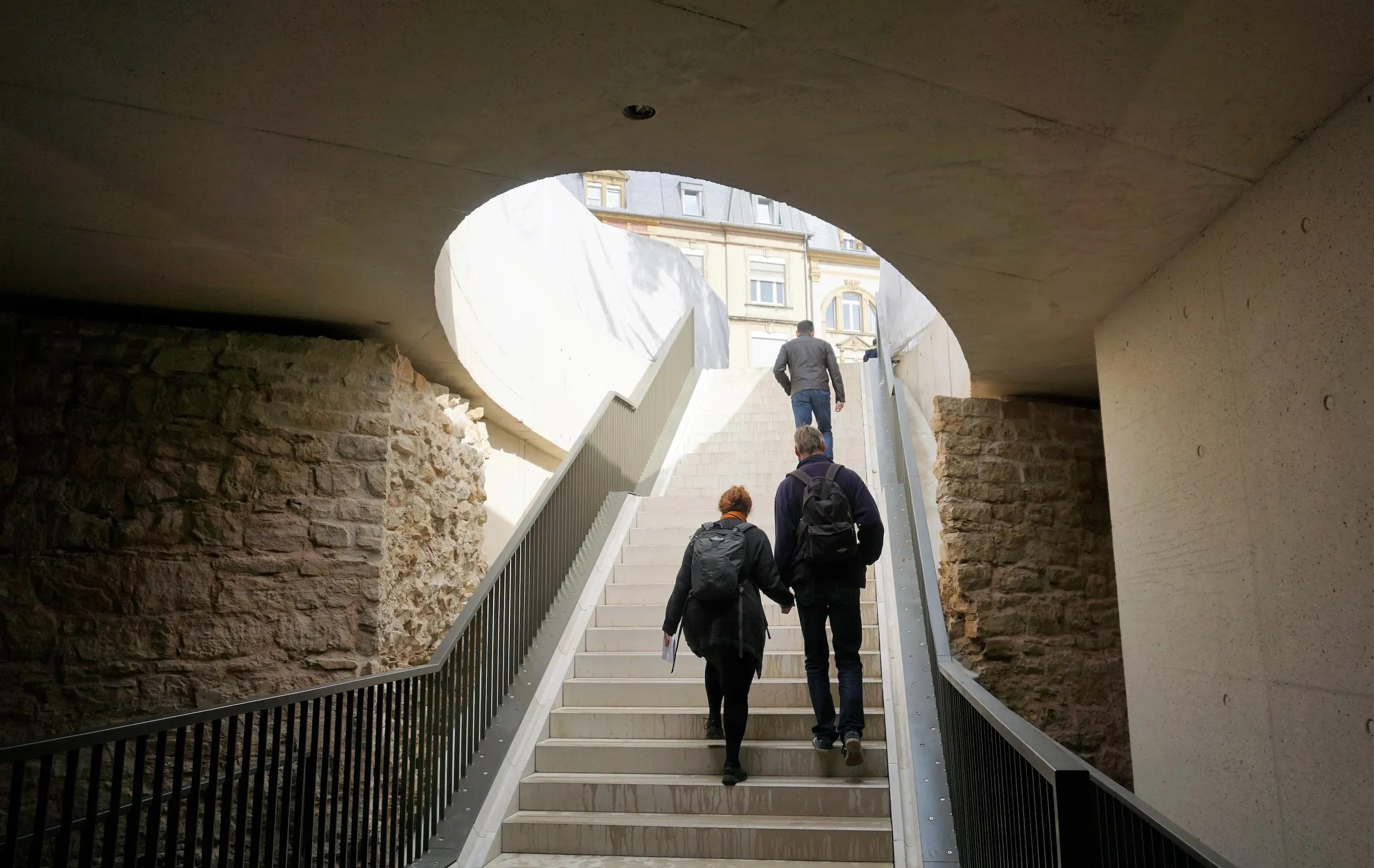
The solution was ingenious: a pedestrian and cycling deck suspended beneath the existing arches of Pont Adolphe. Opened in 2017, the Passerelle hanging from them is nearly four metres wide and more than 150 metres long, with four lanes — two for cyclists and two for pedestrians. Not only does it preserve the historic silhouette of the original structure, but it also creates a new viewpoint framing the city through its monumental arches.
%20(1)%20copia.webp?w=675&q=85&fit=max&auto=format)
WorldWander, Shutterstock (1) | CBA Architects (2) | GilPe, Wikimedia Commons (3,4)
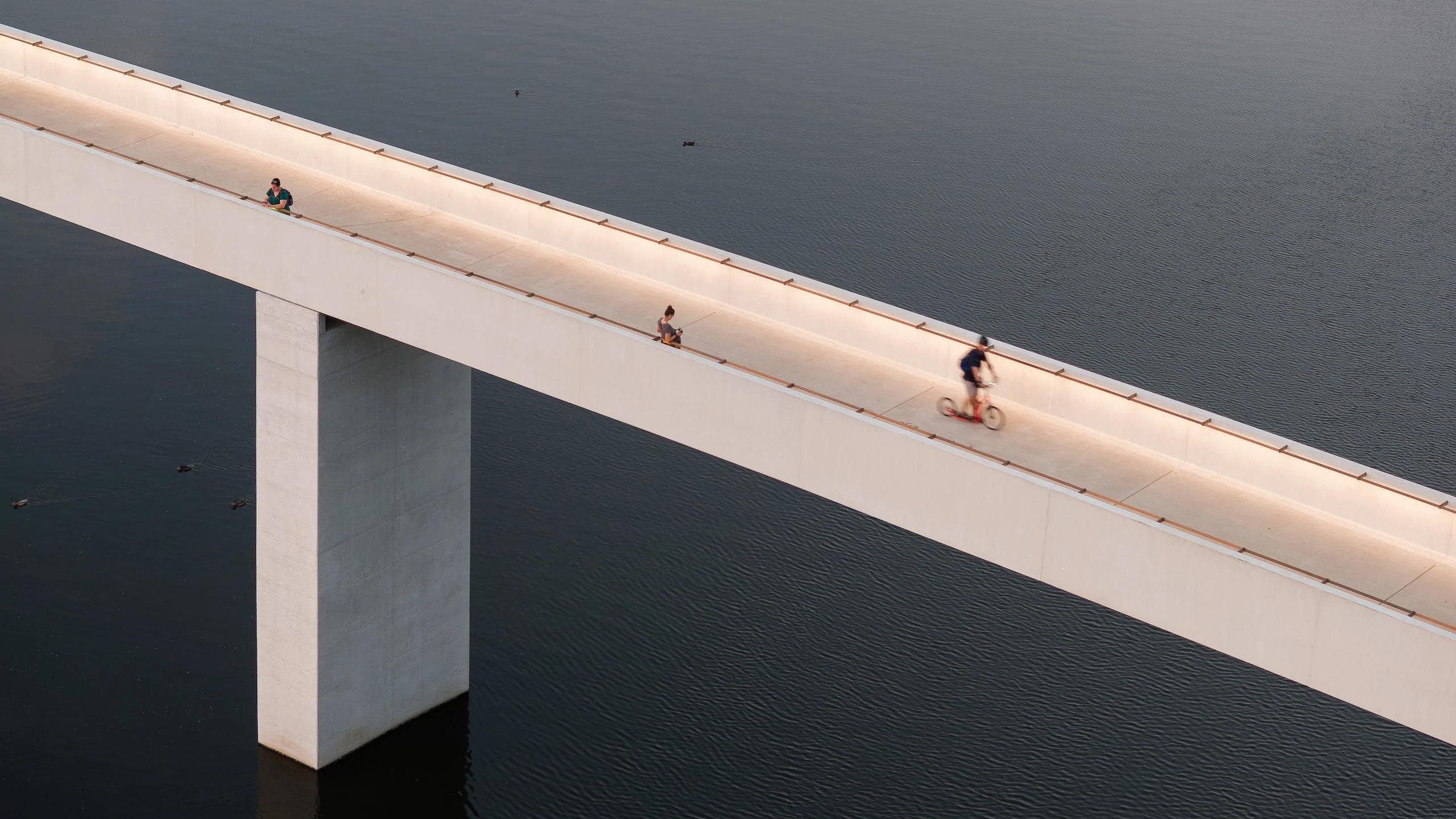
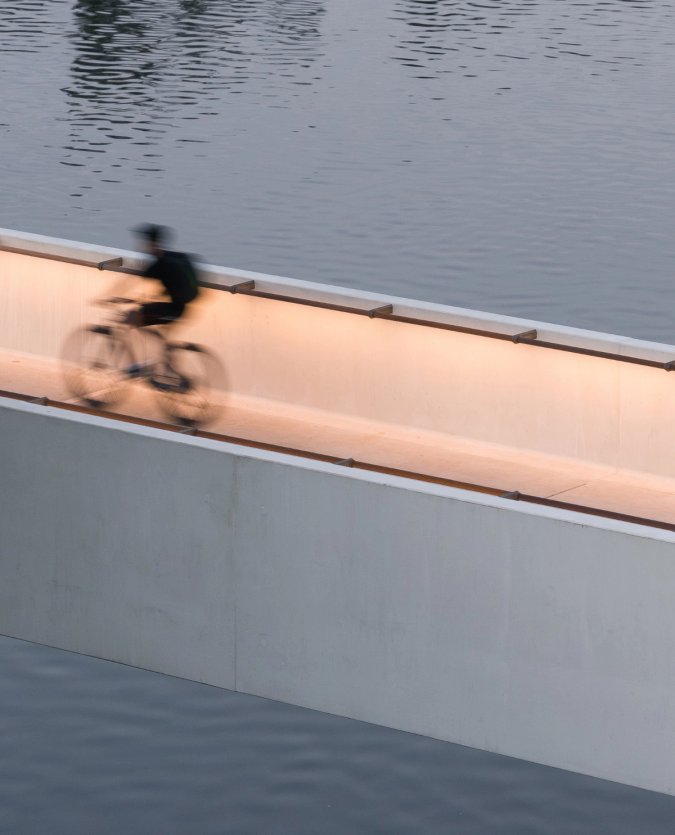
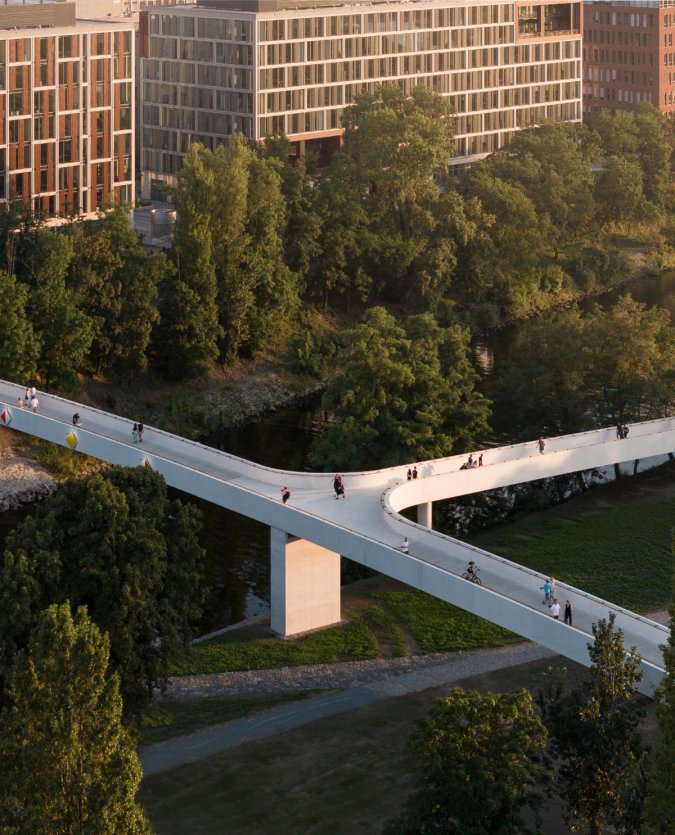
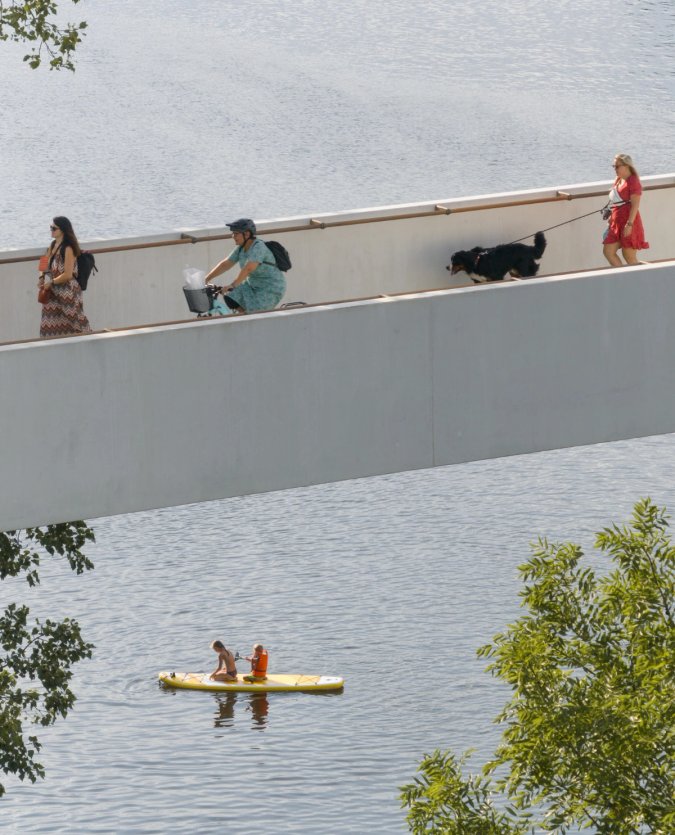
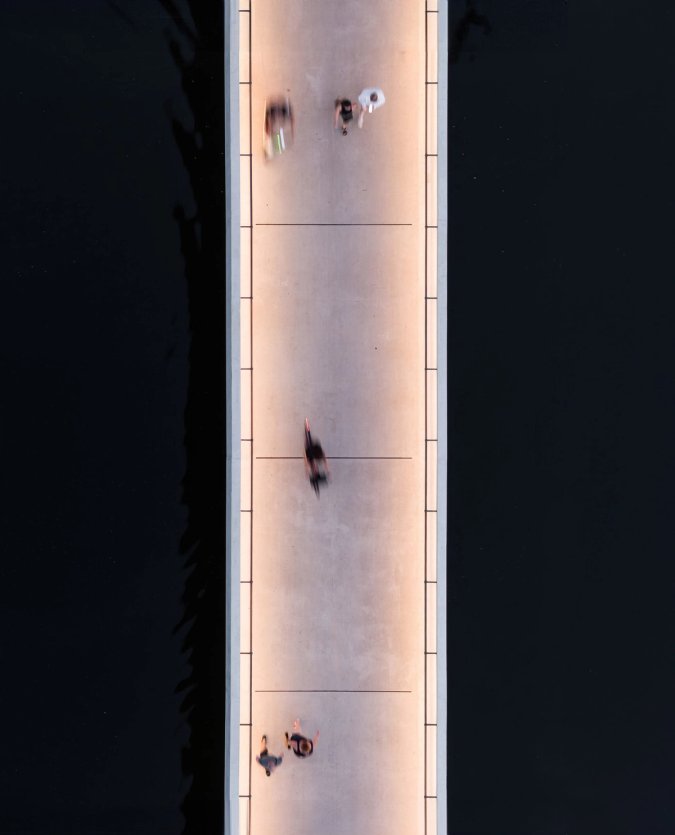
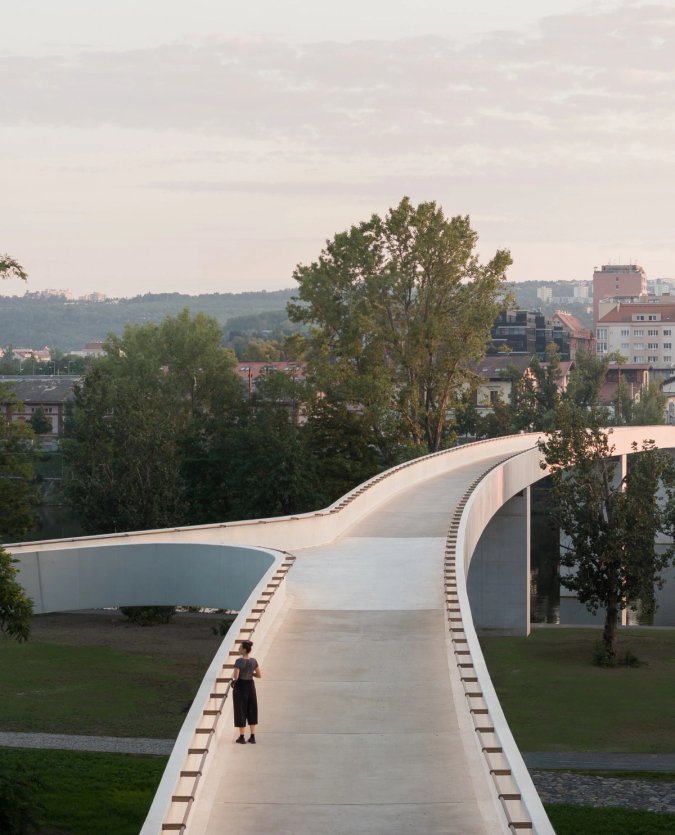
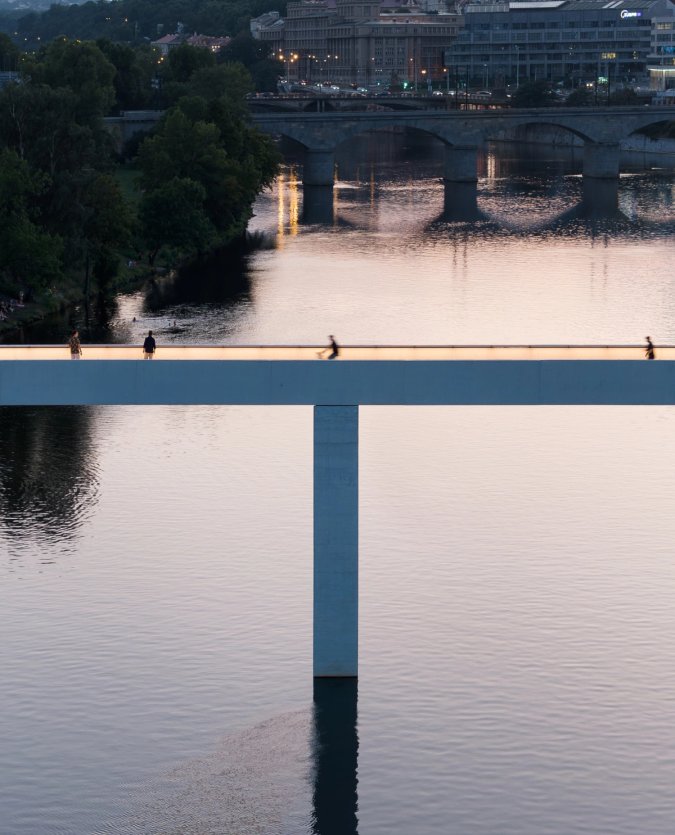
In a city of superb medieval beauty along the Vltava River, the discreet and exquisite Štvanice Footbridge has, since 2023, linked the Holešovice and Karlín riverbanks over Štvanice Island — and gifted passersby spectacular views of Prague’s majestic skyline.
Lightness, softness and minimalism define the design of this immaculate white-marble bridge, conceived not only to improve connectivity in the north-west of central Prague but also to provide an aesthetic, serene experience along the river. It deliberately avoids changes in height so as not to obstruct views of the city, water or trees, and its subtle handrail lighting creates a calm, timeless atmosphere. It is one of the nominees for the 2026 European Union Prize for Contemporary Architecture / Mies van der Rohe Award.
Alex Shoots Buildings - @alex.shoots.buildings
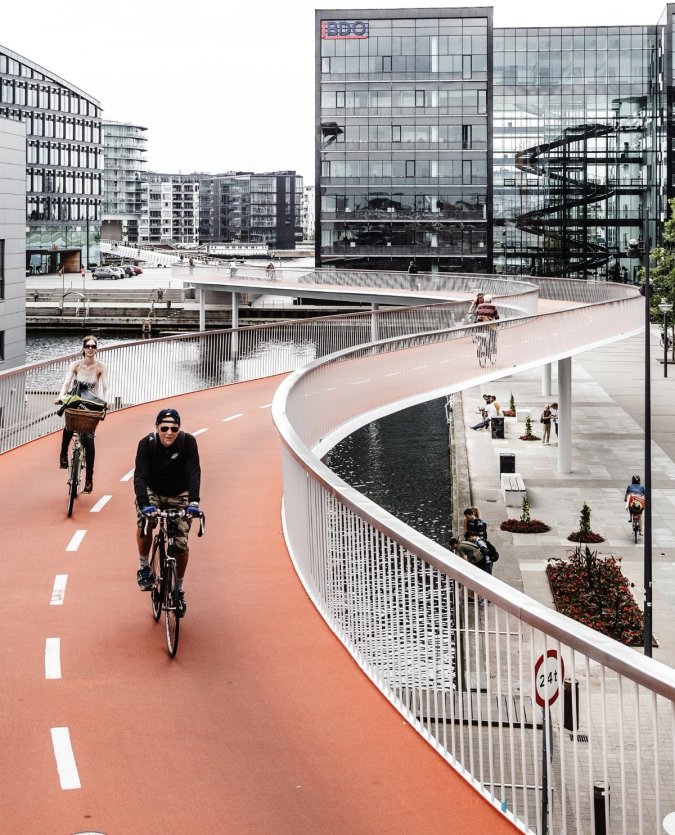
Debate may swirl about which city is the world’s cycling capital, but when it comes to the most scenic and fascinating cycling infrastructure, Copenhagen is the clear favourite.
Near the Fisketorvet Shopping Center, in a patchwork of rail lines, canals, pools and glass office buildings, the Cykelslangen winds freely through all these seemingly incoherent elements. Its delightful, irregular red path stitches them together, adding connection, coherence and playfulness. This celebrated route became an icon not only for the mobility it enables but for the pleasure of experiencing it. «It’s unequalled biking pleasure!» wrote the newspaper Politiken after its 2014 opening. Two years later it was featured at La Biennale di Venezia 2016, and in 2018 it won the Icon Award at the Danish Design Award.
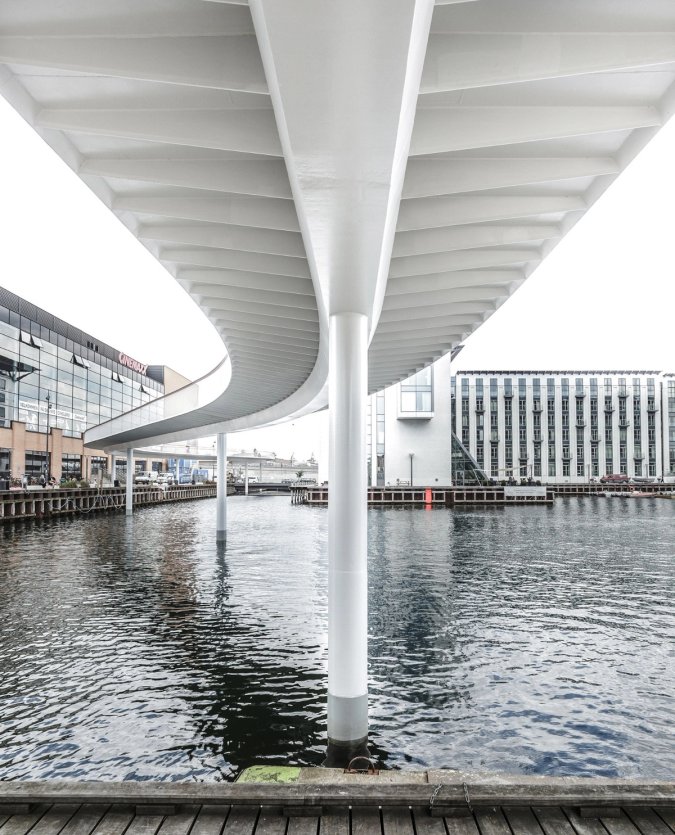
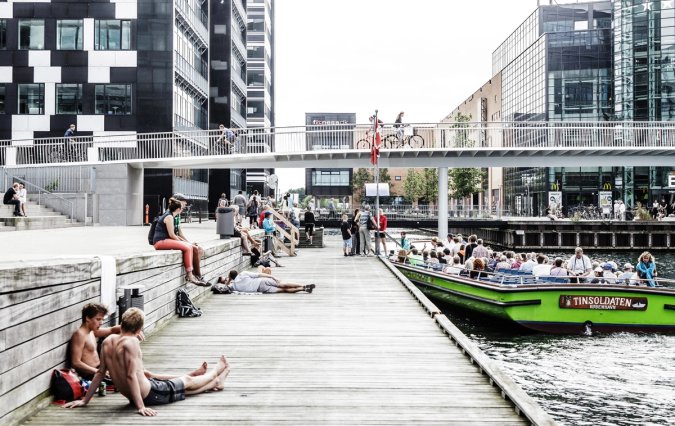
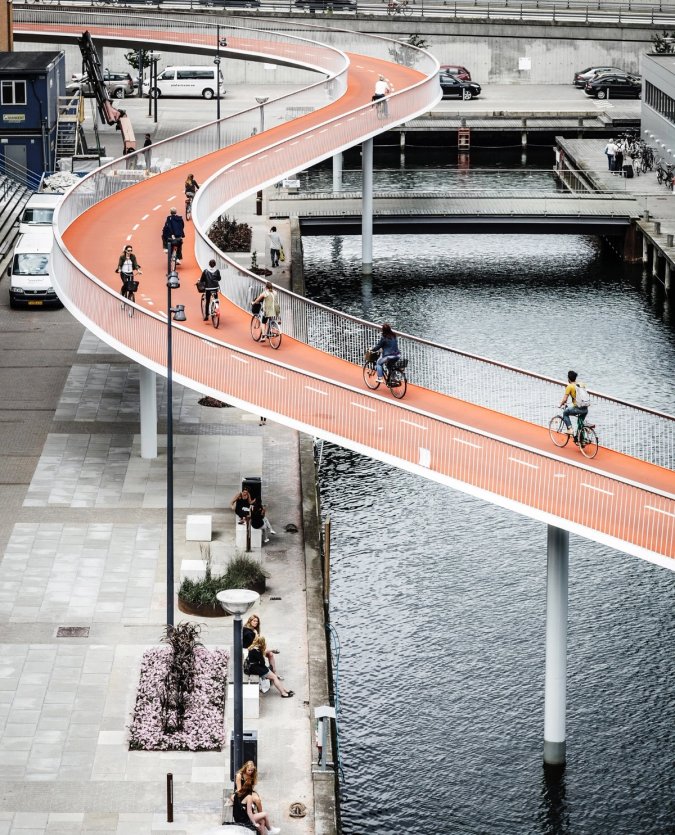
© Rasmus Hjortshoj
Just one kilometre south of the Cykelslangen, Lille Langebro demonstrates Copenhagen’s extraordinary density of elegant cycling bridges. More discreet but equally beautiful, it was designed in 2015 as part of the city’s strategy to transform the harbour into a civic leisure space — and to connect two misaligned streets on opposite banks of the canal, Vester Voldgade and Langebrogade.
A gift from the Realdania Foundation, the bridge offers an elegant curve that seems to float over the harbour. Every day, 10,500 cyclists and pedestrians cross it, linking the two halves of central Copenhagen midway between Christiansborg Palace and the curious Free City of Christiania.
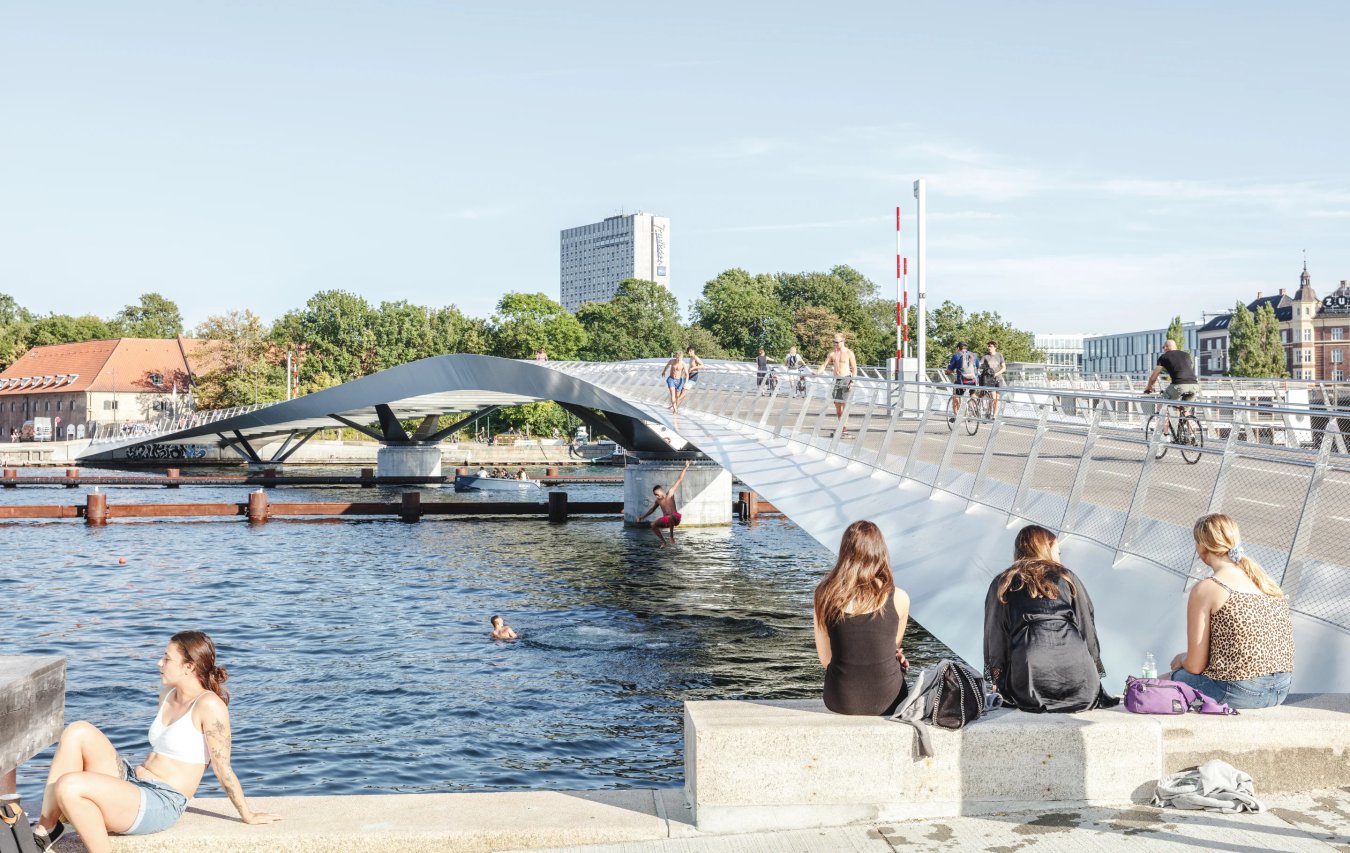
© Rasmus Hjortshøj
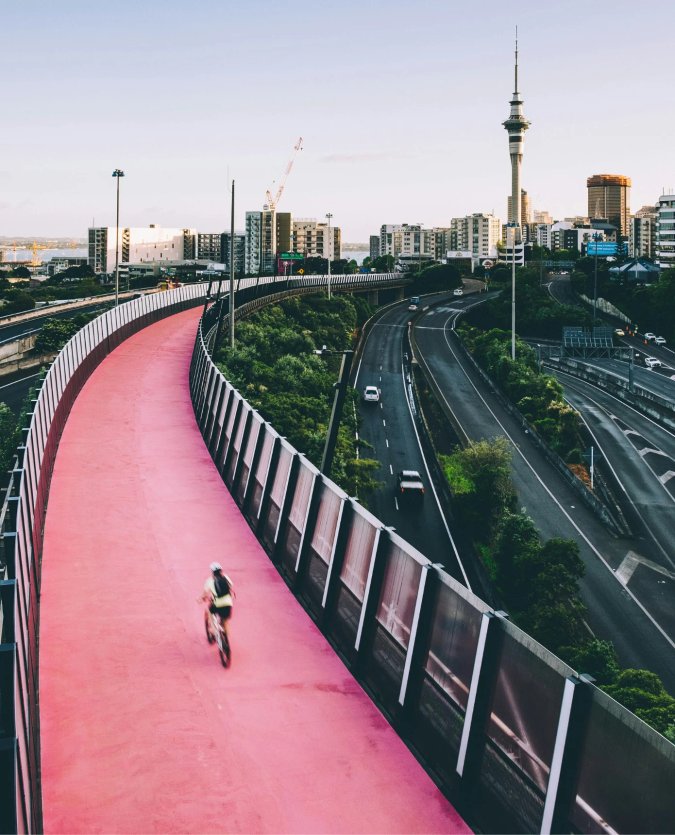
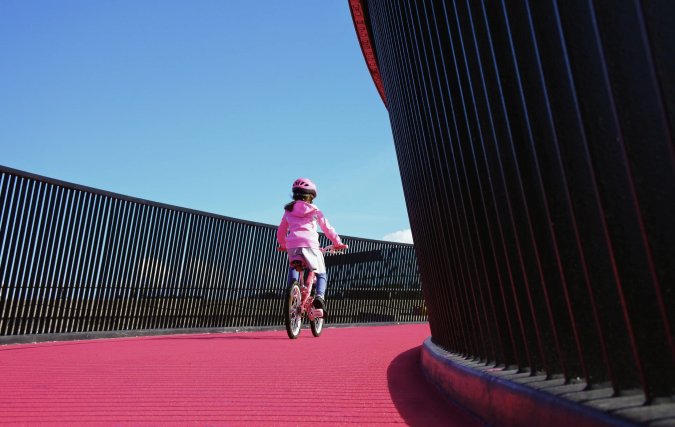
Colourful by day, fluorescent by night: this radiant 640-metre fuchsia cycling path has hovered above central Auckland since 2015, flowing over highways and urban forest. Designed in collaboration with artist Katz Maihi, it incorporates Māori motifs into its surface, and its vivid colour is inspired by a freshly cut tōtara tree.
By day it offers stunning skyline views; by night it becomes a dazzling, interactive experience thanks to LED lights that respond to passing cyclists. Its originality earned it the Supreme Award at the 2016 New Zealand Best Design Awards and a Transport Category Award at the 2016 World Architecture Festival in Berlin.
Dan Freeman, Unsplash | ChameleonsEye, Shutterstock
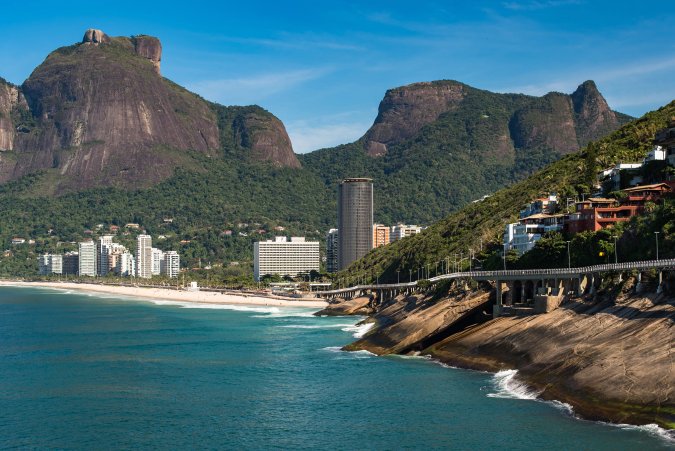
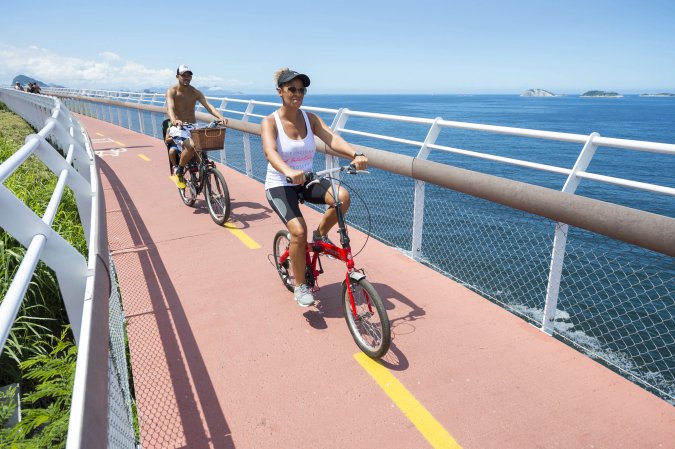
Just as it is hard to imagine a city with a more spectacular natural setting than Rio de Janeiro, it is difficult to picture an urban bike path with more breathtaking views than this nine-kilometre route along the Atlantic between Leblon and Barra da Tijuca.
Inaugurated in 2016, the year Rio hosted the Olympic Games, the elevated path faced several structural failures due to ocean storms. After extensive reinforcement works and new safety protocols, the Ciclovia Tim Maia — named after the beloved local musician — fully reopened in 2025, once again inviting cyclists to ride between the city’s dramatic forested cliffs while breathing Atlantic air.
Lazyllama, Shutterstock | Donatas Dabravolskas, Shutterstock
Back in the Netherlands, the flattest of cycling paradises, we find the most imaginative path on this journey. At the intersection of art, tourism, innovation, technology and sustainability lies this route on the outskirts of Eindhoven, inaugurated in 2014 on the eve of the 125th anniversary of Vincent van Gogh’s death, in the very landscape where he lived between 1883 and 1885.
Inspired by the painter’s evocative universe, the path is designed for daytime use — and for dreaming after sunset. At night it immerses users into Van Gogh’s Starry Night, thanks to thousands of twinkling stones embedded in the pavement. They charge during the day and glow after dark, recreating the celestial swirls of the masterpiece. Designer Daan Roosegaarde calls it “techno-poetry.”
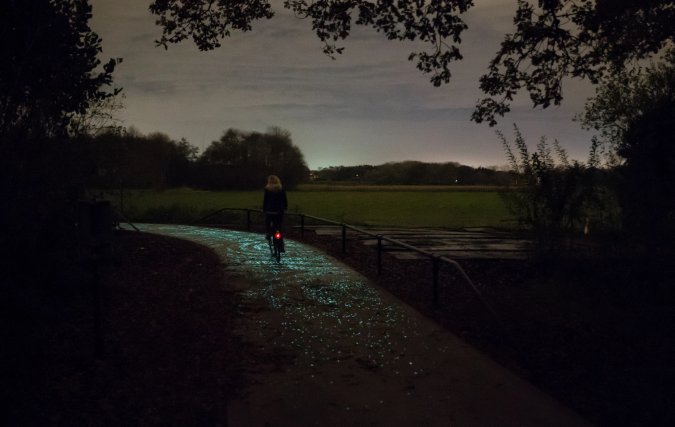
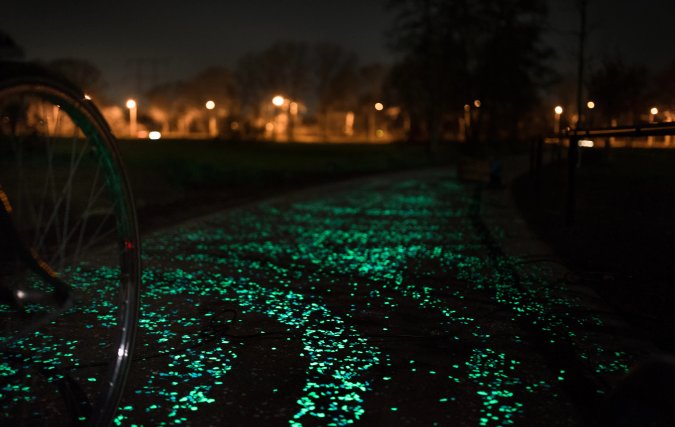
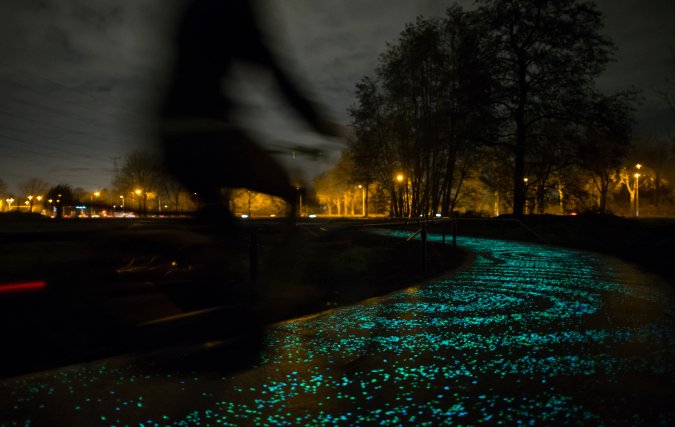
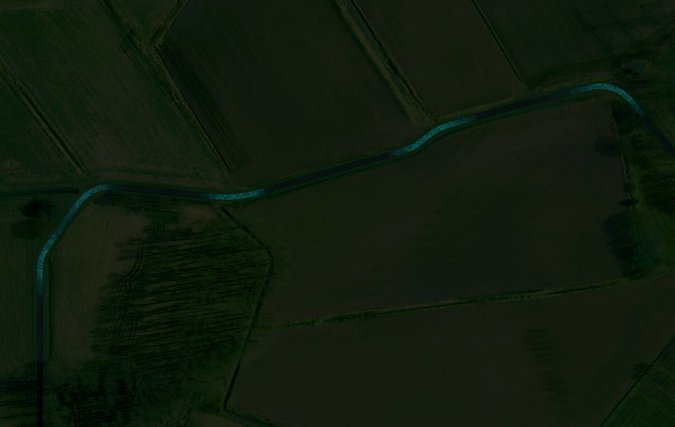
Daan Roosegaarde — studioroosegaarde.net
Just kilometres from Eindhoven, in neighbouring Belgium, this sinuous and now-bucolic cycling bridge invites riders to reflect on the relationship between nature and the urban world — as intertwined today as they were in the past. Throughout the 20th century, coal and gravel extracted in what is today the Hoge Kempen National Park fuelled the region’s cities and industries. Their extraction left behind “terrils”, the slag heaps of former mines, now transformed into serene artificial lakes.
This 400-metre bridge outside Maasmechelen weaves between them. And it is not the province’s only remarkable cycling experience: Limburg has transformed its natural assets — subsoil, water and forests — into a driver for leisure and landscape revaluation. A dense cycling network connects highlights such as Cycling through Water in Bokrijk — a unique 200-metre route cutting through a pond, water at both sides — and Cycling through the Trees in Bosland National Park, a 700-metre spiral path rising through, above and among the canopy. A fresh invitation for urban animals to reconnect with the ecosystems that sustain us.
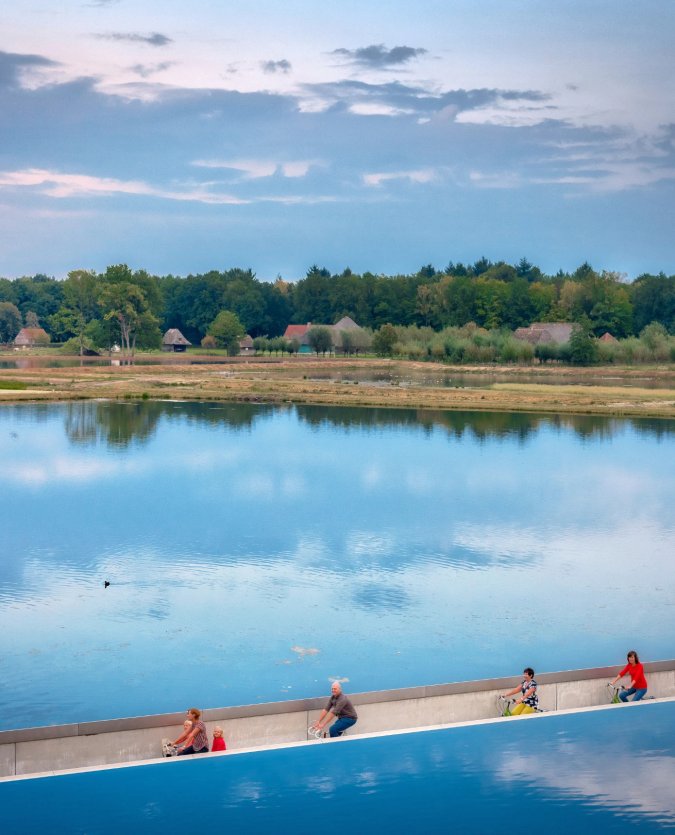
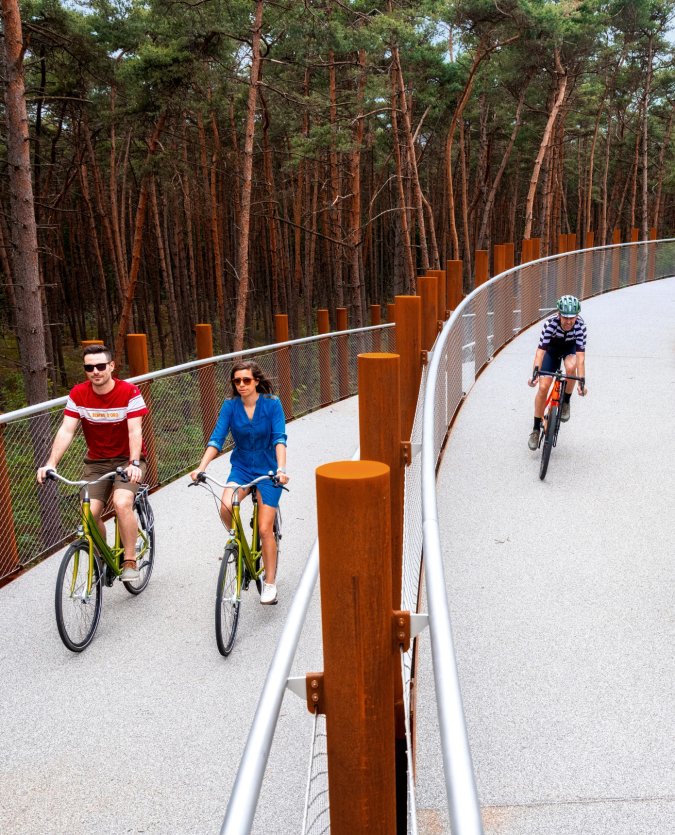
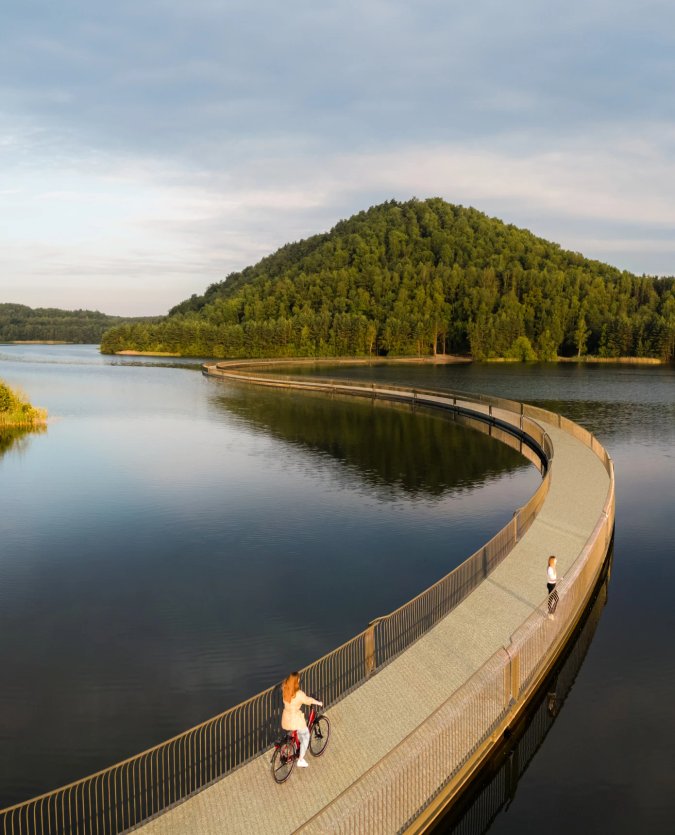
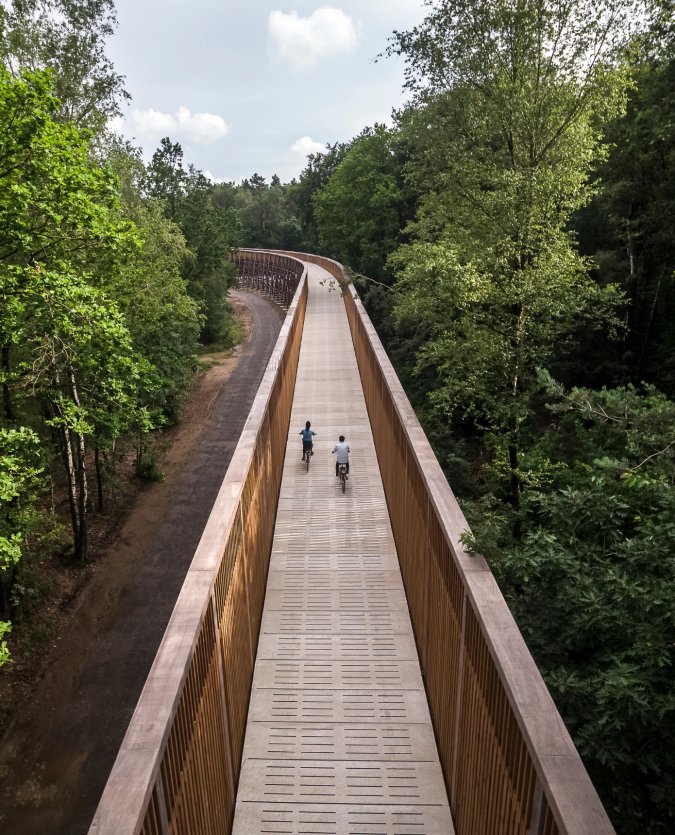
Visit Limburg (1,2,3) | Kurt Vandeweerdt (4)
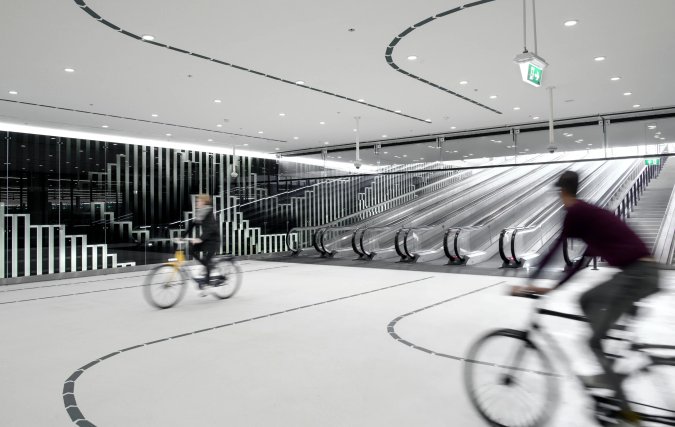
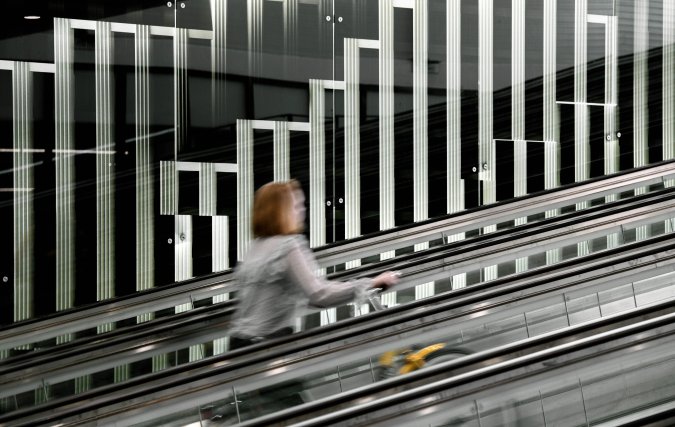
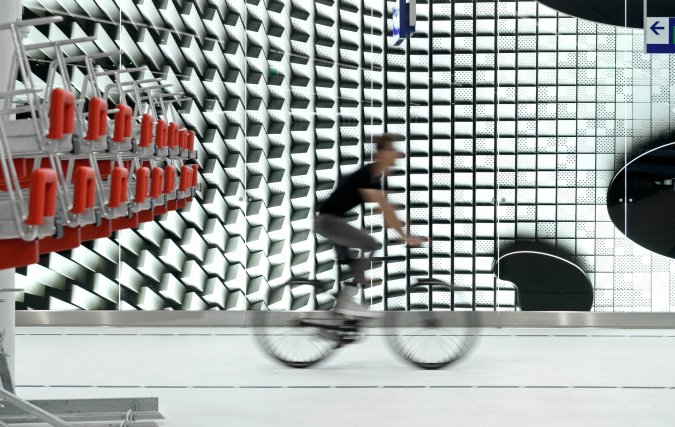
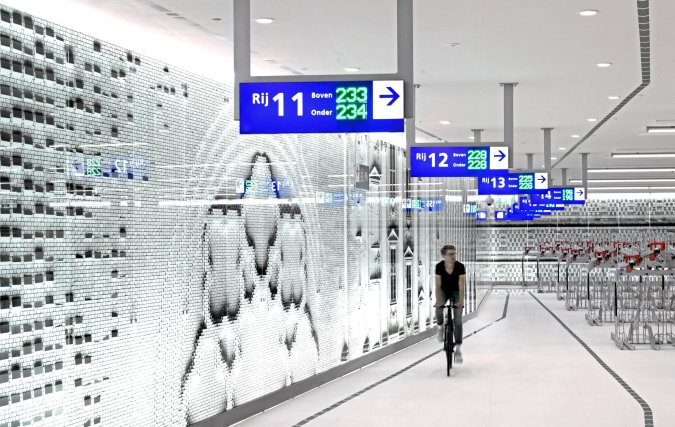
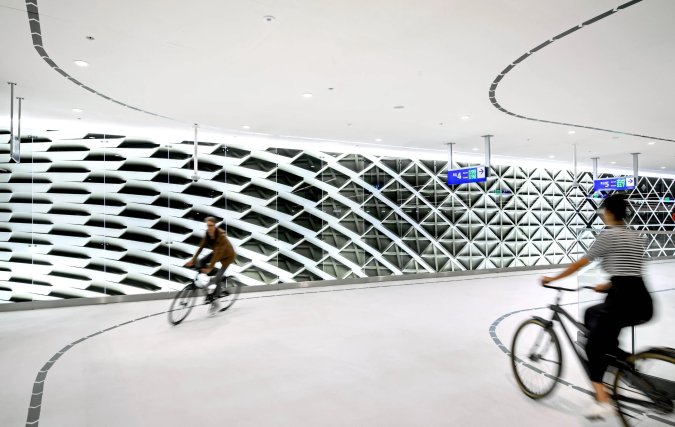
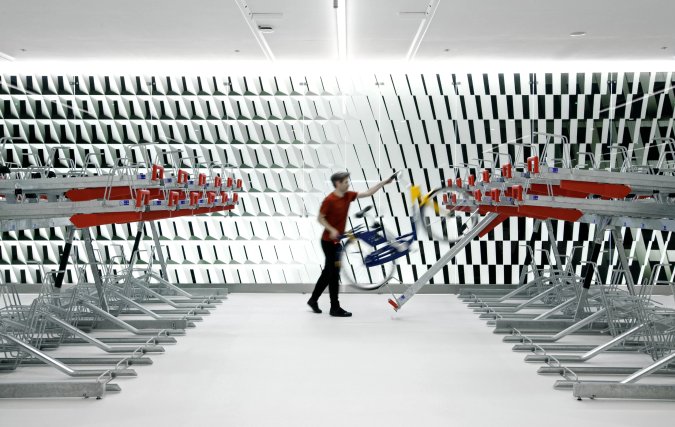
This journey ends where any bike journey ends (or begins): where we park our bicycles. In front of The Hague’s Central Station sits one of the world’s largest bicycle parking garages. With space for around 8,000 bicycles, it exemplifies one of the key enablers of sustainable mobility: intermodality. Providing safe — and free — parking where cyclists can easily switch to another sustainable transport mode is essential to encouraging healthier, lower-emission travel habits. In the Netherlands, 40–70% of train passengers arrive at stations by bicycle, and this facility makes that possible.
But this garage is more than a practical tool — it is almost a museum. Decorated in black and white with luminous motifs inspired by The Hague’s eclectic facades, moving through it feels like stepping into the city’s vibrant identity. Its designers wanted not just functionality but maximum comfort, delight and appeal: a space that is not dark, closed or merely transitional, but part of a mobility experience that enriches daily life for the city and its citizens — and helps enrich the planet. Isn’t that, ultimately, what this is all about? ●
Mike Bink/Silo