.jpeg?w=1425&q=85&fit=max&auto=format)
«Inclusion it’s not just looking at ramps»
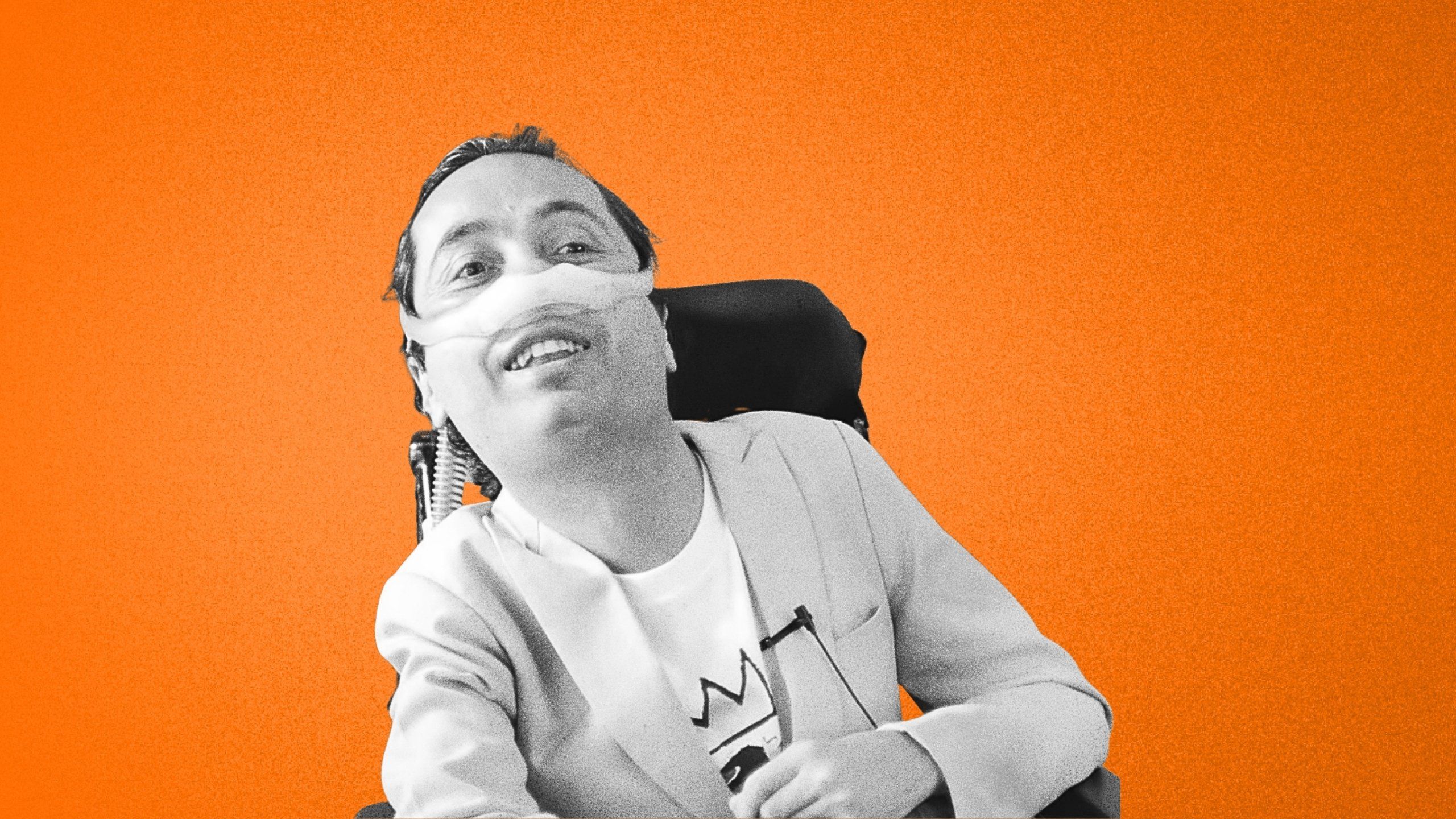
Victor Pineda is an urbanist and innovation specialist, but above all an inclusion activist. As the founder of World Enabled, a non-profit organisation advancing the full inclusion of persons with disabilities, his work sits at the intersection of urbanism, technology and human rights.
For Pineda, cities still systematically leave people with disabilities behind — and not only in terms of physical infrastructure. Exclusion also plays out in access to economic opportunities, participation in decision-making and institutional representation. As he often stresses, «inclusion is not just about ramps, but about the full spectrum of human conditions.»
This gap is especially visible in the digital transformation of cities. Research conducted by World Enabled and the University of California, Berkeley reveals that 96 % of active digital development projects worldwide do not even mention people with disabilities. At the same time, findings from G3ict’s Smart Cities for All initiative show that only a small minority of smart city experts can point to a city applying ICT accessibility standards.
Yet Pineda remains optimistic. With growing global momentum around frameworks such as the Sustainable Development Goals, the New Urban Agenda, and the UN Convention on the Rights of Persons with Disabilities, he sees a unique opportunity to reshape cities into places that truly unlock human potential.
We spoke with Victor Pineda about what defines a city, why 'smart' cities often fail to be inclusive and how cities can begin to change course.
Oft-times I say that I love smart cities but smart cities don’t love me back – yet. I think that to be smart, a city needs to be able to unlock human potential. That creates economic opportunities for everyone, it elevates our production possibility frontier. And I think that is exactly how we have to be thinking about a city: it is a hub and it is also a system. It is a hub for a lot of points of connection, but it is a system that perpetuates values in the built environment and in the way the city generates its own products, services, culture…
Everything that comes out of a city in a sense is shaped by society’s beliefs and in turn shapes the beliefs of society. So, if we have systems of systems that continue to leave people out, we have to change the systems.

.jpg?w=675&q=85&fit=max&auto=format)
«Inclusion it’s not just looking at ramps.» Images by Oliver Cole (1) and Jahanzeb Ahsan (2) on Unsplash
We are conducting a research with the University of California at Berkeley. I direct a research center called the Inclusive Cities Lab and we got some funding from our partners from Microsoft to look at digital development. We currently have 1,200 active digital development projects by the major development agencies. When we looked at each one of these proposals we identified that people with disabilities and older persons were completely left out of these projects all over the world. 96 % of active digital development projects do not even mention people with disabilities and older persons as beneficiaries or stakeholders.
As well as the global survey that we conducted through the G3ict with smart city experts showed that sixty percent of them feel that smart cities are failing persons with disabilities. Only eighteen percent of smart city experts can identify one city that was using an accessibility standard. I think that at the global level we have a huge threat that we are going to be reapplicating the same kind of exclusionary barriers unless we come together.
I would like to share with the audience a very simple assessment framework that can help you make your city more accessible. The first is understanding the laws: countries all over the world and cities have legislative requirements on ensuring accessibility. Second area of focus should be leadership: is your mayor, deputy mayor or other leader talking about this issue? Are they putting budgets towards identifying barriers and removing them?
The third area is institutional capacity and coordination: you can’t solve inclusion with just a Ministry of Social Affairs or a Division for Social Welfare; you need to have a cross-agency approach and coordinate those points where people are falling through the cracks. That means human resources and institutional capacity.
The fourth area of assessment is attitude. Are there outdated attitudes that prevent people with disabilities from living up to their potential? But ultimately the issue is participation. Are people with disabilities participating in the resilience strategies, in the smart city strategies, in the master planning of their cities? Are we able to assure that this participation includes people with developmental disabilities, older persons, psycho-social disabilities? It’s not just looking at ramps, but looking at the broad spectrum of human conditions. Those are the ways which will ensure that your city is accessible and inclusive.
I think the future is a future of inclusion, a future of accessibility. We know the technical standards, we know the solutions: we need political will. I think that we have a unique opportunity with the Sustainable Development Goals, with the New Urban Agenda and with the UN Convention of the Rights of Persons with Disabilities to make a substantial impact not only in reshaping our values but in reshaping our cities so that cities actually become places where we want to live, where human dignity is protected and our potential can be realized.