%20copia.jpg?w=1425&q=85&fit=max&auto=format)
In Images: Overtourism
In 1950, around 70,000 people per day left their home countries to travel abroad. By 2030, that number is projected to reach 5 million daily international tourists, according to UN Tourism. Even without counting domestic travel, the figures speak for themselves: they tell the story of an unprecedented surge in global mobility, with people exploring the world more intensively than ever before.
Where do these travelers depart from — and arrive at? Mostly cities: the beating hearts of nations, where culture, commerce and community converge. Urban centers have become powerful magnets for global visitors, capturing the benefits of tourism while increasingly grappling with its consequences. Economic growth, cultural exchange, diversity and creative vitality are among the rewards. Yet these gains come at a cost: gentrification, the erosion of local identity, and the disruption of everyday urban life.
In this context, tourism is no longer just about sightseeing or discovering new places—it is an active force reshaping how cities look, feel, and function. As visitor numbers grow, so does tourism’s footprint on urban landscapes. Streets once shaped by local routines bend under the pressure of transient crowds, while neighborhoods adapt—or resist—in ways both subtle and striking.
Local governments face a delicate challenge: how to harness the energy and opportunity tourism brings while safeguarding the authenticity and livability of the places it transforms. This balancing act demands thoughtful governance, sustainable strategies and long-term vision.
To better understand this transformation, we turn to visual narratives captured by photographers from around the world. Some of the works submitted to the CitiesToBe Photo Award—our international urban photography contest—invite us to reflect on how tourism is redefining urban realities, from Malta to Cairo, from the high-rises of Hong Kong to the skyline of Benidorm.
This image introduces tourism as acceleration. Movement becomes seamless, efficient, and unquestioned, while the landscapes it crosses are quietly transformed. By choosing slowness as both method and subject, the photograph invites reflection on what contemporary mobility leaves behind: places, rhythms, and forms of attention that resist speed.
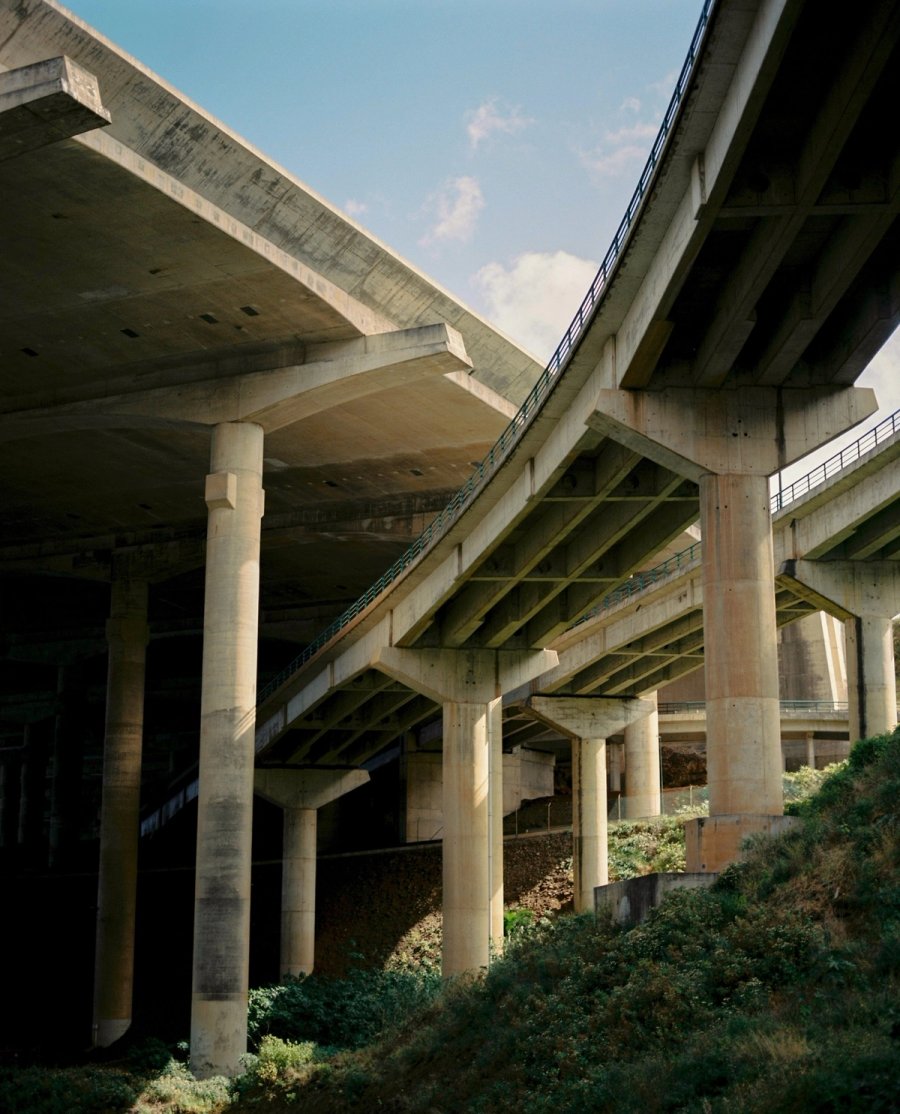
'Under the Airport', by Nuno Serrão
During Eid celebrations, mobility reaches a breaking point in the megalopolis of Dhaka, the capital of Bangladesh. Although not driven by leisure tourism or international travel, this image reveals what happens when large-scale movement overwhelms urban infrastructure. The urgency of return, celebration, and belonging exposes the human cost of overcrowded systems—an echo of the pressures increasingly faced by cities receiving large influxes of visitors.
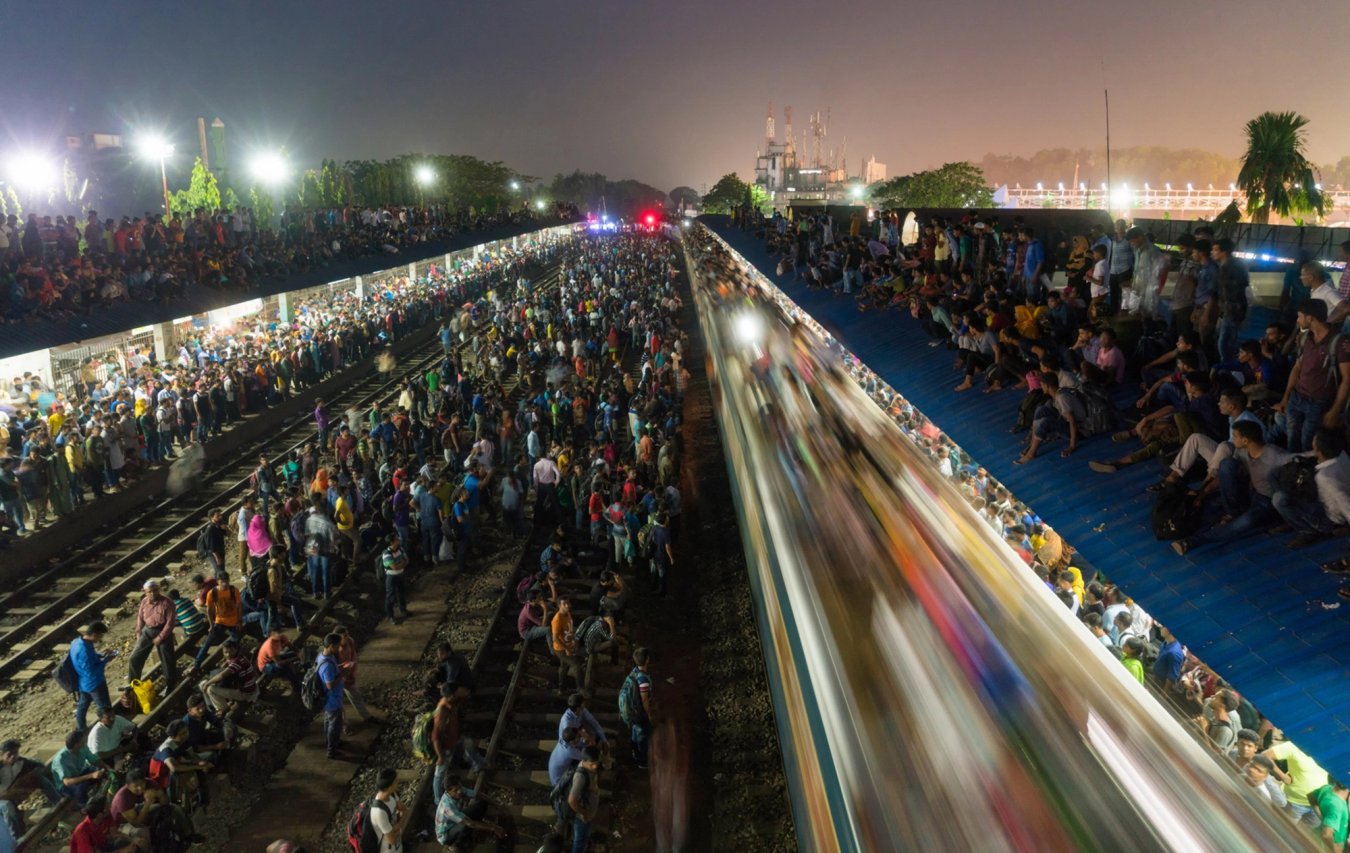
'Massive Crowd at Rail Station during Eid Vacation', by Md Tanveer Hassan Rohan
Sometimes, leisure turns into saturation. This beach in Alexandria, a city of 4.8 million people, is one of its few collective refuges, bearing the weight of bodies seeking relief. What appears as joy and freedom also exposes the limits of shared urban space when demand exceeds capacity — an increasingly common condition in coastal cities shaped by sun-and-sea tourism.
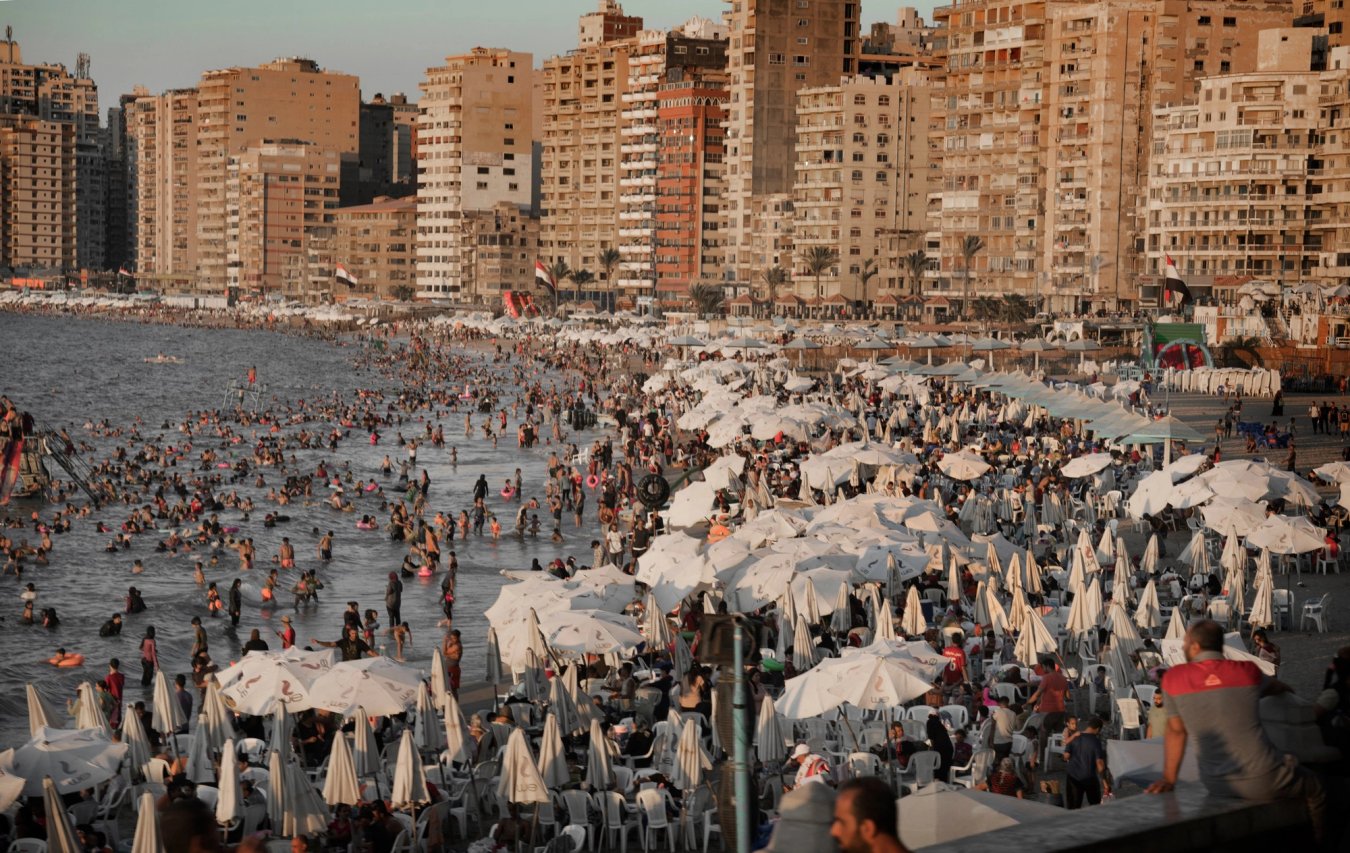
'Alexandria Beach', by Summer Kamal Eldeen
You may have already seen it on social media: Hong Kong’s Choi Hung Estate has become a global image, endlessly reproduced and circulated through photos and reels. As in many places around the world, in this kind of transformation domestic space turns into a backdrop, and daily life becomes secondary to visual consumption. This photograph raises questions about visibility, consent, and the unintended consequences of tourism shaped by digital desire.
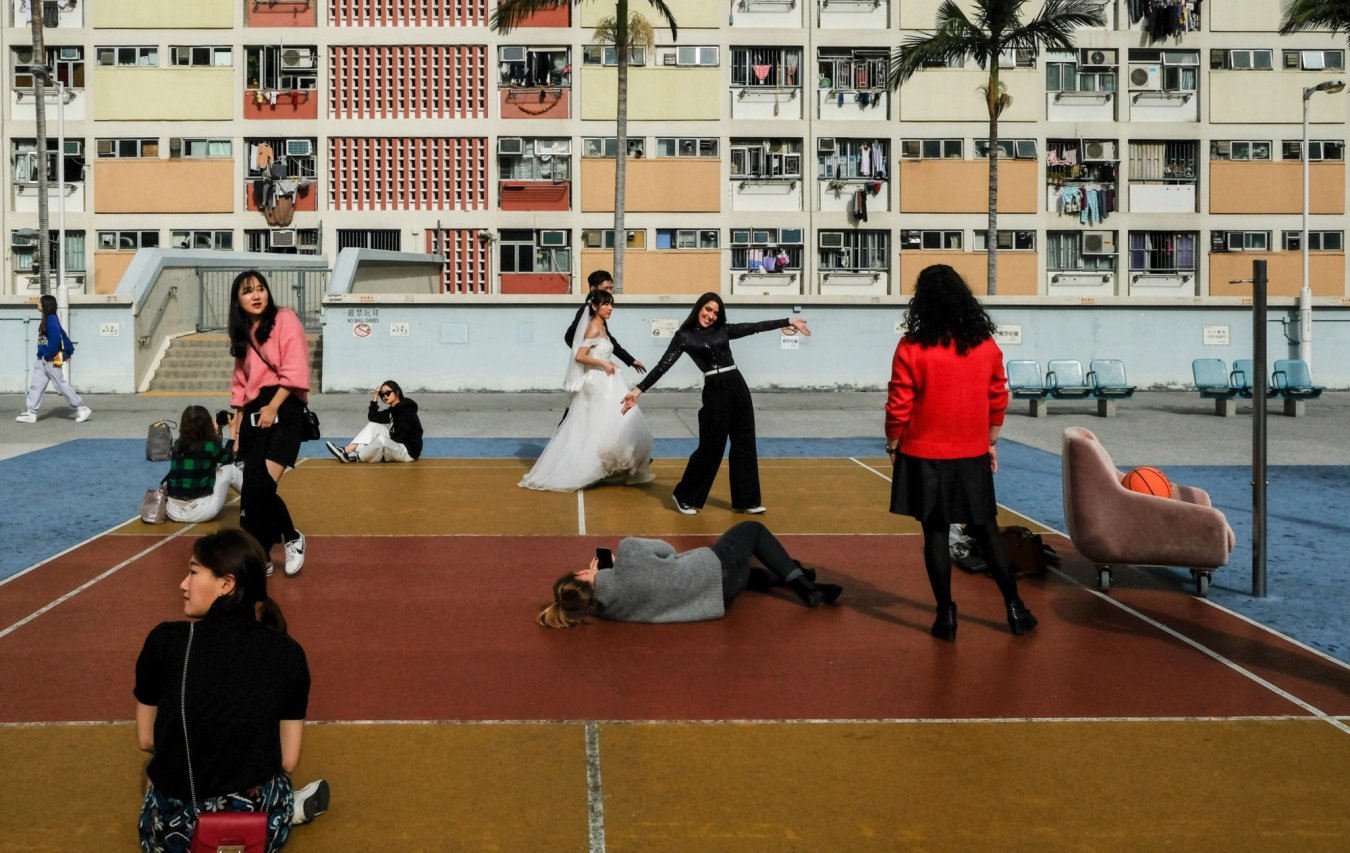
'Hong Kong, 2019', by Olesia Kim
Benidorm, on Spain’s southern Mediterranean coast, embodies the long arc of tourism-led urban planning. Conceived as a machine for leisure in the 1960s, the city reveals how political decisions, economic ambition and accelerated growth converge in the built landscape — leaving legacies that extend far beyond seasonal visitors and endure for decades.
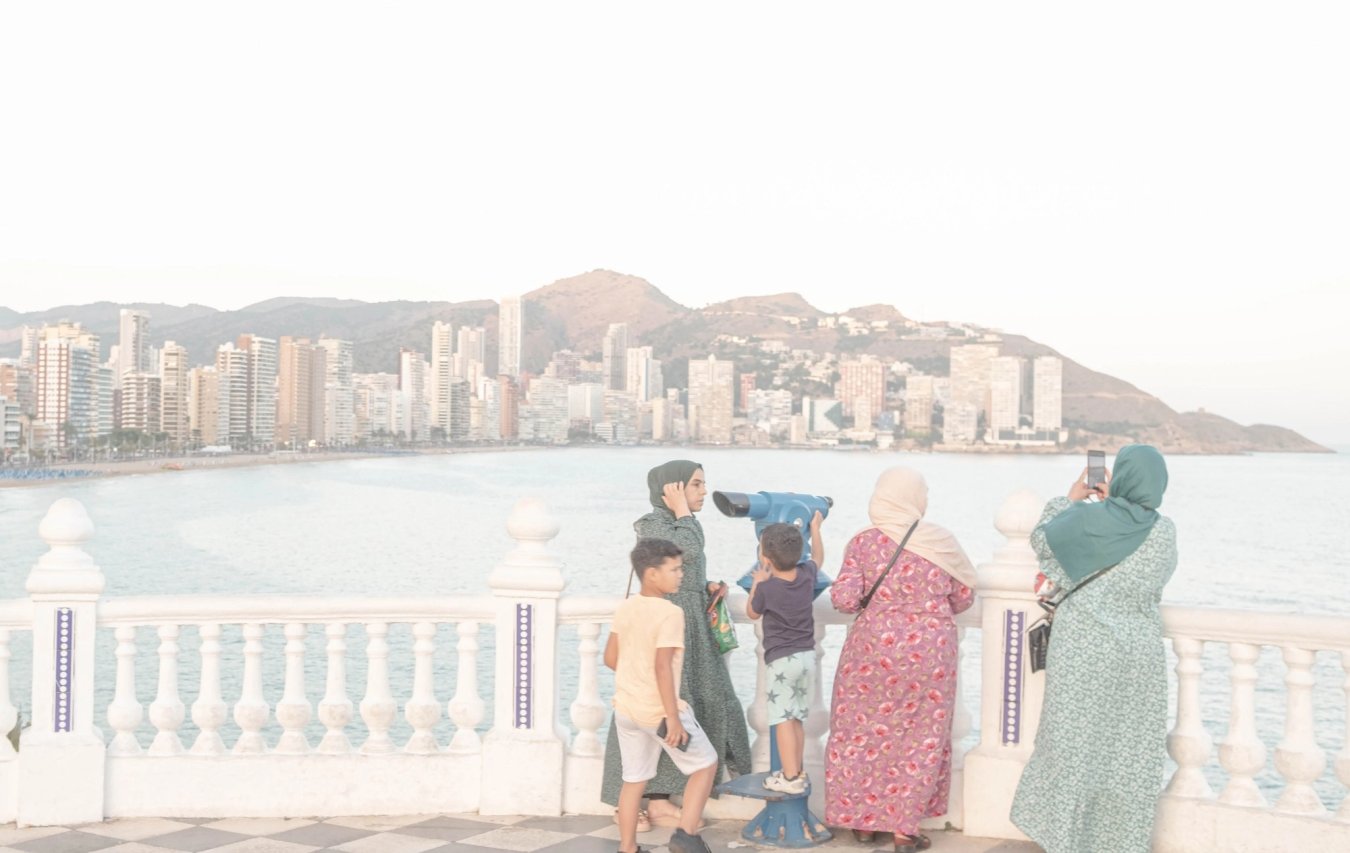
'Benidorm's Skyline', Jordi Jon Pardo
Zooming in, the city becomes pattern. Uniform façades of massive hotels and residential buildings reflect how tourism booms standardize living space, compressing personal narratives into visual repetition. Yet behind each window lies a life that resists anonymity, quietly contradicting the architecture that contains it.
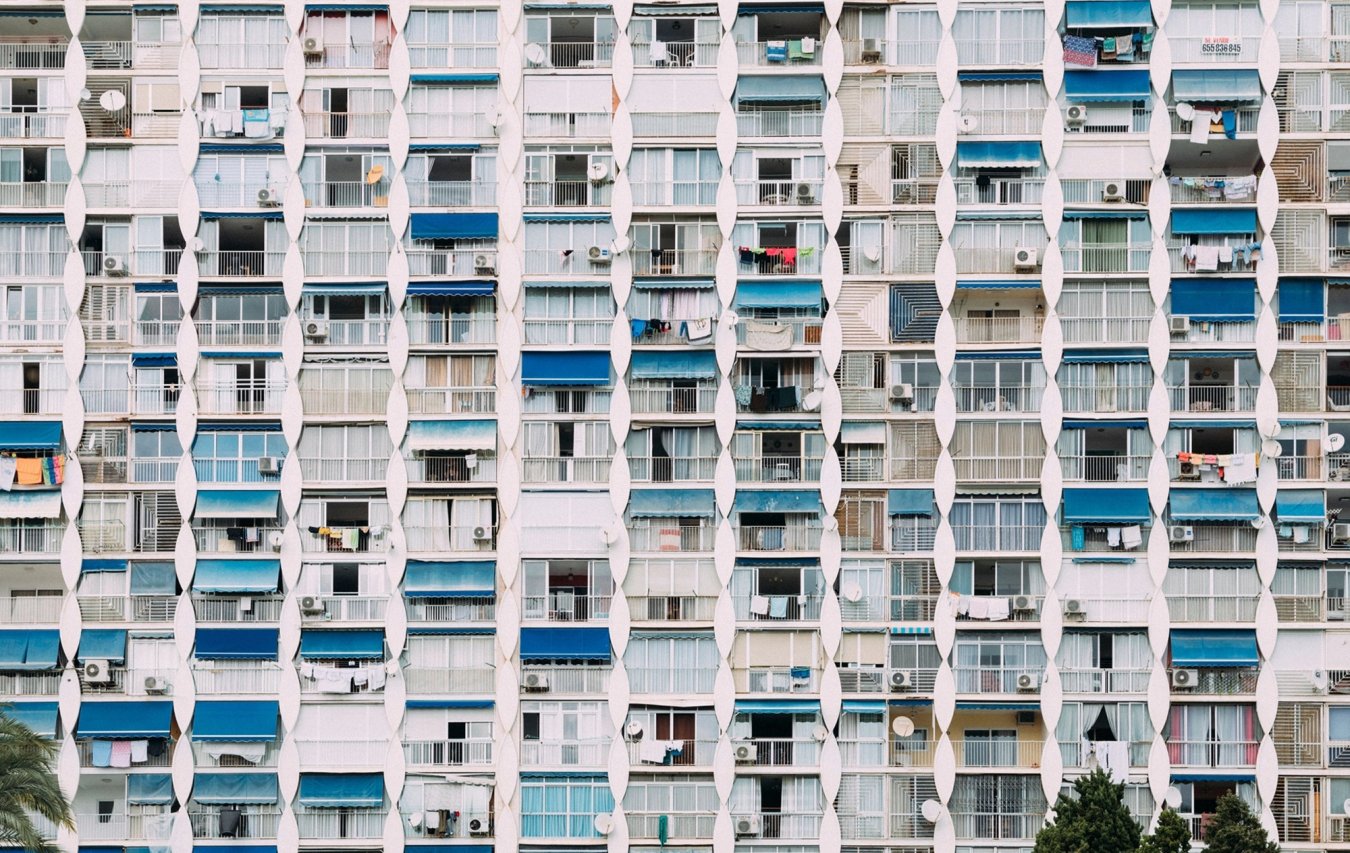
'Toldos Azules en Benidorm', Alberto Sen
A tourism hotspot of the present and future, Dubai appears as both mirage and warning. Monumental scale, repetition and spectacle merge into an urban form shaped by global aspiration and consumption. Tourism here is not an accessory but a driving force, shaping a city that oscillates between promise and alienation.
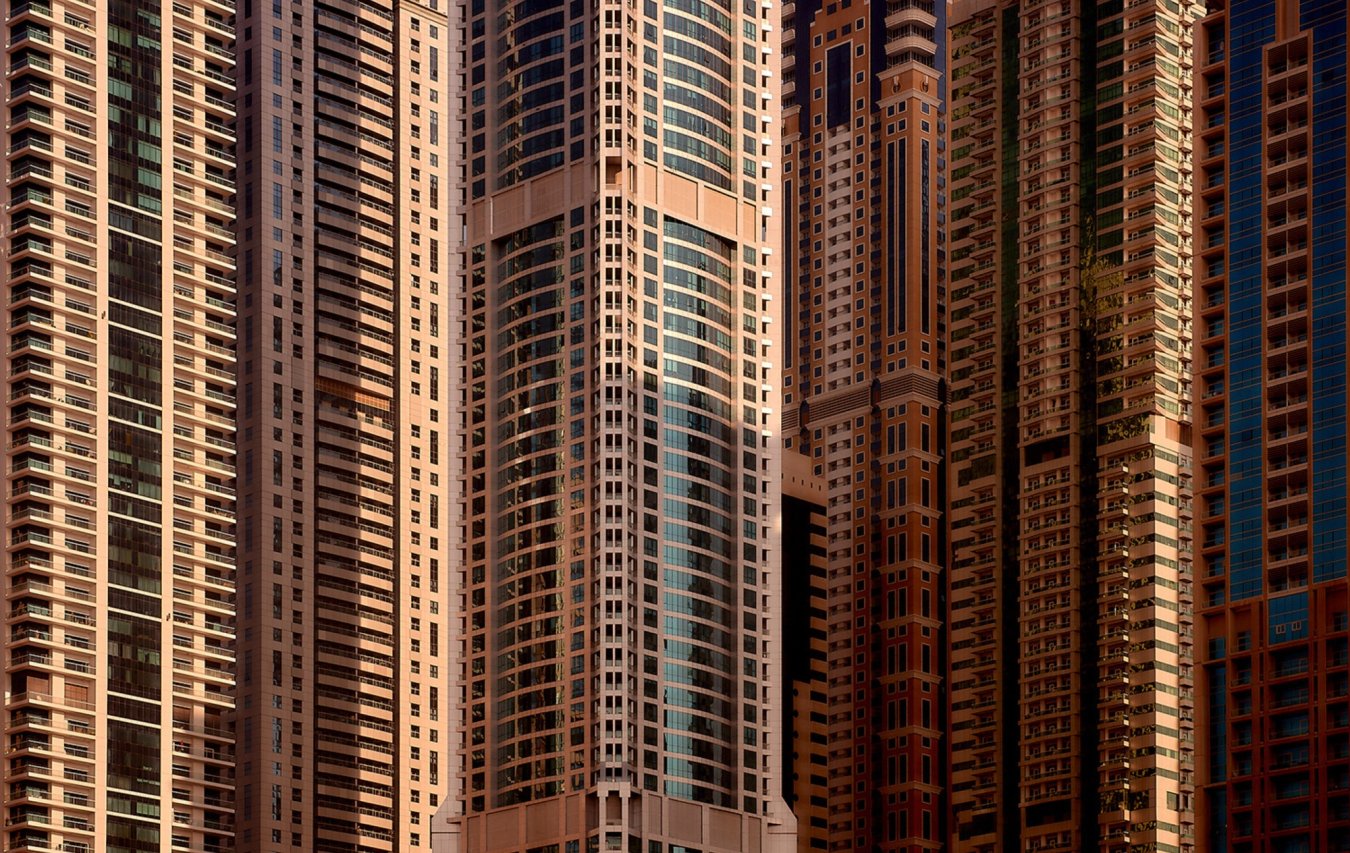
Dubai IV, Manuel Álvarez Diestro
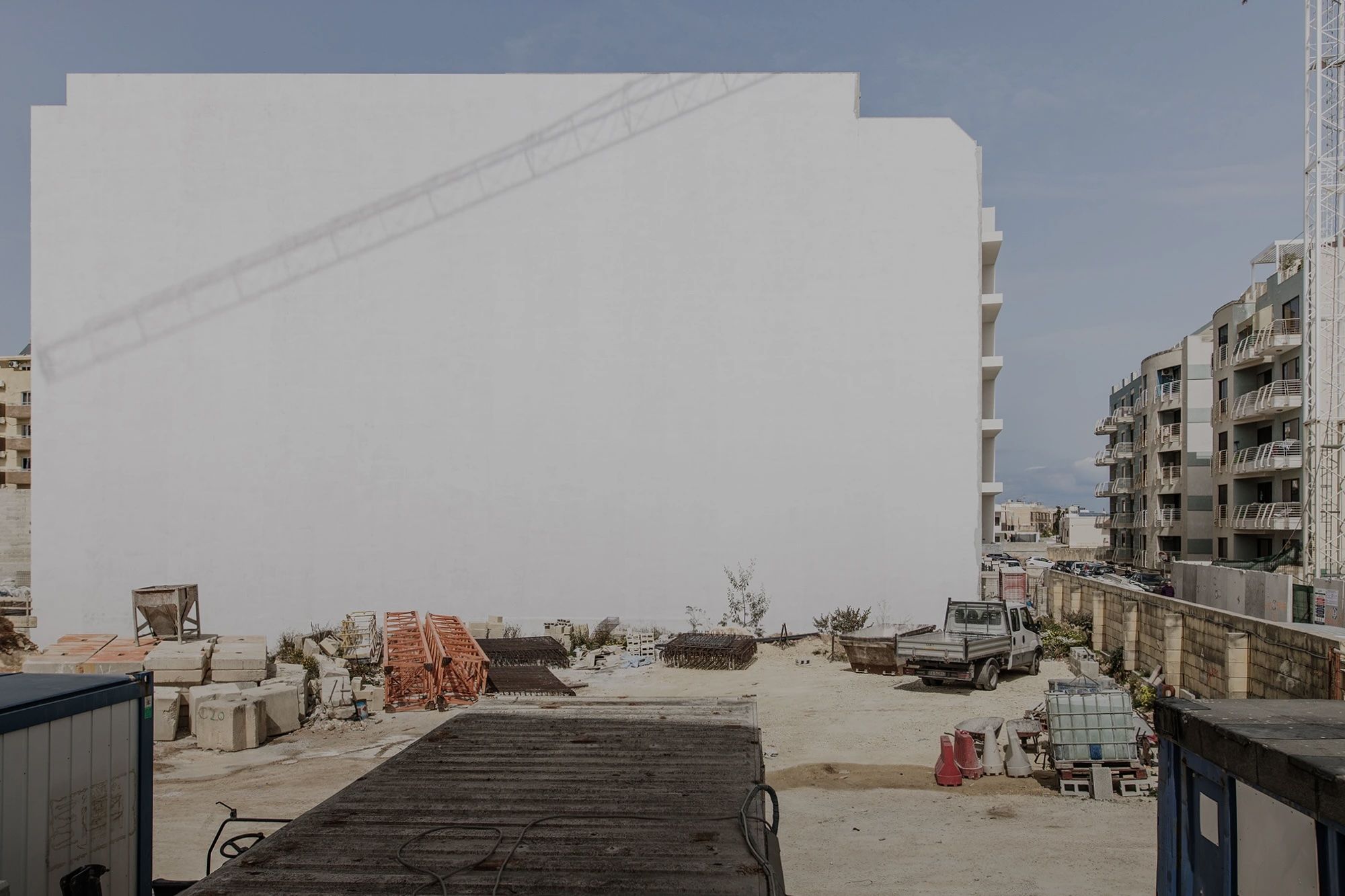
Overtourism leaves marks that remain long after visitors depart. In Malta, rapid construction replaces context and continuity, producing blank façades that erase identity. The image speaks of permanence: development that reshapes territory faster than collective reflection can respond.
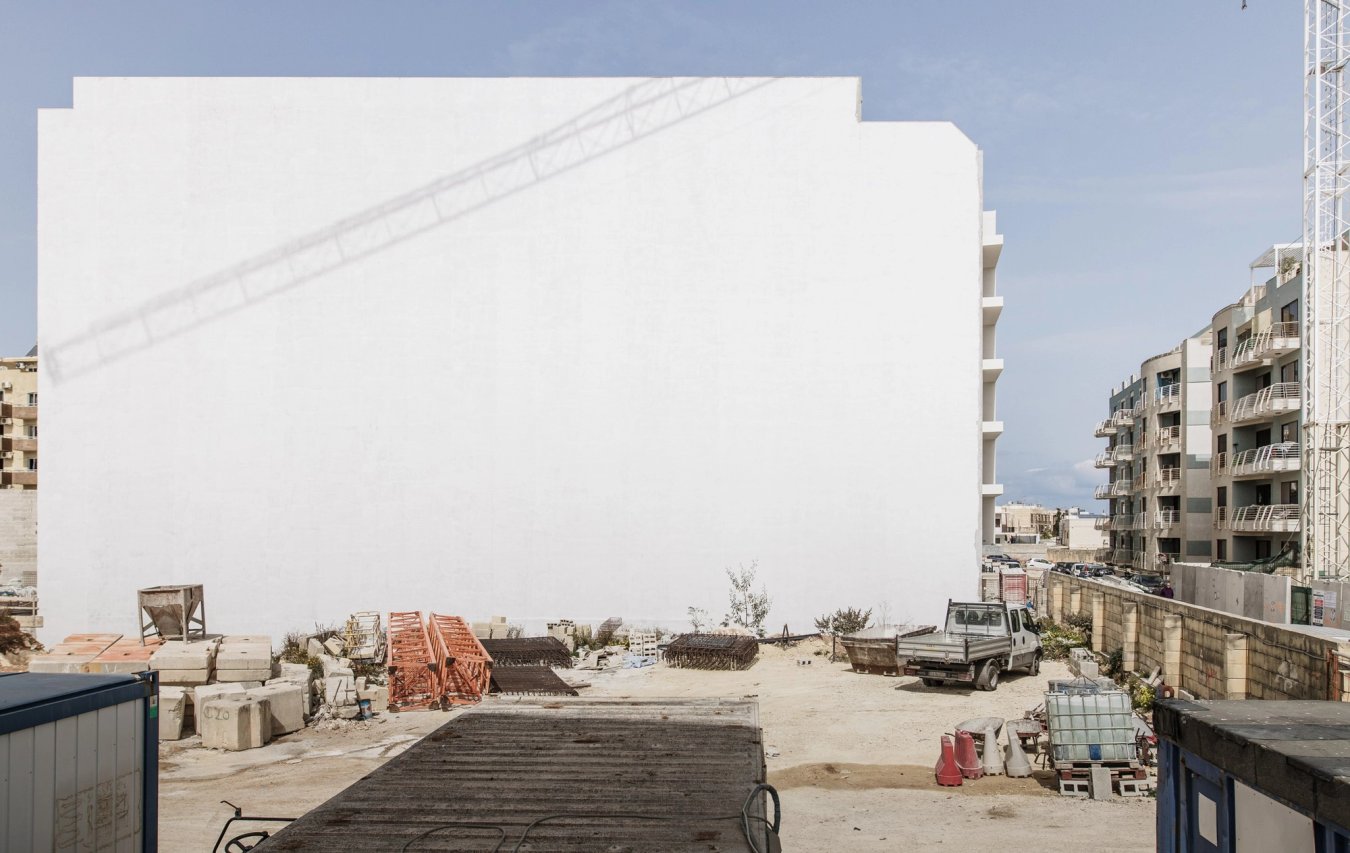
'The Spread of Overdevelopment', Therese Debono
This sequence closes with fragility. Islands — imagined as destinations of escape — are among the territories most exposed to tourism pressure, environmental imbalance, and climate change. This image asks how desire, consumption, and vulnerability can coexist, and what kind of future remains for places built on expectation.
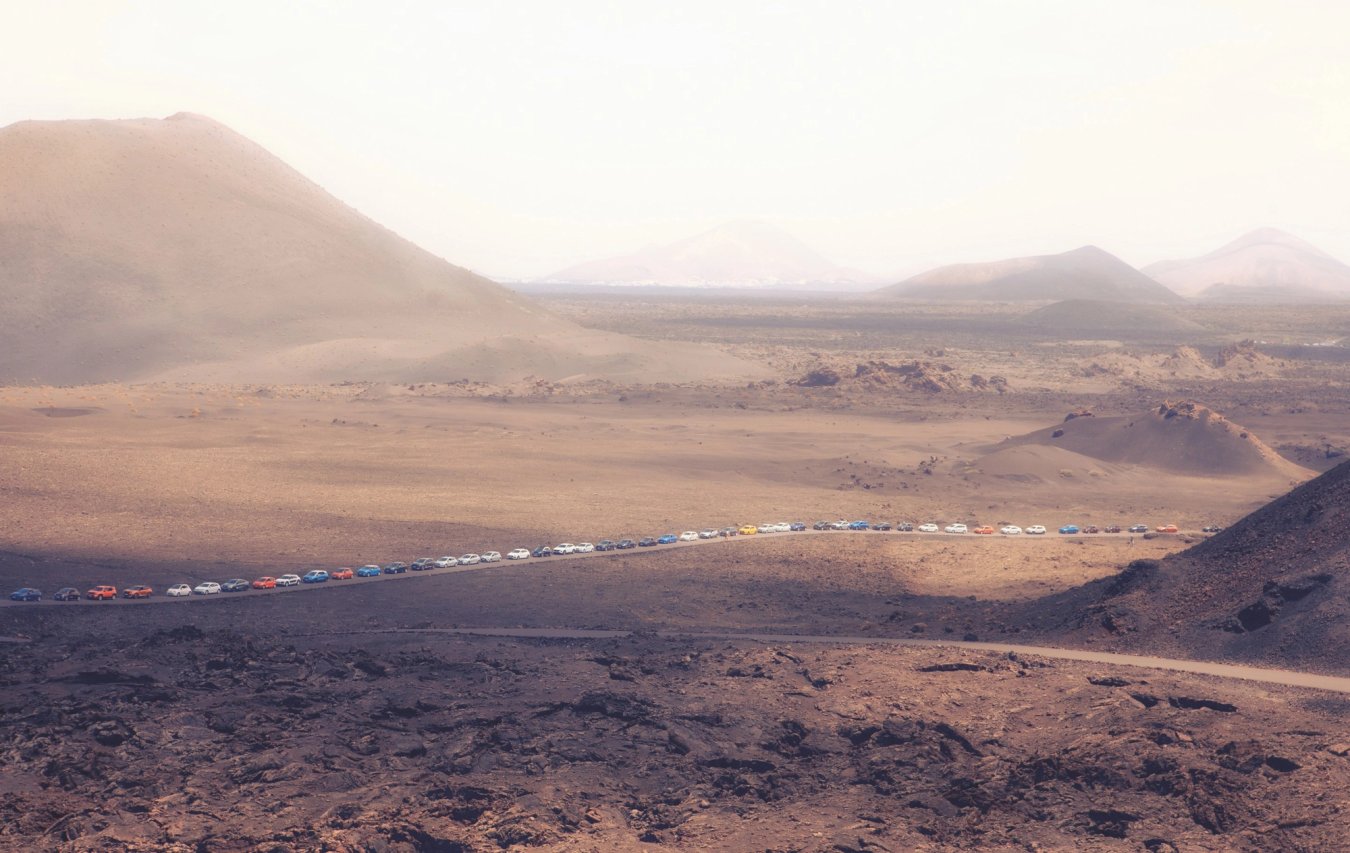
Great Expectations, Laura Roth