Cities in 2026: 5 Urban Tensions That Will Make Headlines — And 5 Ways to Move Forward
Cities in 2026: 5 Urban Tensions That Will Make Headlines — And 5 Ways to Move Forward
Every year at Anteverti, we take a step back to make sense of the fast-moving forces reshaping our cities. Our annual urban outlook is our way of pausing, observing and asking: what currents are rising beneath the surface? What tensions are quietly shaping the places where life unfolds? And, most importantly, what possibilities emerge when we read these signals together?
In 2026, cities will confront a landscape defined by urgency and contradiction. From the geopolitics of climate adaptation to the everyday pressures of housing, mobility, care and the digitalisation of public space, urban environments sit at the centre of a world marked by uncertainty and polarisation. It is in cities where the question of how we want to live together becomes most pressing—and where the demand for meaningful responses is greater than ever.
This article summarises this year’s outlook —available for download at Anteverti’s website—, highlighting five key issues we believe will command attention in 2026. More than a look ahead, it is an invitation to interpret the symptoms and movements already underway, and to recognise the places where new ways of thinking and making the city are being tested.
Ultimately, this report seeks to open a conversation about what is possible: to bring to light the challenges already knocking at the door, and the energies—institutional, civic and creative—that can rise to meet them.
Why is this urgent?
As cities scale up climate action, well-intentioned environmental interventions (new parks, ecological corridors, pedestrian areas or clean-mobility upgrades) can inadvertently trigger eco-gentrification. By increasing land values and attracting higher-income residents, these projects risk displacing long-standing communities and eroding local social networks. This dynamic is emerging in very different contexts: wildfire-affected suburbs such as Altadena in Los Angeles; neighbourhood renewal processes in Vallcarca (Barcelona), Aurora and Porta Palazzo (Turin); and even celebrated interventions like Copenhagen’s climate-adaptation parks.
The common thread is a growing perception that certain sustainability projects distribute costs and benefits unevenly, fuelling concerns about elitism and accelerating social backlash. As these tensions intensify, 2026 is likely to see more community resistance to green interventions that are viewed as socially blind or territorially unbalanced. This forces a fundamental question: can cities advance environmental goals without exacerbating inequality?
.jpg?w=675&q=85&fit=max&auto=format)
The upcoming opportunities for cities
The risk of eco-gentrification opens the door to a more integrated approach to climate action, one that views environmental ambition and social justice as mutually reinforcing. A just ecological transition requires aligning green projects with housing affordability, price regulation, community governance and territorial compensation.
Cities such as Vienna, Paris, Portland and Medellín show this alignment is possible: combining ecological planning with strong social-housing policies, directing climate funds toward marginalised communities, or pairing green corridors with participatory governance and accessible mobility networks.
By prioritising vulnerable groups and explicitly linking social and environmental objectives, cities can redefine sustainability as a collective right, not a driver of displacement.
Our suggestions for local action
1 | Integrate anti-displacement and equity goals into all green projects, using participatory processes and indicators that measure both environmental and social outcomes.
2 | Adopt new conceptual frameworks that connect climate goals with rights and community well-being.
3 | Assess risks proactively, identifying vulnerable populations and evaluating whether interventions may deepen territorial inequalities.
4 | Monitor equity impacts continuously, tracking differences across neighborhoods and demographic groups to ensure benefits reach those who need them most and to adjust policies accordingly.
.webp?w=1350&q=85&fit=max&auto=format)
Why is this urgent?
Extreme heat has become one of the most lethal climate risks cities face, already responsible for more than 489,000 deaths each year. Urban areas experience far higher temperatures than their surroundings, often 10 to 15ºC hotter, due to the heat island effect, with projections indicating that heat-related mortality among older adults could increase by up to 370% by 2050. Beyond health impacts, the economic consequences of unchecked heat are profound: loss of productivity, reduced tourism, increased energy demand, and in some cases climate-driven relocation, as seen in parts of Spain.
In 2026, cities will be compelled to make thermal comfort a core dimension of urban policy, requiring a shift in how materials, mobility, public space and nature are designed and governed. Addressing extreme heat is not only an environmental necessity—it is a matter of equity, liveability and climate resilience.

The upcoming opportunity for cities
The growing severity of heat offers cities a chance to innovate and institutionalise heat governance. The emergence of Chief Heat Officers in cities like Miami and Freetown signals a broader shift toward coordinated, cross-sectoral approaches.
Nature-based solutions will gain prominence: strategically planned tree canopies, green corridors and parks capable of reducing temperatures by up to 5ºC, along with networks of shade structures and climate shelters that ensure year-round habitability. At the same time, technological tools—AI models, IoT sensors, satellite data and real-time warning systems—enable cities to anticipate heat waves and guide residents more effectively.
Since extreme heat disproportionately affects low-income neighbourhoods, the elderly and other vulnerable groups, 2026 is poised to solidify thermal justice as a defining urban priority. Cities that embed equity into heat adaptation will be better equipped to remain liveable and competitive in a warming world.
Our suggestion for local action
1 | Develop comprehensive heat plans, establishing extreme-temperature protocols, mapping shade and shelter availability and ensuring essential services remain functional.
2 | Plant smarter—not only more, prioritising high-shade, drought-resistant species and using data to target neighbourhoods most in need while ensuring biodiversity
3 | Guarantee access to shade as a right, treating greenery as an equity issue and ensuring vulnerable districts receive proportional protection through cross-cutting governance.


Why is this urgent?
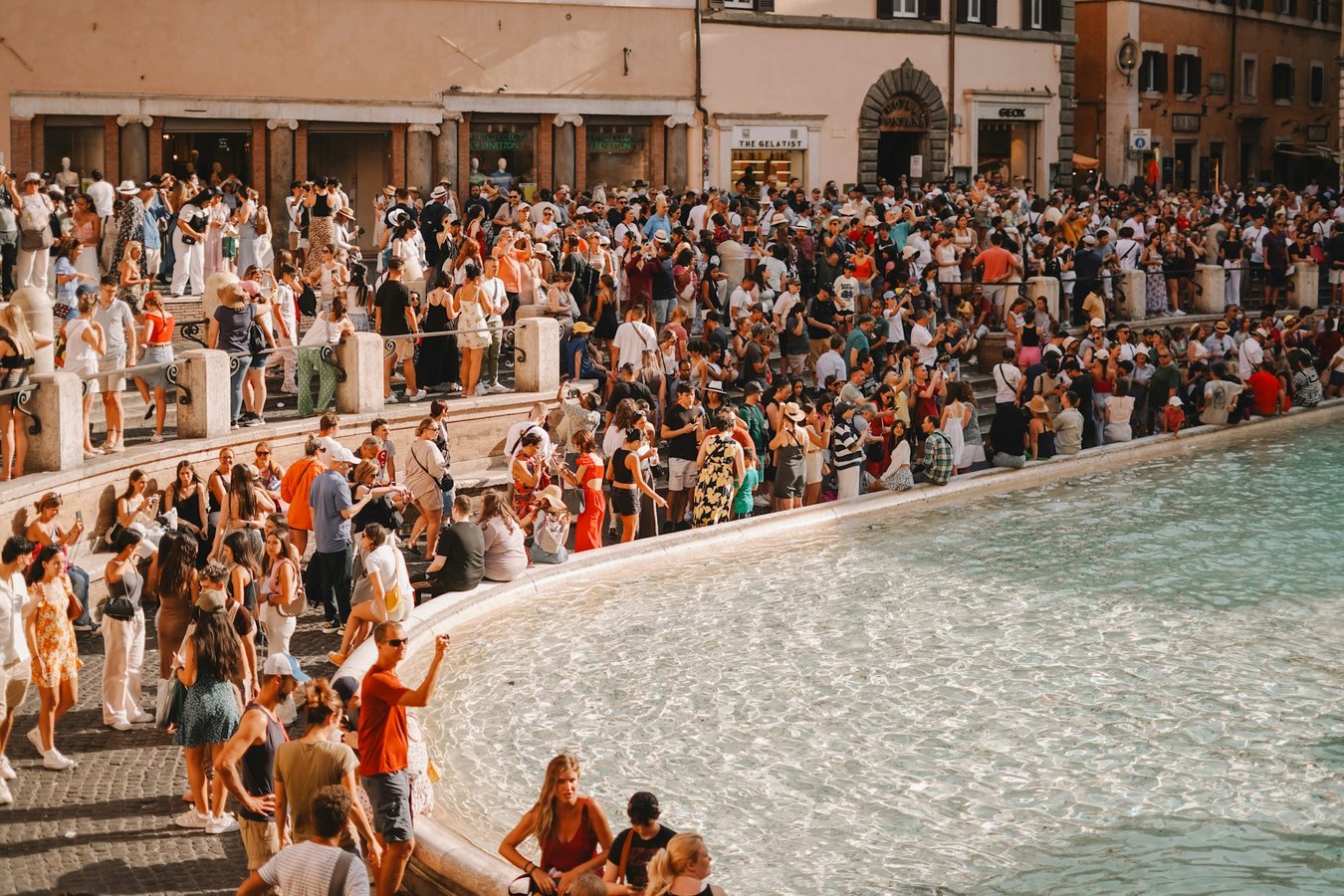
Urban tourism is approaching a decisive turning point in 2026. As global travel rebounds —contributing roughly 10% of global GDP and reaching 690 million international trips in just the first half of 2025— cities face tourism’s double-edged nature. While it generates significant economic activity, it also fuels housing pressures, overcrowded public spaces, overstretched services and rising social tensions.
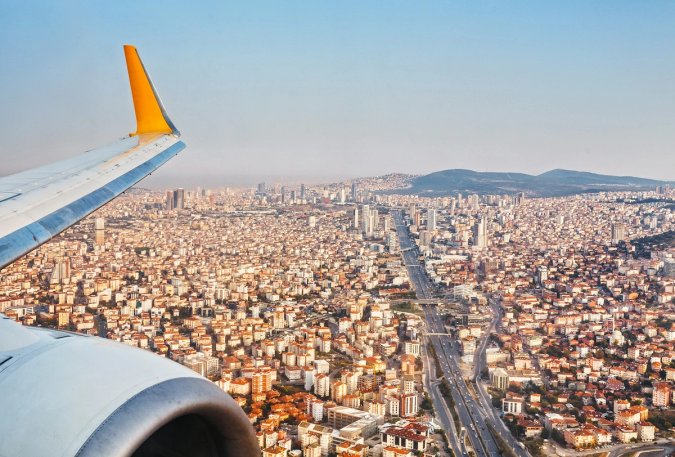
Cities such as Amsterdam, Venice and Barcelona have become emblematic of this conflict. Surges in tourist demand have coincided with dramatic rent increases: over 200% in Istanbul and 60 to 80% in Lisbon, Prague and Edinburgh, as well as the erosion of neighborhood identity. These pressures have triggered new waves of resident mobilization: license freezes in Barcelona and Lisbon, visitor caps in Venice, and stricter short-term rental rules in Amsterdam, Paris and Rome.
In 2026, more municipalities are likely to intervene as frustration grows and smaller cities begin to experience similar saturation. The central challenge will be reconciling tourism’s economic benefits with liveability, affordability and the preservation of local belonging.
The upcoming opportunity for cities
Tourism tensions have fully entered public debate, creating momentum for a shift toward regenerative tourism, a model that restores rather than depletes urban environments and communities. This approach encourages cities to move beyond maximising visitor numbers toward strategies that strengthen neighbourhood resilience, support social equity and integrate housing and territorial policies.
Emerging global examples illustrate this shift: Cannes’ cruise caps, Venice’s day-tripper fee, Dubrovnik’s crowd management systems, Amsterdam’s reduction of rental nights, and Pemuteran’s community-led eco-tourism model. Collectively, these interventions show how governance, transparency and resident-centred planning can redirect tourism toward sustainability and identity protection.
Our suggestion for local action
1 | Deploy data-driven management tools, such as digital twins and real-time analytics, to anticipate crowding and optimise mobility and public space.
2 | Strengthen resident participation through consultations, digital platforms and co-design processes that give communities a voice in tourism governance.
3 | Diversify tourism models, promoting under-visited areas, cultural and creative experiences, and more resilient year-round activity.
4 | Integrate housing policy by regulating short-term rentals, supporting cooperative housing and closely monitoring market impacts to protect neighbourhood diversity.
Why is this urgent?
Throughout 2026, artificial intelligence will permeate nearly every aspect of urban life, from public services to education, media, mobility, safety and administrative processes. Municipal governments are accelerating pilots and experimentation, yet regulatory and governance frameworks lag behind. Tools like digital twins offer predictive power but introduce concerns about privacy, data ownership, surveillance and technological dependency.
Simultaneously, the expansion of connected systems heightens vulnerabilities: every new interface becomes a potential cybersecurity weak point. The emergence of “cognitive cities,” where algorithms influence or automate urban decision-making, intensifies questions about transparency, accountability and democratic oversight.
2026 will be decisive: cities must move from adopting AI to governing it: defining ethical principles, ensuring algorithmic fairness, securing data infrastructures and preventing digital innovation from widening social inequalities or eroding public trust.
_Nick_Fancher_Photos_ID6149.jpg?w=675&q=85&fit=max&auto=format)
The upcoming opportunities for cities
The rapid spread of AI offers cities the opportunity to build institutional cognitive capacity: the ability to learn, anticipate and act using data while upholding ethical standards. This involves developing shared data governance systems, investing in interoperable digital infrastructures and prioritising digital sovereignty to avoid dependence on external vendors.
A central challenge is algorithmic opacity. Without transparency, AI systems may reproduce biases or make decisions residents cannot understand or contest. Cities can address this by embracing participatory AI through citizen labs, ethics boards, open algorithm registries and public accountability mechanisms that turn residents into co-producers rather than passive subjects of intelligent systems.
Cities such as Barcelona, Amsterdam, Seoul and Buenos Aires demonstrate how responsible AI models can enhance public value when strong governance frameworks exist. The opportunity for 2026 lies in adopting AI progressivelly, intentionally and with democratic safeguards.
Our suggestion for local action
1 | Develop a coherent urban AI strategy grounded in ethical principles (equity, transparency, accountability) and priority areas such as mobility, energy or social services.
2 | Build institutional intelligence, creating public AI units, cross-functional teams and digital literacy programmes for municipal staff.
3 | Implement ethical frameworks and algorithmic impact assessments to evaluate risks, require explainability and prevent bias.
4 | Strengthen cybersecurity and digital sovereignty by protecting critical infrastructure and ensuring secure, interoperable data systems.
5 | Measure AI’s public value, assessing its impact on wellbeing, equity, trust and environmental sustainability.
.jpg?w=1350&q=85&fit=max&auto=format)
Why is this urgent?
Public facilities like cultural centres, libraries, sports complexes, museums and large renewal projects are often celebrated as symbols of progress. Yet, in practice, they increasingly generate tension when perceived as detached from their urban and social context. As cities announce major investments in 2026, communities are raising concerns not only about the physical impact of these buildings, but also about how they shape identity, social life and neighbourhood dynamics.
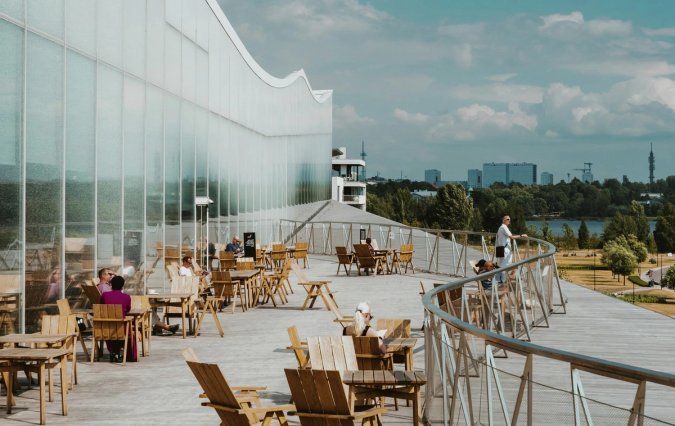
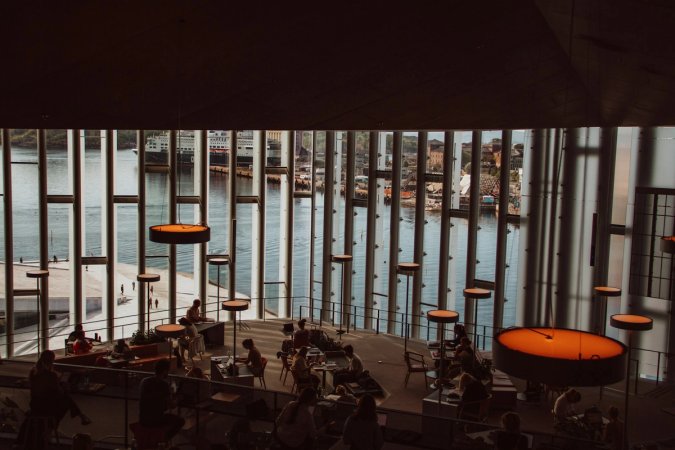
Public facilities can no longer function as simple containers of services. Poorly contextualised projects risk accelerating socio-economic transformations, displacing local life or creating sterile, underused spaces. In contrast, well-designed facilities (such as Oslo’s Tøyen Library, where reading rooms coexist with cafés, maker spaces and community services) demonstrate how architecture can act as a strong civic anchor.
The urgency lies in shifting from city-building to city-making, ensuring that public buildings genuinely serve local communities, enhance belonging and enrich the everyday life of neighbourhoods.
The upcoming opportunities for cities
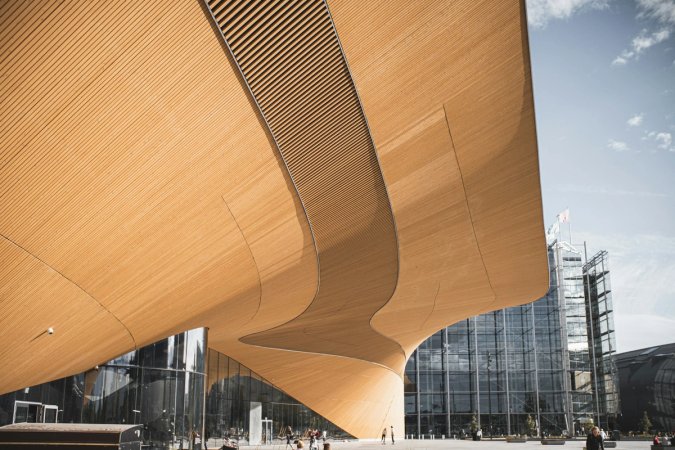
Smart public buildings can become powerful social infrastructures. When designed with active façades, porous boundaries and mixed uses, they generate vibrancy, safety and comfort. Conversely, monofunctional structures with blank walls often create hostile or disconnected streets.
This tension reveals an opportunity: to embed public facilities deeply in their communities. Even specialised buildings (hospitals, stadiums or cultural hubs) can integrate complementary uses such as green areas, cafés, informal seating, or cultural programming, amplifying their public value and strengthening their relationship with place.
Examples worldwide illustrate this approach. Bangkok’s Chang Chui Creative Park revitalises underrepresented areas through creativity and youth culture. São Paulo’s Casa do Povo demonstrates radical openness and community-led governance. Santiago’s Gabriela Mistral Cultural Centre uses transparent ground floors and open plazas to become a true civic hub. These cases show how architecture can nurture connection, belonging and everyday joy when contextualised thoughtfully.
Our suggestion for local action
1 | Design facilities as porous, sociable infrastructures, with open plazas, multiple entrances, mixed uses and accessible green spaces.
2 | Ensure genuine participation by using professional mediation teams and participatory tools to integrate local knowledge into every phase of development.
3 | Implement territorial impact indicators to monitor social, ecological and spatial effects and adjust programming or design over time.
Taken together, these five tensions reveal a shared message for 2026: cities are no longer lacking ideas, but alignment. Alignment between climate ambition and social justice. Between digital speed and democratic care. Between global flows and local life. The task ahead is not to eliminate conflict, but to work with it deliberately — to read tensions as signals pointing toward new forms of governance, design and collaboration.
For local governments, institutions and urban actors, the opportunity lies in moving beyond reactive fixes and embracing more integrated, humble and people-centred approaches. At Anteverti, we see this moment not as a warning, but as an invitation: to slow down, connect disciplines and collectively shape cities that are not only more resilient, but more liveable, fair and meaningful for those who inhabit them every day. ●