
«You have to address urban issues based on natural boundaries, not political ones»
«You have to address urban issues based on natural boundaries, not political ones»
Metropolitan regions have become the primary arenas where the promises and tensions of contemporary urban life converge. As they grow in scale and complexity, they expose the limits of traditional governance models, demanding new forms of coordination, legitimacy, and action across fragmented institutional landscapes. Santiago de Chile is no exception: a vast urban region where social, environmental, and political dynamics unfold at a pace that often outstrips formal powers.
Since 2021, Santiago has been navigating a profound institutional transition with the creation of its first democratically elected metropolitan authority. Still in its formative stage, this governance layer operates less through regulatory muscle than through convening power, experimentation, and the ability to align diverse actors around shared priorities. In this context, innovation is not only a policy choice but a necessity, shaping how the region responds to structural challenges and long-term risks.
In this interview, Claudio Orrego reflects on what it means to govern a metropolis while its institutions are still being built. His perspective offers a timely contribution to global debates on metropolitan governance, resilience, and cooperation, highlighting how leadership, political legitimacy, and strategic alliances can open new pathways for action in an increasingly urban world.
We have, I would say, three major challenges.
First is inequality. Santiago, on average, has very high standards, but as people say, averages can be misleading. There are parts of Santiago that are very wealthy, modern, and well-equipped, but others are quite impoverished. So, the quality of life across the city is very uneven.
Second, I would say sustainability. Like many cities around the world, we are facing a climate crisis, but Chile — and Santiago in particular — is especially challenged by climate change. We’ve been experiencing a drought for 13 years and almost ran out of water last year. As you can imagine, a city of 8 million people cannot be relocated easily, so we have to find ways to reuse and conserve water.
Third, I would say governance. Santiago has 52 different mayors and municipalities. My position — the governorship — was just created one year ago. I’m the first elected governor of Santiago, and we are currently building the institutional framework needed to govern a metropolitan area of 8 million people. There are many challenges ahead over the next four years, but we’re working with mayors, our regional council, the national government, and society to address these issues in multiple ways.
As a new institutional body, we don’t yet have all the legal powers necessary to address these issues, so we have to be very creative.
For example, when I was sworn into office, I declared a climate emergency for the region. After that, we developed the first protocol to rationalize water use in the city. Then we created an emergency water working group for the city. None of these measures have legal authority behind them, but all the parties involved are eager to find a common solution and have accepted my invitation to be part of this joint effort.
We are leading by example and through political legitimacy rather than legal power. The same applies to our initiatives supporting caregivers for highly dependent individuals and addressing mental health. We are currently running the most important suicide prevention program in Latin America, even though we don’t have authority over health. But we’re doing it anyway — funding it and collaborating with NGOs and the national government.
In areas like safety, the environment and social services, we’re innovating — leveraging both the political legitimacy that allows me to bring everyone to the table and the limited resources we have, which I believe are still enough to trigger meaningful change.
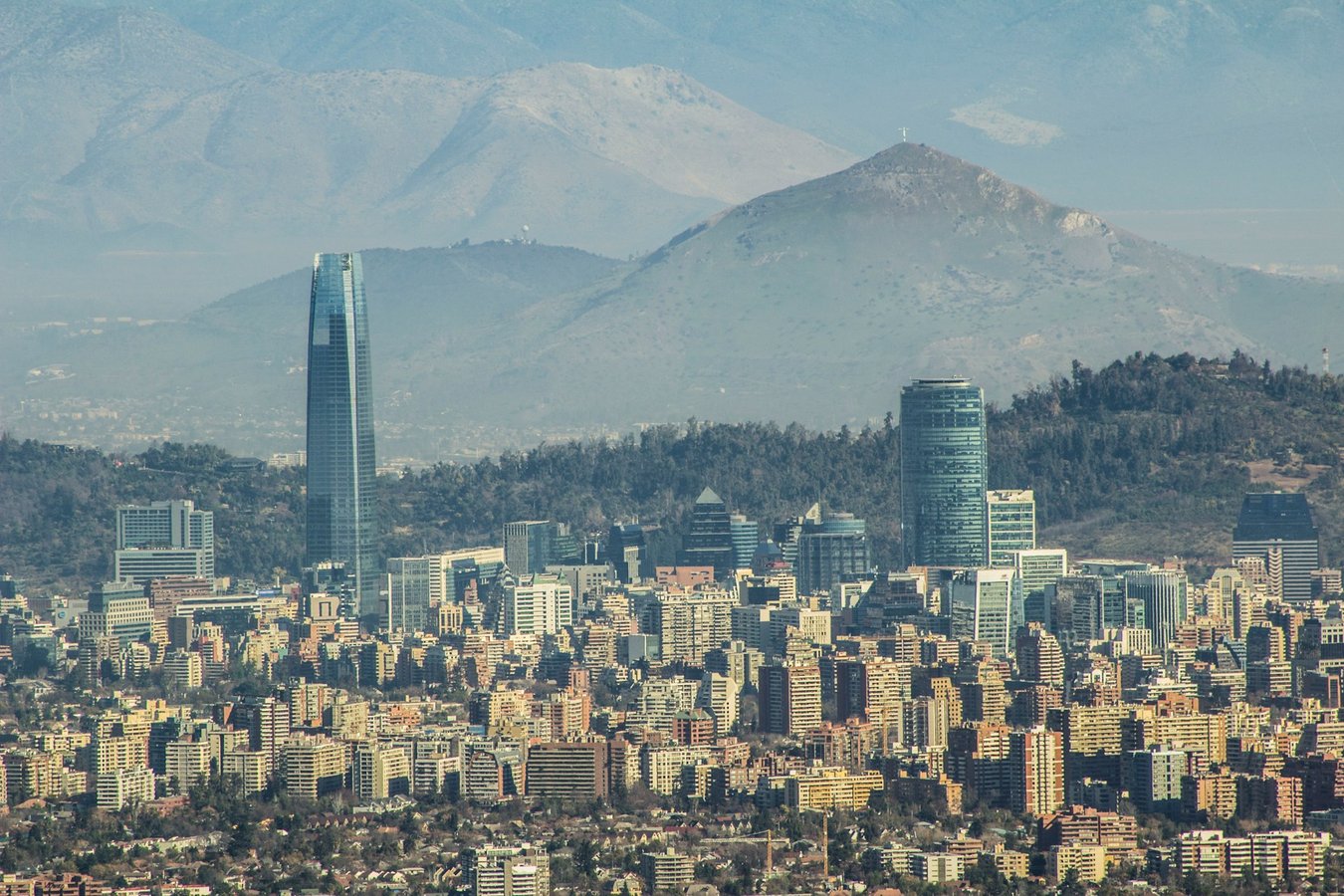
Santiago de Chile. Image by Juan Pablo Ahumada on Unsplash
I believe cities as a whole should have a stronger voice. At the same time, we need to recognize the particularities of metropolitan areas. These regions share many characteristics — a common labor market and mobility patterns — yet they are often governed by fragmented institutions.
So how do you promote environmental sustainability, sustainable mobility, equitable housing, and productivity in a region governed by multiple authorities? Globally, there are only two models. One is the associative model, where different municipalities collaborate to address these issues. The other — seen in cities like London, Istanbul, and Santiago — is a second-tier authority that operates across municipalities.
This is the approach we are pursuing in Chile. We need to respond to the reality that more and more people are living in these complex metropolitan regions. These areas face specific challenges that are inherently intermunicipal and cannot be effectively addressed solely at the national or municipal level.
What we are very proud of right now is our work on a resilience strategy to address the water issue. If we are able to develop a solid solution, it’s something we would be eager to share.
The problem in Chile — unlike in places like Israel or Melbourne, Australia — is that we don’t have a single authority overseeing water. Instead, there are 40 different authorities connected to the river basins. And, as you can imagine, nature doesn’t follow legal jurisdictions. You have to address the issue based on natural boundaries, not political ones.
So, we are building a regional strategy to tackle water scarcity. If we achieve good results, we’ll gladly share them with the rest of the world. ●