
Future-Proofing Europe Starts in Its Cities: 3 Core Challenges — and Some Ways Forward
Future-Proofing Europe Starts in Its Cities: 3 Core Challenges — and Some Ways Forward
From Dublin to Nicosia, and from Rovaniemi to Valletta, cities are the beating heart of the European Union. Nearly three out of four EU citizens—more than 330 million people—live in urban areas. It is in these cities that Europe’s future is being shaped: in public squares, innovation hubs, cultural institutions, shopping streets, and industrial parks. They are centers of opportunity and creativity—but also the places where the EU’s most urgent challenges become most visible, from the escalating impacts of climate change and geopolitical instability to the deepening housing crisis.
Acknowledging this dual role, the EU has made urban development a key priority of its Cohesion Policy, allocating over €100 billion for the 2021–2027 period. The aim is to drive green, digital, and inclusive transitions that can deliver a more sustainable, prosperous, and equitable Europe—for its people, its cities, and the Union as a whole.
Realizing this vision depends not only on EU-level strategy but also on local action. As the level of government closest to citizens, cities are uniquely positioned to design and implement context-specific solutions. But how can municipalities translate high-level EU ambitions into meaningful, tangible outcomes? What barriers stand in their way? And what do cities need to truly become engines of European transformation?
In June, we joined policymakers, urban leaders, and experts at the Cities Forum 2025 in Kraków, Poland—the European Commission’s flagship event on urban policy. Drawing on insights from the forum, we identify three core challenges facing cities today—and suggest three practical, forward-looking strategies to address them.
1 | Cities must truly become innovation labs for testing scalable solutions
In recent years, cities have found themselves on the front lines of climate-related disasters—from flash floods in Valencia to wildfires in Athens. At the same time, geopolitical instability—from Ukraine to the Middle East—is testing Europe’s resilience and autonomy, placing additional strain on the economic, social, and physical fabric of its urban systems.
In this volatile global context, cities must move beyond reactive responses. They must anticipate change—and do so with agility and adaptability. But that requires space for experimentation, testing, and refinement to develop solutions that work in the complexity of real urban life. Just as artists explore new ideas freely in the studio, without fear of failure, the futureproofing of our cities depends on how freely and effectively they can explore, iterate, and innovate.

Tom Podmore, Unsplash
To enable this, cities must be empowered to act as innovation testbeds—supported by EU frameworks that encourage pilot projects, experimentation, and local validation of scalable solutions. The EU’s role should be to foster this ground-level innovation by promoting governance models that integrate citizen engagement and multi-sector collaboration.
Urban sandboxes provide a strong example of this approach. These are controlled environments where cities and companies can trial and refine innovations that would otherwise face long delays under standard regulatory conditions. They help reduce risk, lower bureaucratic barriers, and open the door to sustainable, scalable solutions that balance environmental, social, and economic priorities.
City digital twins — such as the one we supported Barcelona in developing—offer another powerful tool. These real-time, data-driven models allow urban planners to simulate the impact of proposed policies or infrastructure changes before implementing them on the ground. With digital twins, cities can anticipate which areas are most vulnerable to flooding or model how changes in traffic patterns would affect air quality and public health.
2 | Multi-level governance and cooperation must move from buzzword to reality
There is broad consensus across the EU that cities must be empowered to act as laboratories for Europe’s future. The financial resources to support this ambition are largely in place. But for this vision to materialize and endure, it needs something akin to the cement that binds the bricks of a building: a coherent, binding force that ensures consistency and alignment across all levels of government. That force is multi-level governance. Making it effective is as urgent as it is essential for Europe’s urban future.
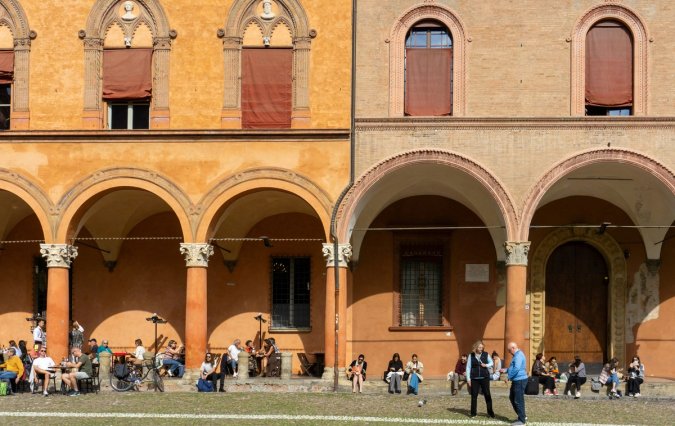
Today, the lack of alignment between EU-wide, national, regional, and local policies often continues to hinder cities’ capacity to act — especially when it comes to accessing funding or implementing cross-cutting innovation projects. While major European cities with robust innovation ecosystems and strong institutional capacity often succeed in developing transformative tools and policies — from Barcelona’s digital twin to Paris’s “Réinventer Paris” urban regeneration programme — smaller cities or more fragmented metropolitan areas often struggle to keep pace.
Caio Fernandes, Unsplash
How can we break this inertia? Two key elements come to mind. The first is multi-level governance: if we want solutions that meaningfully connect Europe-wide priorities with local contexts, all relevant actors—local authorities, regional governments, national institutions, civil society, businesses, and research communities—must have a coordinated and meaningful role in shaping the decisions that affect them. Strengthening mechanisms that enable this multi-level governance throughout the entire chain of action will make urban transformations not only more effective, but also more legitimate, widely accepted, and better suited to local realities—while fostering a sense of shared ownership.
The second element is cooperation. When it comes to overcoming the challenges of developing innovative solutions from scratch, nothing is more effective than sharing them with peer cities—those of similar size, facing comparable challenges, and operating within similar policy and implementation frameworks. The EU offers a wide range of city-to-city cooperation programmes, many of which extend beyond the European context. Initiatives like the IURC — of which we at Anteverti are proud collaborators — enable the meaningful exchanges of knowledge and experience between European cities and their counterparts in the Americas, Asia, and Oceania.
3 | Sustainable cities need sustainable finance — and that requires public-private partnerships
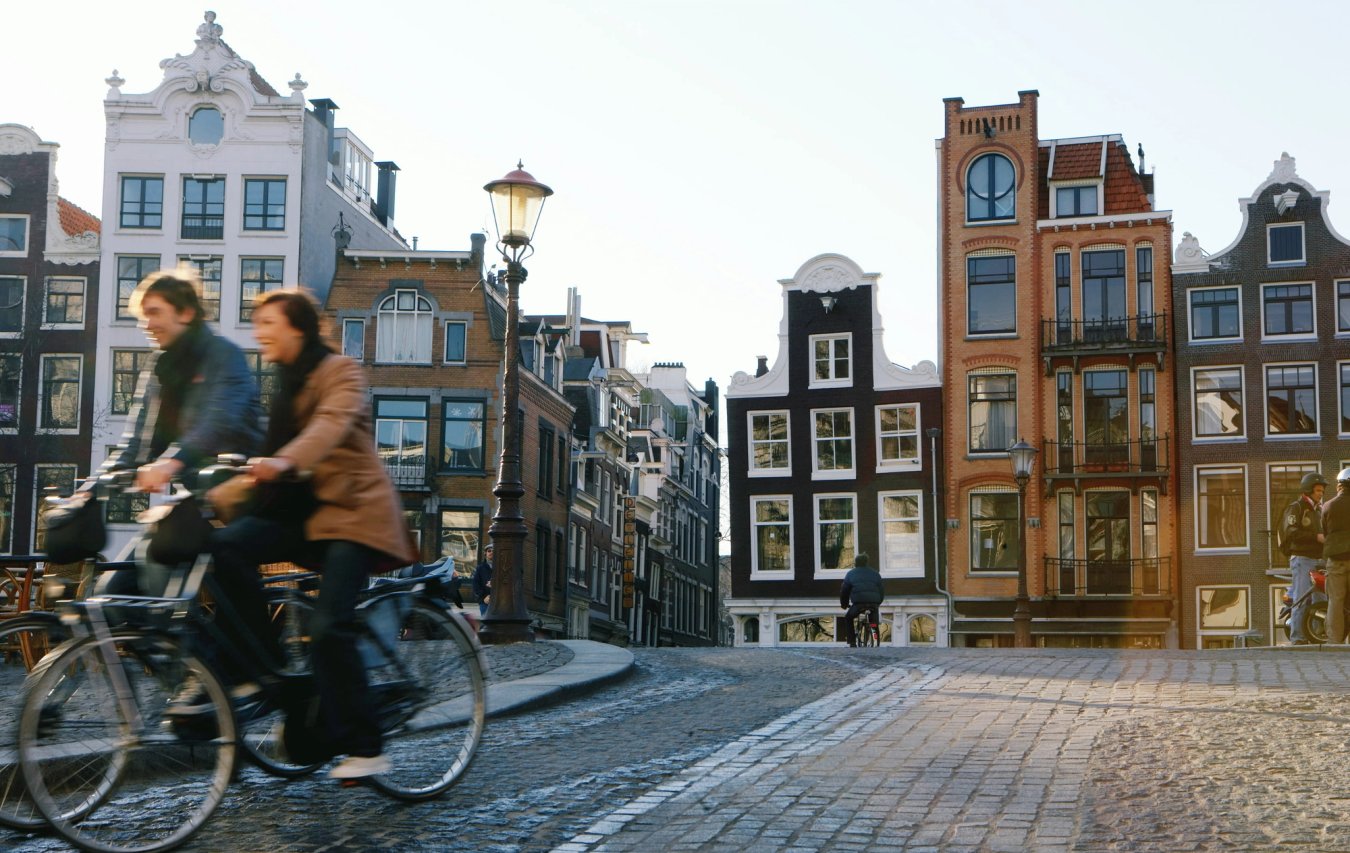
As circular as the conversation may sound, the transformation of Europe’s cities ultimately hinges on a single, essential question: how do we finance it? Without sustainable financing models—long-term, forward-looking, and integrated into the planning and budgeting frameworks at all levels of government—we will not reach a climate-neutral EU. Nor will we succeed in tackling challenges such as housing access, the quality of public services, or the transition to green, digital, and competitive urban economies.
Getty Images, Unsplash
Here again, collaboration is key. National governments, cities, and the private sector must work together; no one actor can deliver urban innovation and regeneration alone. This is particularly evident in the built environment—where the realities of urban transformation are most tangible.
Large-scale urban revitalization projects like Nowa Huta in Kraków—which we visited during the Cities Forum 2025— demonstrate that transforming post-industrial brownfields into vibrant, green, and inclusive neighborhoods is only possible through strong public-private partnerships.
The same principles hold true on a smaller scale when it comes to nature-based solutions. Take the Bologna Missione Clima initiative, for example—it brings together public institutions, private companies and civil society groups to fund nature-based solutions, among other efforts, with the goal of achieving carbon neutrality by 2030. It’s a great example of how collaborative funding, community involvement and well-designed pilot programs can lead to greener, more resilient cities.
The lesson is clear: the future of Europe’s cities—and the funding mechanisms that will shape them—depends on grounded partnerships, shared risk, cooperation and a long-term commitment to balancing public and private investment. ●